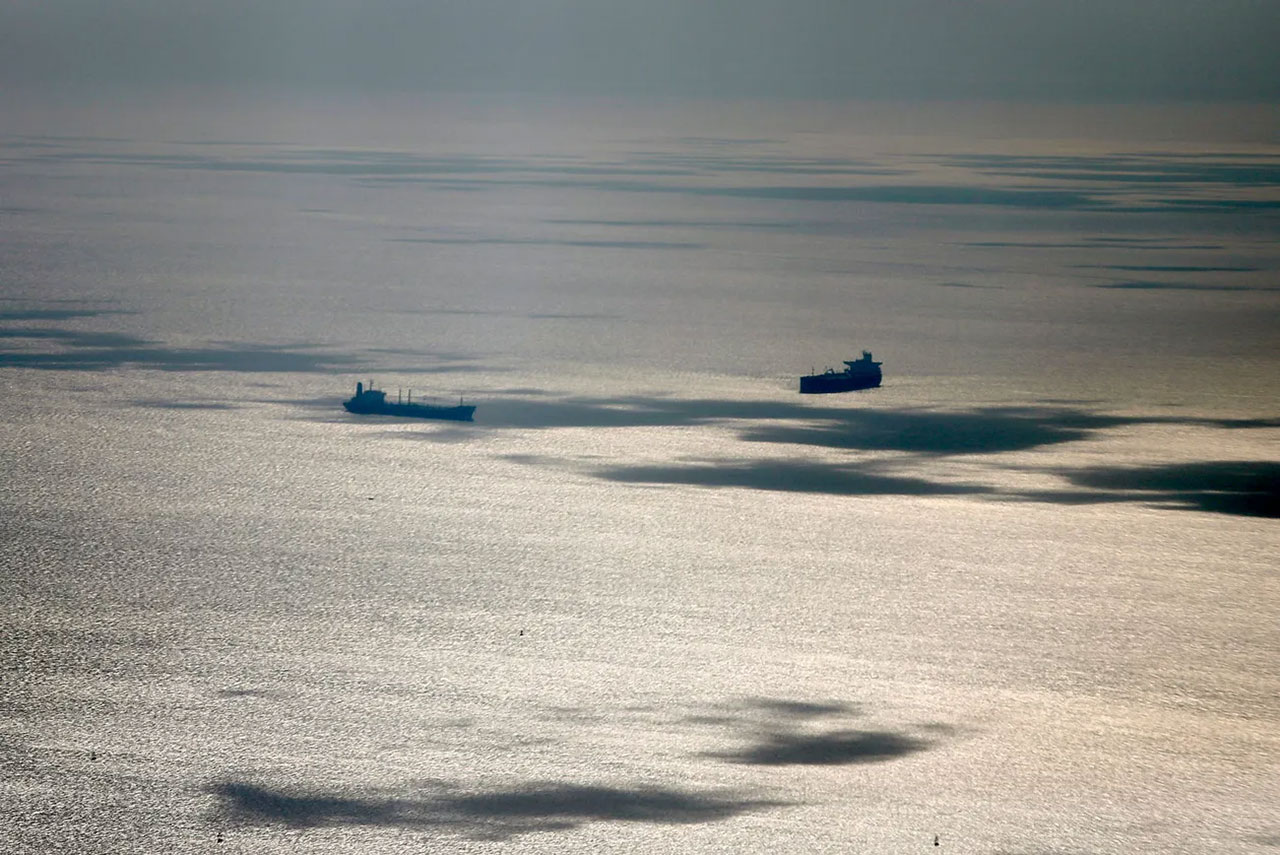
The sun hadn’t yet crested the horizon over the Port of Houston, but the humidity was already a thick, salt-slicked blanket. Elias, a third-generation dockworker with hands like cured leather, watched a massive tanker drift toward the terminal. To most, it’s just a ship. To Elias, and to the millions of Americans staring at the blinking red numbers on a gas station sign two miles inland, that ship is a pulse point.
When that pulse slows, everything hurts.
The mechanics of global energy are often treated like a high-altitude board game played by bureaucrats in windowless rooms. We talk about "supply chains" and "regulatory frameworks" as if they are abstract math problems. They aren't. They are the difference between a family taking a summer road trip or sitting at the kitchen table wondering why the grocery bill just jumped another twenty percent.
At the center of this tension lies a century-old ghost known as the Jones Act. Formally the Merchant Marine Act of 1920, it dictates that any goods shipped between U.S. ports must be carried on ships that are built, owned, and flagged in the United States, and manned by U.S. citizens. It was born from a desire for national security—a noble intent to ensure we have a domestic fleet ready for war.
But in a time of peace and surging energy costs, that ghost haunts the gas pump.
The Law of Unintended Friction
Imagine you are trying to move a mountain of sand from a beach in Texas to a construction site in Florida. You have a fleet of trucks available right now, parked in the lot, ready to go. But a law from 1920 says you can only use trucks built in a specific factory in Ohio that hasn't expanded in decades. Those trucks are all busy. So, the sand sits. Or, more likely, you decide it’s cheaper to buy sand from a different country entirely, even if it has to travel ten times the distance.
This isn't a metaphor for the shipping industry. It is the literal reality of American energy.
Because there are so few Jones Act-compliant tankers, it is often more expensive to move oil from the Gulf Coast to the Northeast than it is to ship it across the Atlantic from Europe. The Trump administration’s decision to extend a waiver on this act for an additional 90 days isn't just a dry policy update. It is a desperate, necessary oxygen mask for a suffocating market.
By extending this waiver, the government is essentially saying: "We need the foreign ships." We need their capacity. We need their speed. We need them to dampen the fire that is consuming the American consumer's paycheck.
The Human Cost of a Shield
For a merchant mariner like Sarah, who spends half her year on American-flagged vessels, the Jones Act is a shield. It protects her job. It ensures that the people she works with are trained to the same rigorous standards. From her perspective, the waiver feels like a crack in the foundation. She worries that if the "temporary" waivers become a permanent fixture, the American shipping industry will wither away, replaced by cheaper, foreign-flagged vessels that don't answer to the same labor laws or safety requirements.
Her fear is valid.
But then there is Marcus. Marcus drives a delivery truck in Philadelphia. He doesn't know what the Jones Act is. He doesn't know that a 90-day waiver is currently allowing a foreign-flagged vessel to bring domestic fuel to a terminal near him. All Marcus knows is that for the first time in six months, the cost of filling his rig didn't go up. He knows that his boss might not have to cut his hours this week to cover the fuel surcharge.
The conflict isn't between "good" and "bad" policy. It is a collision of two different types of survival.
One side fights for the survival of a domestic industry and long-term national security. The other fights for the survival of the immediate economy—the ability of a mother in Maine to heat her home or a farmer in Iowa to run his tractor without going into debt.
Breaking the Bottleneck
The 90-day extension is a tactical retreat from protectionism in favor of pragmatism. When oil prices spiked, the administration looked at the logistics of the East Coast and saw a bottleneck. The pipelines were full. The American tankers were already spoken for. The fuel was there, sitting in Texas, but it had no way to get to the people who needed it.
Think of the waiver as a temporary bypass surgery. It allows foreign vessels—the "foreign-flagged" tankers that usually roam the international waters—to enter the domestic trade route. They can pick up American oil and drop it at American ports.
It sounds simple. It is anything but.
Every time a waiver is granted, it triggers a quiet war in Washington. Shipbuilders argue that the waiver undermines the incentive to build new American ships. They argue that if we don't build them now, we won't have them when a real crisis hits. On the other side, energy advocates point to the immediate pain at the pump. They argue that a law from the era of the Model T shouldn't be allowed to dictate the energy security of the digital age.
The Math of the Pump
To understand why 90 days matters, you have to look at the sheer volume. A single large tanker can carry hundreds of thousands of barrels of oil. If you can bring in ten of those ships under a waiver, you are injecting millions of gallons into the market that otherwise wouldn't be there.
Economics 101 tells us that when supply rises, prices should stabilize. But the oil market is a temperamental beast. It reacts to rumors, to geopolitical shifts, and to the weather. The waiver acts as a stabilizing force, a signal to the markets that the government is willing to use every tool in the shed to prevent a total price meltdown.
The 90-day window is specific. It covers the transition into the high-demand summer driving season. It’s a gamble that three months of increased shipping capacity will be enough to bridge the gap until global production can catch up or demand naturally cools.
The Ghost in the Machine
We often ignore the infrastructure of our lives until it breaks. We don't think about the electrical grid until the lights flicker. We don't think about shipping laws until a gallon of milk costs six dollars because the diesel used to transport it is at record highs.
The Jones Act is a piece of that invisible infrastructure. It’s a set of rules that were written in a different world, for a different set of problems. In 1920, the idea of globalized, just-in-time supply chains was science fiction. Today, it is the air we breathe.
When the administration extends a waiver, they are admitting that the old rules are rubbing up against the new reality. They are admitting that the "shield" of protectionism can sometimes become a "stranglehold" on the consumer.
Beyond the Horizon
Back on the docks in Houston, Elias watches the tanker finish its mooring. It flies a flag from a country half a world away, but the cargo it carries will end up in American cars. He understands the pride of the American merchant marine—he’s lived it. But he also sees the trucks lined up at the gate, drivers waiting for fuel that has been too scarce and too expensive for too long.
The waiver will eventually expire. The 90 days will tick down. And when they do, the debate will reignite. The shipbuilders will demand the return of their exclusive rights. The consumer advocates will scream about the inevitable price hike.
We are caught in a cycle of temporary fixes for a structural problem. We want national self-reliance, but we also want cheap energy. We want to protect American jobs at sea, but we want to protect American wallets on land.
The 90-day extension isn't a victory for either side. It’s a pause. It’s a moment of breathing room in a high-stakes game of economic chicken. As the foreign tanker begins to offload, the red numbers at the gas station down the road stop their upward climb, if only for a few months.
The ghost of 1920 is still there, lurking in the hull of every ship. For now, it has been told to wait in the shadows, while the world demands its fuel at any cost.
The true price of a gallon of gas isn't just the oil inside it. It’s the weight of a century of laws, the sweat of the dockworkers, and the shifting winds of a government trying to balance the needs of the few against the survival of the many.
The ships keep moving. The clock keeps ticking. And Elias keeps working, knowing that in 90 days, the rules of the game might change all over again.