Somewhere in the middle of the Atlantic Ocean, a freighter the size of an upright skyscraper is fighting a losing battle against the wind. The captain, a veteran of thirty years who has seen every shade of blue and grey the Earth can offer, stares at his monitors with a hollow feeling in his gut. His ship carries twelve thousand containers. Inside them are the guts of modern life: lithium batteries, surgical masks, thousands of pairs of sneakers, and the microchips that will power next year’s "revolutionary" smartphones.
If this ship stops, a factory in Germany goes dark. A hospital in Ohio misses its shipment of specialized tubing. A teenager in Tokyo wonders why her package is three weeks late.
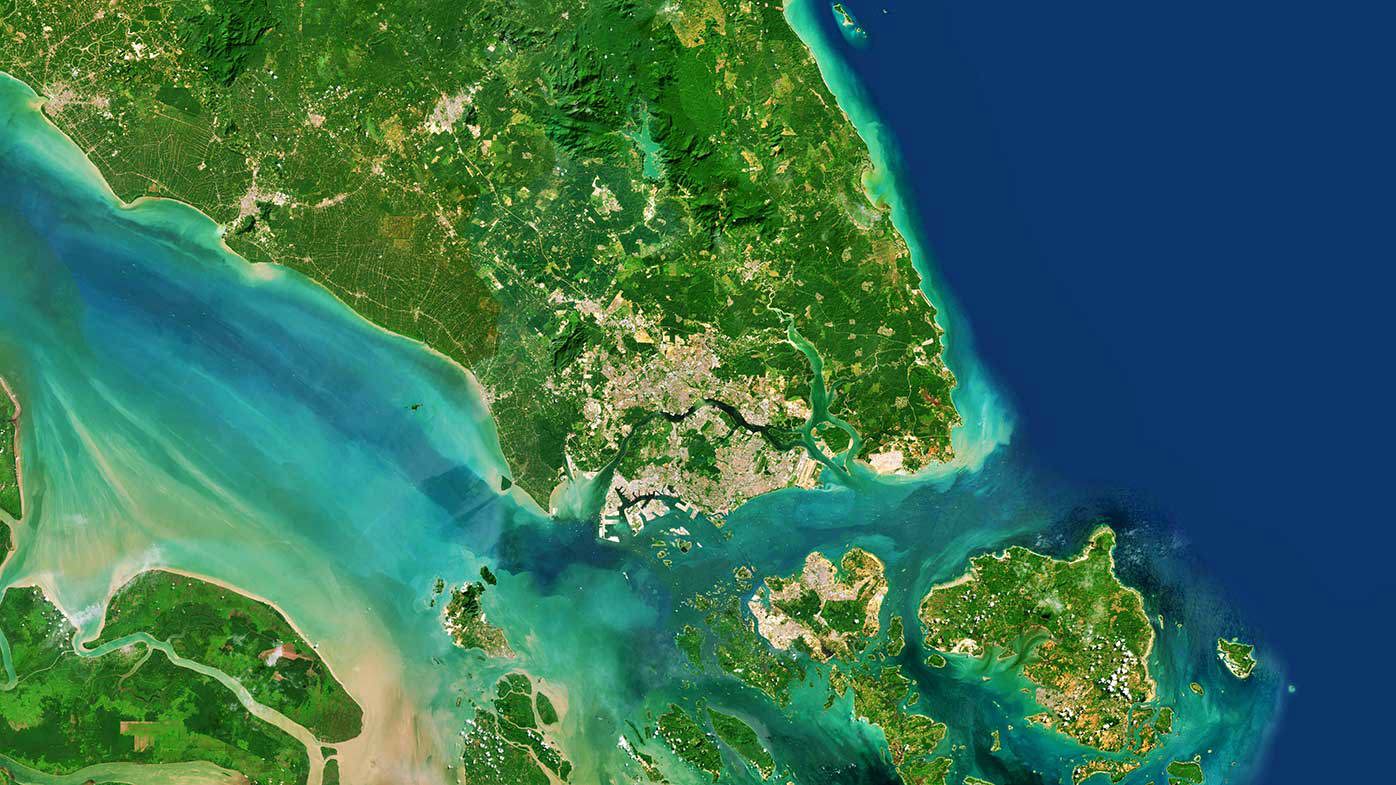
But the ship isn't stopping because of a storm or a mechanical failure. It’s slowing down because it’s approaching a narrow strip of water that has become the most expensive piece of real estate on the planet. This isn't a bustling harbor or a glittering city-state. It is a geographic fluke, a tiny gap in the map that the global economy has grown too big to fit through.
The Geography of Greed and Gravity
For decades, we treated the world’s shipping lanes like infinite highways. We built bigger ships, designed more complex supply chains, and assumed the ocean would always be wide enough. We were wrong.
The math of global trade is brutal. $90%$ of everything you own was moved by a ship. Because water is the most efficient way to move weight, we have funneled the entirety of human commerce through a handful of "chokepoints." Think of the Suez Canal or the Strait of Hormuz. These are the jugular veins of civilization. When they get blocked, the world bleeds money.
But there is a new kind of crisis brewing at a specific, narrow passage—one that isn't just about a physical blockage, but about a sudden, staggering increase in the cost of passage. Imagine a tollbooth that yesterday charged you five dollars to cross a bridge, and today demands five thousand.
You can’t turn around. You can’t go back. You have to pay, or you have to sink.
The Ghost in the Supply Chain
Let’s look at a hypothetical scenario to ground this abstract economic nightmare. Meet Elias. Elias runs a medium-sized electronics firm in Brazil. He’s not a billionaire; he’s a guy who worries about payroll and logistics. He has a contract to deliver five thousand high-end tablets by November. His margins are thin—about $8%$ per unit.
In June, his shipping costs were predictable. In July, the "gap" became a crisis.
Because of environmental shifts or geopolitical tensions—often a lethal cocktail of both—the capacity of this specific maritime passage was cut in half. To ensure his tablets didn't sit in a sun-baked container for three months, Elias had to bid for a "slot."
It’s an auction. A digital gladiator pit.
Giant corporations with deep pockets can outbid the Eliases of the world every single time. They pay the "toll," which has ballooned from a standard administrative fee into a multi-million dollar ransom. Elias is left with two choices: pay the toll and lose money on every tablet he sells, or wait in line and face a breach-of-contract lawsuit when his goods arrive in January.
This is how inflation actually starts. It’s not just a government printing money; it’s the physical friction of moving an object from Point A to Point B becoming so high that the price of the object must double just to justify its existence.
The Physics of the Bottleneck
Why can't we just go around?
Distance is the enemy of profit. To bypass a major maritime chokepoint often requires sailing around an entire continent. This adds thousands of miles to a journey. More miles mean more fuel. More fuel means more carbon emissions and more wear on the engines. But more importantly, it means more time.
In a world built on "Just-in-Time" manufacturing, time is a physical resource. If a ship takes an extra twenty days to arrive, the entire sequence of global production stutters. The "tollbooth" becomes a necessity because the alternative is a slow-motion collapse of the schedule.
Consider the sheer scale of the vessels we are talking about. A modern Ultra Large Container Vessel (ULCV) can be 400 meters long. When you try to squeeze dozens of these through a passage that is shrinking due to drought-induced water levels or being restricted by naval blockades, you aren't just managing traffic. You are managing a cardiac arrest of the global markets.
The Hidden Winners
Behind every crisis, someone is holding a collection plate.
When a passage becomes a "most expensive tollbooth," the entities controlling that passage—whether they are national governments, private canal authorities, or even the insurance conglomerates that underwrite the risk—see their revenues skyrocket. They aren't doing more work. They are simply sitting on the only bridge in town while the town is on fire.
The irony is that these profits are often used to fund the very technologies that seek to bypass the bottleneck. We see investments in "land bridges"—massive rail projects that attempt to move containers across continents by train. But the capacity of a train is a teardrop in the ocean compared to a ship. You would need dozens of trains to empty a single freighter.
The math never quite adds up. We are stuck with the sea.
The Human Cost of a Centimeter
We often talk about these issues in terms of "global indices" and "shipping throughput." These words are designed to make the reality feel bloodless.
The reality is a sailor who hasn't seen his family in nine months because his ship was rerouted and trapped in a queue. It’s a small business owner in a developing nation who goes bankrupt because his raw materials are stuck behind a $4 million toll he can't afford. It’s the subtle, creeping rise in the cost of a gallon of milk or a box of diapers that makes a parent wonder why their paycheck doesn't go as far as it did last month.
We are living in a fragile moment of history. Our ancestors built a world that relied on the idea that the oceans were a "global commons"—a free space for all. Now, that space is being carved up, monetized, and throttled.
The tiny gap in the ocean is a mirror. It reflects a global system that has prioritized efficiency over resilience. We built a machine that works perfectly until it doesn't. We built a world where a few inches of water or a single line of geopolitical policy can dictate whether a continent prospers or starves.
The freighter moves forward. The captain pays the toll. The cost is passed down, hand to hand, until it reaches you.
We are all paying for that tiny gap in the water. We pay in the things we can no longer afford, the time we wait for a world that used to be at our fingertips, and the growing realization that the horizon is much narrower than we were told.
The ocean is vast, but the gate is very, very small.