Crude oil pricing currently reflects a structural inability to price in "peace" because the failure of US-Iran diplomatic negotiations is not an isolated event; it is a breakdown in the global supply-side equilibrium. When high-level talks stall, the market immediately prices in the Geopolitical Risk Premium (GRP), a non-linear variable that accounts for the probability of kinetic disruption in the Strait of Hormuz and the continued exclusion of Iranian barrels from the global balance sheet. This price appreciation is the direct result of a tightening supply delta paired with the erosion of spare capacity among OPEC+ members.
The Architecture of Stalled Diplomacy
The upward pressure on Brent and WTI following failed negotiations is driven by three distinct economic pillars. Each pillar represents a specific friction point that prevents the market from reaching a lower-cost equilibrium.
1. The Lost Supply Delta
The most immediate factor is the physical absence of approximately 1.5 to 2 million barrels per day (mb/d) of Iranian crude. Under a successful diplomatic framework, this volume would enter the market over a 6-to-12-month ramp-up period.
- Inventory Depletion: Global commercial inventories remain below five-year averages. Without the Iranian "surge" capacity, the cushion against unplanned outages—such as infrastructure failure in Libya or hurricanes in the Gulf of Mexico—remains dangerously thin.
- Quality Differentials: Iran produces significant quantities of medium-sour crude. Global refineries, particularly in Asia and the Mediterranean, are optimized for this specific grade. Its absence forces refiners to seek more expensive alternatives, driving up the "crack spread"—the difference between the price of crude and the petroleum products extracted from it.
2. The Strait of Hormuz Chokepoint Risk
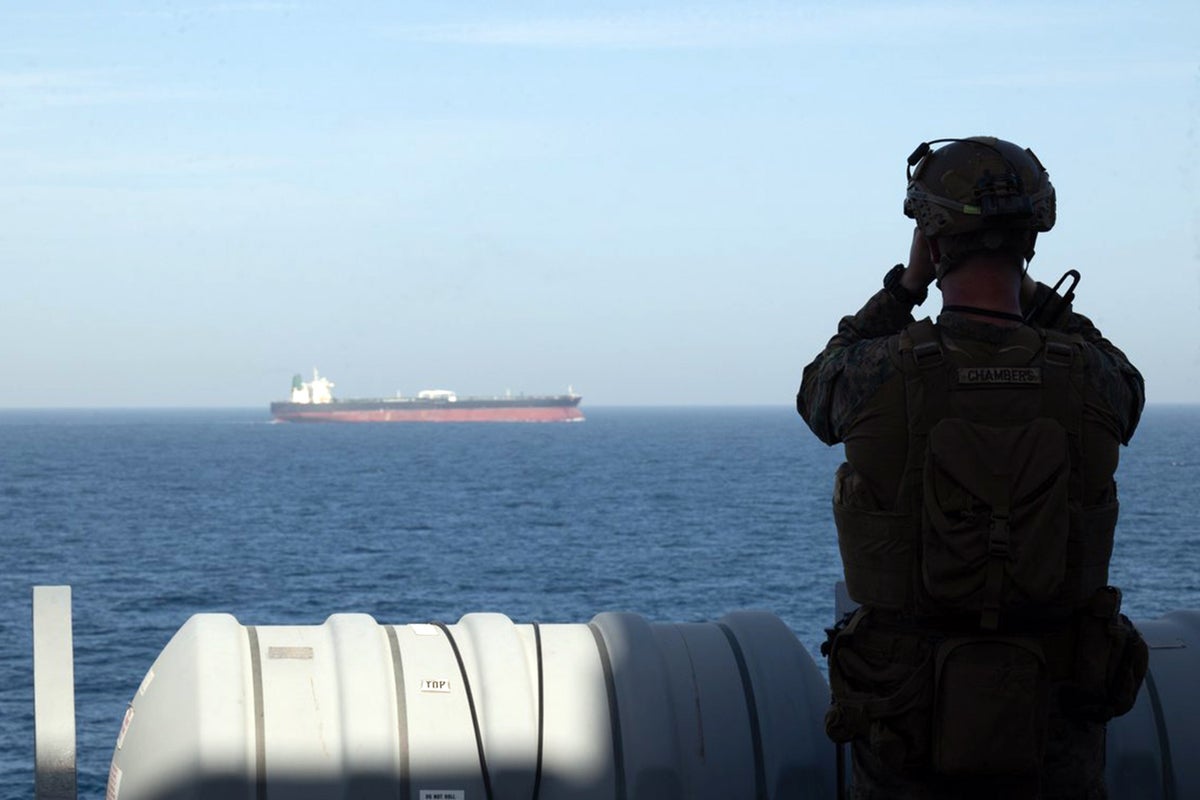
Diplomatic stalemate increases the probability of "shadow war" tactics. Approximately 20% of the world’s liquid petroleum consumption passes through the Strait of Hormuz.
- The Probability Function: Analysts calculate the risk of closure or harassment of tankers as a binary outcome. When talks are active, the probability sits near zero. When talks stall, the probability shifts to a non-zero integer, triggering algorithmic buying.
- Insurance and Freight Escalation: As tensions rise, War Risk Insurance premiums for tankers in the Persian Gulf increase. This cost is passed directly to the consumer, baked into the "landed" price of crude before a single barrel is even refined.
3. The Sanctions Elasticity Gap
The market has already accounted for "leaky" sanctions—the volume Iran currently exports to independent refiners via the "dark fleet." The price rise seen during stalled talks reflects the realization that the official removal of sanctions is no longer on the horizon. This prevents institutional capital from investing in Iranian upstream infrastructure, ensuring that even if peace were achieved tomorrow, the production response would be lagged by years of underinvestment.
Quantifying the Risk Premium
The GRP is often misunderstood as a "fear index," but it is more accurately described as an Insurance Premium on Future Scarcity. To understand why prices rise, one must analyze the relationship between spare capacity and price volatility.
Currently, global spare capacity is concentrated almost exclusively in Saudi Arabia and the UAE. When US-Iran talks fail, the burden of balancing the market shifts entirely to these two players.
- The Margin of Error: If global spare capacity drops below 2% of total demand, price sensitivity becomes parabolic.
- The Multiplier Effect: Every $1 increase in the risk of a supply disruption is multiplied by the lack of an alternative source. If Iran remains sidelined, the market loses its primary "relief valve."
The failure of talks also solidifies the "higher for longer" interest rate environment in energy-heavy economies. As oil prices rise due to geopolitical friction, inflationary pressures persist, which in turn raises the cost of capital for future energy projects. This creates a feedback loop: political instability leads to higher prices, which leads to higher costs for new supply, which ensures long-term scarcity.
Structural Bottlenecks in the US Response
Standard analysis suggests that US shale production should act as a counterweight to Persian Gulf instability. However, this logic ignores the Operational Constraints of Tier 1 Acreage.
- Capital Discipline: US exploration and production (E&P) firms have shifted from "growth at all costs" to "free cash flow generation." They are no longer flooding the market in response to $80 or $90 oil.
- Service Inflation: The cost of labor, tubular goods, and hydraulic fracturing fleets has risen by double digits. This raises the "breakeven" price, meaning US shale requires a higher sustained price floor to justify incremental drilling.
- Logistical Limits: Export terminals on the Gulf Coast are approaching nameplate capacity. Even if the US produced more, the physical ability to ship that oil to global markets to offset Persian Gulf losses is limited by infrastructure.
The Impact of Non-State Actors and Proxy Friction
Stalled talks are rarely just about the US and Iran. They signal a permission structure for regional proxies to engage in "asymmetric market disruption."
- Infrastructure Targeting: Drone or cyber-attacks on processing facilities—similar to the 2019 Abqaiq-Khurais strike—become more likely when the diplomatic path is closed.
- The Red Sea Vector: The security of the Bab el-Mandeb strait is intrinsically linked to the broader Iran-US relationship. Continued friction ensures that transit times for tankers remain elevated as they avoid the Suez Canal in favor of the Cape of Good Hope, adding 10 to 15 days of "transit inventory" that is effectively removed from the immediate supply pool.
Strategic Forecast: The Displacement of the Equilibrium
The market is currently transitioning from a "Contango" structure (where future prices are higher than current prices) to "Backwardation" (where current prices are higher). This indicates an urgent demand for immediate physical delivery. Stalled peace talks accelerate this trend because traders want to hold physical barrels today as a hedge against a total breakdown in regional security tomorrow.
The immediate ceiling for oil prices is not determined by production costs, but by Demand Destruction. At current levels, the market is testing the elasticity of the global consumer. If prices remain elevated due to the diplomatic vacuum, expect a shift in crude flows toward China and India, who will continue to leverage the "dark fleet" and discounted sanctioned barrels, creating a bifurcated global market.
The strategic play is no longer betting on a "breakthrough." The lack of a diplomatic roadmap has institutionalized a price floor near $80 Brent. Any dip below this level will likely be met with OPEC+ production cuts to maintain the revenue requirements of petrostates. Conversely, the upside remains uncapped as long as the Iranian supply remains locked behind a geopolitical wall. Financial actors should allocate based on the assumption that the "peace dividend" has been permanently removed from the energy balance sheet for the current fiscal cycle.