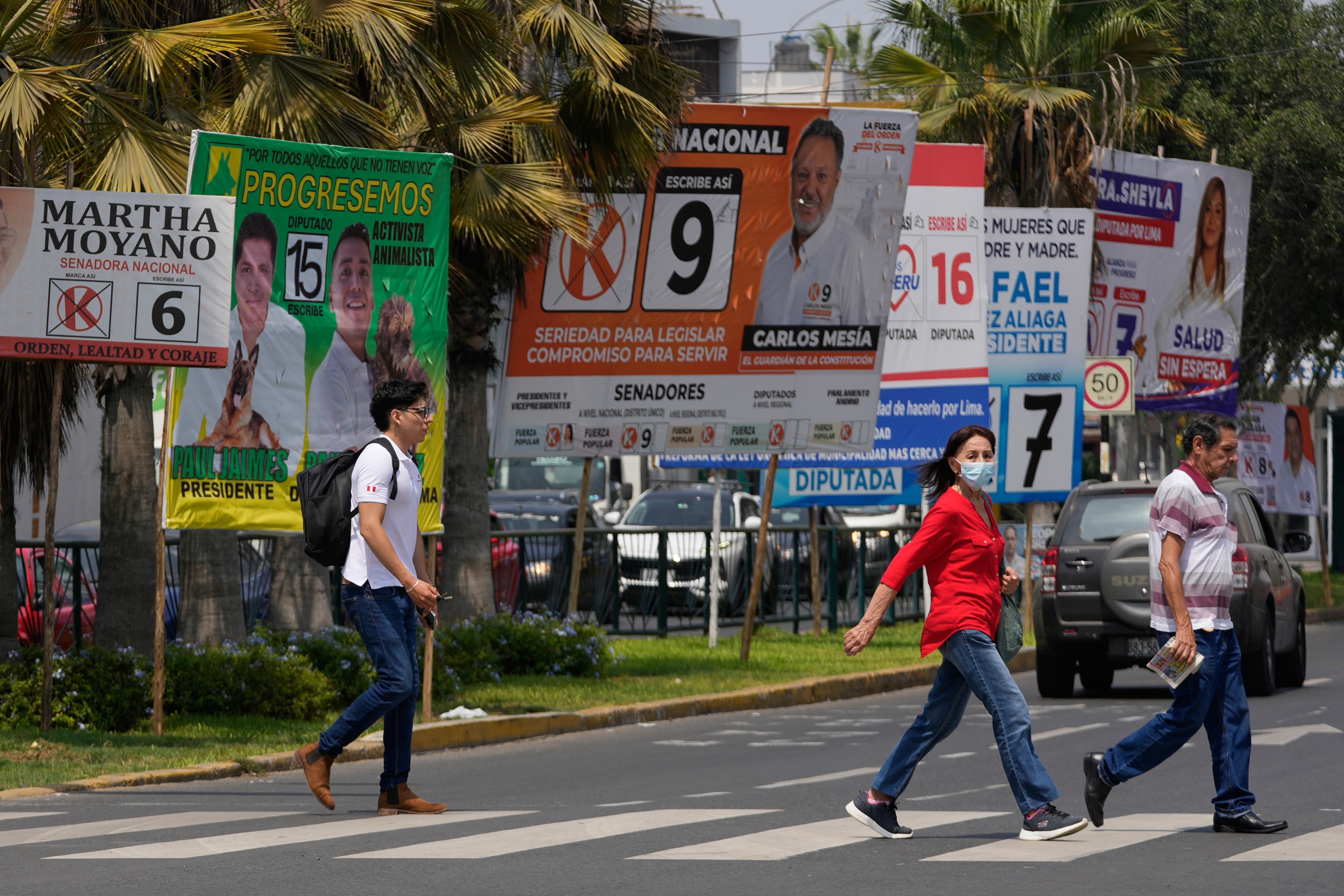
The air in Lima doesn’t just carry the scent of sea salt and exhaust. It carries a heavy, metallic taste—the tang of uncertainty. If you stand on a street corner in the Miraflores district or climb the dusty, vertical slopes of the pueblos jóvenes, you will hear the same sound. It isn't the sound of a campaign rally. It is the sound of metal shutters rattling closed.
Shopkeepers lock their gates at three in the afternoon. They aren’t just afraid of the thieves; they are afraid of the vacuum. In Peru, the presidency has become a revolving door so slick with scandal that the office itself feels like a haunting. We are a nation looking for a leader, but we keep finding ghosts, or worse, inmates. For an alternative look, consider: this related article.
The Weight of the Sash
To understand the chaos of the upcoming election, you have to look at the presidential sash. In most countries, it is a symbol of pride. In Peru, it looks more like a target.
Consider the math of the last decade. Since 2016, Peru has cycled through six presidents. Read that again. Six. Some lasted years, one lasted less than a week. We have reached a point where the average lifespan of a Peruvian presidency is shorter than a standard car lease. Similar analysis on this trend has been published by Al Jazeera.
When a country changes leaders that often, the government ceases to be a machine that provides water, roads, or safety. It becomes a frantic game of musical chairs. While the politicians in Congress argue over constitutional technicalities and impeachment motions—locally known as vacancia—the man selling empanadas in the Plaza San Martín is wondering if he can afford the bribe the local gang will demand tomorrow.
The tragedy isn't just the corruption. It’s the exhaustion.
A Hypothetical Choice in a Real Storm
Let’s look at Maria. She isn't a real person, but she is every person. She lives in San Juan de Lurigancho. Every morning, she spends two hours on a bus to reach a kitchen where she scrubs floors. Maria represents the "invisible stakes." To her, the "Political Crisis" isn't a headline in a newspaper. It is the reason her neighborhood hasn't seen a new police patrol in three years.
When the state is busy eating itself, the criminals move in to fill the space.
Peru is currently facing a surge in extortion that would have been unthinkable twenty years ago. It isn't just the big businesses. It’s the school bus drivers. It’s the grandmother running a bodega out of her living room. They receive a WhatsApp message with a photo of their front door and a demand for 500 soles. If they don't pay, the "punishment" follows.
The upcoming election is framed by the media as a battle between the Left and the Right. That is a lie. It is a battle between the desperate and the indifferent.
The Anatomy of the Chaos
Why can’t we just pick someone and stay with them?
The problem lies in a fragmented political system that rewards small, radical parties over broad coalitions. Our Congress is a sea of tiny factions, each one acting like a feudal lord. They use the "moral incapacity" clause in the constitution—a vague, 19th-century relic—as a scalpel to remove any president who doesn't play ball.
It is a cycle of revenge.
President A tries to reform the mines.
Congress B impeaches President A.
Vice President C takes over, is immediately investigated for a bribe taken in 2012, and resigns.
The people take to the streets.
The police use tear gas.
The cycle resets.
This isn't just "political instability." It is a slow-motion car crash where the passengers are 34 million people. We have seen our poverty rates climb back up after years of miraculous decline. We have seen the "Peruvian Miracle"—the economic boom of the early 2000s—evaporate into the gray mist of the Andes.
The Shadow of the Past
You cannot talk about a Peruvian election without talking about the ghosts of the 1990s. The name Fujimori hangs over every ballot box like an ancestral curse. To some, it represents the iron fist that stopped hyperinflation and terrorism. To others, it represents the death of democracy and the birth of a kleptocracy.
But there is a new shadow now. It is the shadow of the "outsider."
Because the established parties have failed so spectacularly, the Peruvian voter has developed a dangerous appetite for the unknown. We look for a savior who has never held office. We look for a "strongman" who promises to sweep the streets with fire. It is a romantic, terrifying impulse. We are so tired of the liars we know that we are willing to gamble on the liars we don't.
The Invisible Stakes of the Ballot
What happens if we get it wrong again?
The stakes are not found in the GDP growth charts or the diplomatic cables from Washington. The stakes are found in the eyes of the young people in Lima who are currently lining up outside the Spanish embassy.
Brain drain is a sterile term for a visceral tragedy. It means the doctors we trained are leaving. It means the engineers who should be fixing our crumbling infrastructure are moving to Santiago or Madrid. They aren't leaving because they don't love Peru. They are leaving because they are tired of living in a country that feels like a house on fire where the firemen are busy stealing the silverware.
The crime wave is the final straw. When you combine political paralysis with a lack of physical safety, you get an exodus.
The Candidate’s Dilemma
In the coming months, dozens of candidates will appear on our television screens. They will wear traditional ponchos in the highlands and crisp white shirts on the coast. They will promise to end the "chaos." They will promise "law and order."
But how do you build law and order in a system where the judges are afraid of the politicians, and the politicians are afraid of the jails?
Our last several presidents have all faced the same fate. One committed suicide before the police could put the handcuffs on him. Others sit in the Barbadillo prison, a small facility designed specifically to hold former heads of state. It is perhaps the only "growth industry" left in the capital.
The Emotional Core of the Vote
If you sit down with a voter in a market in Arequipa, they won't talk to you about macroeconomics. They will talk to you about dignity.
There is a profound sense of betrayal in the Peruvian soul. We were told we were the rising stars of South America. We have the best food in the world, the most breathtaking history, and a resilient, hardworking population. We did our part. We worked the fields, we opened the small businesses, we sent our children to school.
But the leadership failed the people.
The upcoming election isn't about choosing a platform. It is about trying to find a heartbeat in a body politic that feels brain-dead. We are looking for someone who won't just survive the next five years, but someone who will make the office of the presidency mean something more than a preliminary hearing.
Beyond the Noise
The news will tell you about the polls. They will tell you who is leading in the "flash" surveys. They will analyze the "anti-vote"—the percentage of people who say they would never vote for a specific candidate. In Peru, the "anti-vote" is often larger than the "pro-vote." We don't vote for people anymore. We vote against our greatest fears.
But the real story is simpler.
It is the story of a nation that is holding its breath. We are waiting to see if we can finally break the loop. We are waiting to see if a leader can emerge who is bigger than the scandals, bigger than the vengeance of Congress, and strong enough to look the extortionists in the eye.
The metallic taste in the air isn't going away. Not yet.
On election day, millions of Peruvians will walk past the closed shutters of the shops, past the walls covered in the faded posters of presidents past, and they will pick up a pen. It is a small, plastic tool. In any other country, it is a mundane object. In Peru, it is a needle used to stitch a wounded country back together, one trembling line at a time.
We aren't looking for a hero. We would settle for a person who stays in the room until the lights go out.