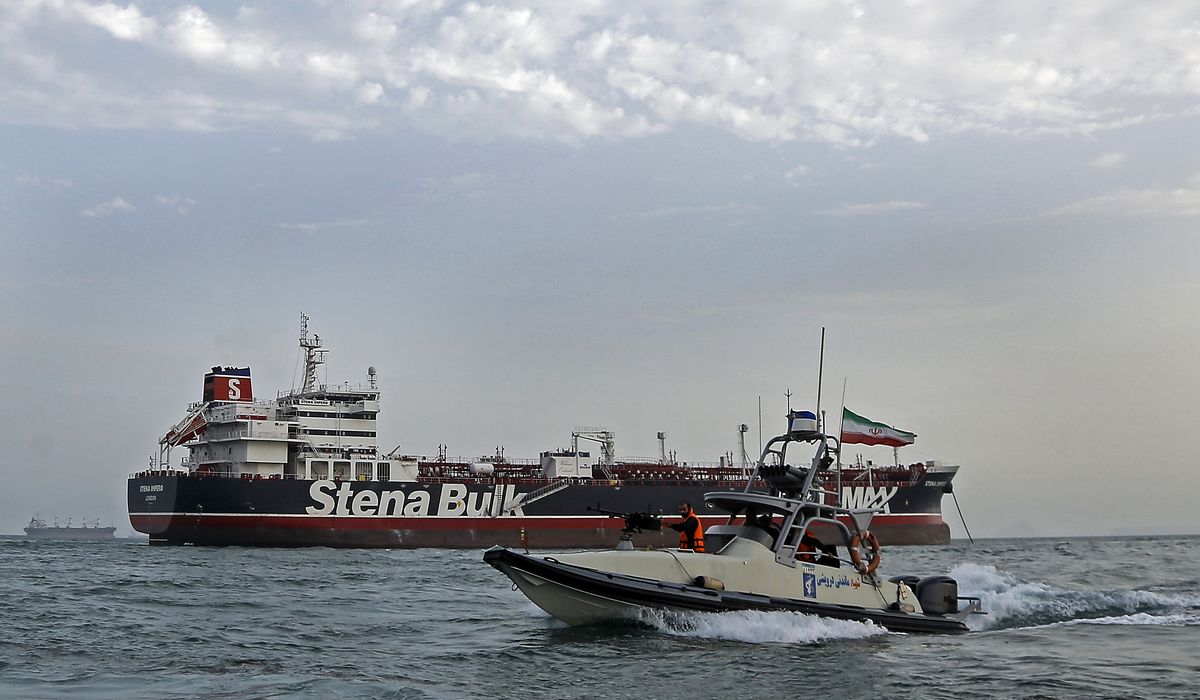
The financial press is currently obsessed with the narrative that Tehran has pulled off a masterstroke by taxing the Strait of Hormuz. They paint a picture of a cornered economy finally finding its "liquid gold" through a maritime toll, bypassing the grind of U.S. sanctions. It makes for a great David vs. Goliath headline. It’s also fundamentally wrong.
If you believe Iran is "earning" revenue through a blockade-defying toll, you don’t understand how global shipping works, nor do you understand the physics of sovereign risk. This isn't a revenue stream. It’s a desperate, short-term liquidation of diplomatic capital that will cost ten times what it collects in the long run.
The Myth of the Sovereign Gatekeeper
The prevailing "lazy consensus" suggests that because Iran sits on the northern bank of the world's most vital chokepoint, it can simply set up a digital cash register and collect a fee from the 20 million barrels of oil passing through daily. Proponents of this view point to the Suez Canal as a blueprint.
Here is the nuance the "experts" missed: The Suez Canal is a service. The Strait of Hormuz is a right.
Under the United Nations Convention on the Law of the Sea (UNCLOS), the Strait is governed by the regime of "transit passage." Ships have a right to pass through as long as they are continuous and expeditious. While Iran has not ratified UNCLOS, it is bound by the customary international law that mirrors these provisions. When you start charging for "passage" under the guise of environmental fees or security taxes, you aren't running a business. You are committing a slow-motion act of piracy.
I’ve seen commodity desks lose their shirts betting on "disruption premiums" that never materialize because they overestimate a nation's ability to tax what it doesn't own. You cannot "leverage" a geographic accident into a sustainable GDP growth plan when the entire world’s navy is parked in your driveway.
The Math of Dead Weight Loss
Let's look at the actual numbers, not the projected fantasies. The touted "toll" is often framed as a percentage of cargo value or a flat fee per Gross Tonnage (GT). On paper, collecting even $0.50 per barrel seems like a billion-dollar windfall.
In reality, the friction costs destroy the gain.
- Insurance Spikes: The moment a mandatory "toll" is enforced by the IRGC, Lloyd’s of London and the International Group of P&I Clubs don't just shrug. They reclassify the entire zone as a war risk area.
- The Discount Factor: To keep buyers willing to risk the Hormuz gauntlet, Iran has to offer even steeper discounts on its own crude to compete with Iraqi or Emirati barrels that might find alternative routes through the East-West Pipeline.
You aren't making money if you collect $500,000 in tolls but have to drop your oil price by $5.00 a barrel to keep your Chinese customers from looking at Russian or African alternatives. It’s a net-negative trade. It’s the equivalent of a store charging a "door fee" while the building is on fire; you might get a few bucks from the people trapped inside, but nobody is coming back tomorrow.
The Shadow Fleet Fallacy
A major argument in the competitor's piece is that the "Shadow Fleet"—the gray-market tankers moving sanctioned oil—will happily pay the toll to ensure protection. This is a fundamental misunderstanding of the gray market.
The Shadow Fleet exists to minimize footprints. These vessels operate with switched-off transponders (AIS), spoofed locations, and fraudulent registries. The last thing a ghost ship wants is a digital paper trail or a formal transaction with a sanctioned central bank in Tehran. By forcing these ships to pay a toll, Iran is effectively unmasking the very network it spent a decade building to circumvent the U.S. Treasury.
You are burning your own infrastructure for a handful of rials. It is a strategic blunder of the highest order.
Infrastructure is Not Control
Critics often ask: "Well, if they can't charge a toll, why are they building the Jask oil terminal?"
The answer is the exact opposite of what you’ve been told. Iran isn't building Jask—located outside the Strait in the Gulf of Oman—to reinforce its control over Hormuz. It is building it because it knows the Strait is a liability.
If you truly controlled the gate, you wouldn't spend billions building a back door. The Jask terminal is a confession. It is an admission that the Strait of Hormuz is a trap for the Iranian economy, not a weapon. By moving its export point outside the chokepoint, Tehran is trying to insulate its own exports from the very "blockade" or "toll" chaos it threatens to unleash on everyone else.
The Sovereignty Tax
Every time an Iranian official mentions a toll, the "sovereignty tax" goes up. This isn't a line item on a budget; it's the cost of doing business when the world thinks you're a rogue actor.
Think about the mechanics of the payment. How does a Greek-owned, Liberian-flagged tanker carrying Saudi crude pay a toll to a sanctioned Iranian entity without triggering a secondary sanction from OFAC? They can't.
So, the "revenue" consists of:
- Barter arrangements with desperate actors.
- Seized assets that are tied up in legal limbo for years.
- Cryptocurrencies that are notoriously difficult to offramp into the food and medicine the Iranian population actually needs.
Stop Asking if They Can Collect
The question isn't whether Iran can collect money at the point of a gun. Of course they can. The question is whether that money is worth the total isolation of their maritime sector.
When you disrupt the "freedom of navigation," you don't just annoy the U.S. Navy. You alienate China—the largest importer of oil through the Strait. Beijing does not want a "partner" who adds a tax to its energy supply chain. They want a gas station that stays quiet and keeps the pumps running.
By pushing this toll narrative, Iran is poking its only remaining customers in the eye. It is the ultimate "penny wise, pound foolish" maneuver.
The Hard Truth of Maritime Power
Real power in the Strait isn't the ability to stop a ship; it's the ability to keep it moving.
The British Empire didn't dominate the seas by charging tolls at every rock they owned; they dominated by ensuring that everyone else could trade safely, provided they played by British rules. Iran is attempting the inverse. They are trying to extract rent from a system they don't support and can't maintain.
If you're an investor or a policy analyst looking at these "toll revenues" as a sign of Iranian resilience, you're being played. You're looking at the smoke and calling it an engine. The reality is a desperate regime cannibalizing its future for a headline-friendly "win" that won't even cover the cost of the missiles used to enforce it.
The Strait isn't a cash cow. It's a noose. And every time Tehran tightens the toll, they’re just pulling the chair out from under themselves.