Wall Street analysts are paid to sell you sunshine while the roof is leaking. When you see a headline shouting about "top picks" for "enhanced returns" through dividends, you aren't looking at a wealth-building strategy. You are looking at a marketing brochure for capital stagnation.
The consensus is lazy. It suggests that in a volatile market, you should hunker down in high-yield stocks, collect your 5% or 7% check, and wait for the storm to pass. This isn't investing; it's a security blanket. If you want to actually build wealth, you need to stop obsessing over the yield and start looking at the destruction of value happening beneath the surface.
The Dividend Irrelevance Reality Check
Most retail investors treat a dividend like a gift from a generous uncle. It isn't. It is a forced liquidation of your position.
Mathematically, the value of a firm is the present value of its future cash flows. When a company pays a dividend, that cash leaves the balance sheet. The stock price adjusts downward by the dividend amount on the ex-dividend date. You haven't "earned" anything; you've just been handed a piece of the company you already owned, now with a tax bill attached.
$V_{ex} = V_{cum} - D$
In this basic identity, $V_{ex}$ is the price after the dividend, $V_{cum}$ is the price before, and $D$ is the dividend. If you are in a taxable account, you just paid the government for the privilege of having your share price lowered. This is the Dividend Irrelevance Theory, pioneered by Modigliani and Miller. While Wall Street pretends this doesn't exist to keep you buying "income" products, the math doesn't lie.
The Yield Trap is a Value Graveyard
Analysts love to point at "Dogs of the Dow" or high-yield REITs as "safe havens." I have seen portfolios decimated because an investor chased an 8% yield into a company whose business model was being disrupted by a teenager in a garage.
A high yield is often a distress signal, not a sign of strength. The yield is a function of the price. If the yield is soaring, it’s usually because the market is pricing in a dividend cut or a total collapse of the underlying equity.
- The Payout Ratio Lie: Analysts talk about payout ratios as a safety metric. They’re looking at the rearview mirror. A 60% payout ratio looks "safe" until a single quarter of earnings compression turns it into 110%.
- CapEx Starvation: When a company commits to a high dividend, it often does so by starving its own R&D. You are betting on a company that has admitted it has no better use for its cash than giving it back to you. They have stopped growing. They have surrendered.
- The Debt Spiral: I’ve watched management teams take on debt just to maintain a dividend streak to keep their "Dividend Aristocrat" status. It is corporate vanity at its most lethal.
The Opportunity Cost of "Safety"
The obsession with "income" stocks usually comes at the expense of total return. Total return is the only metric that matters.
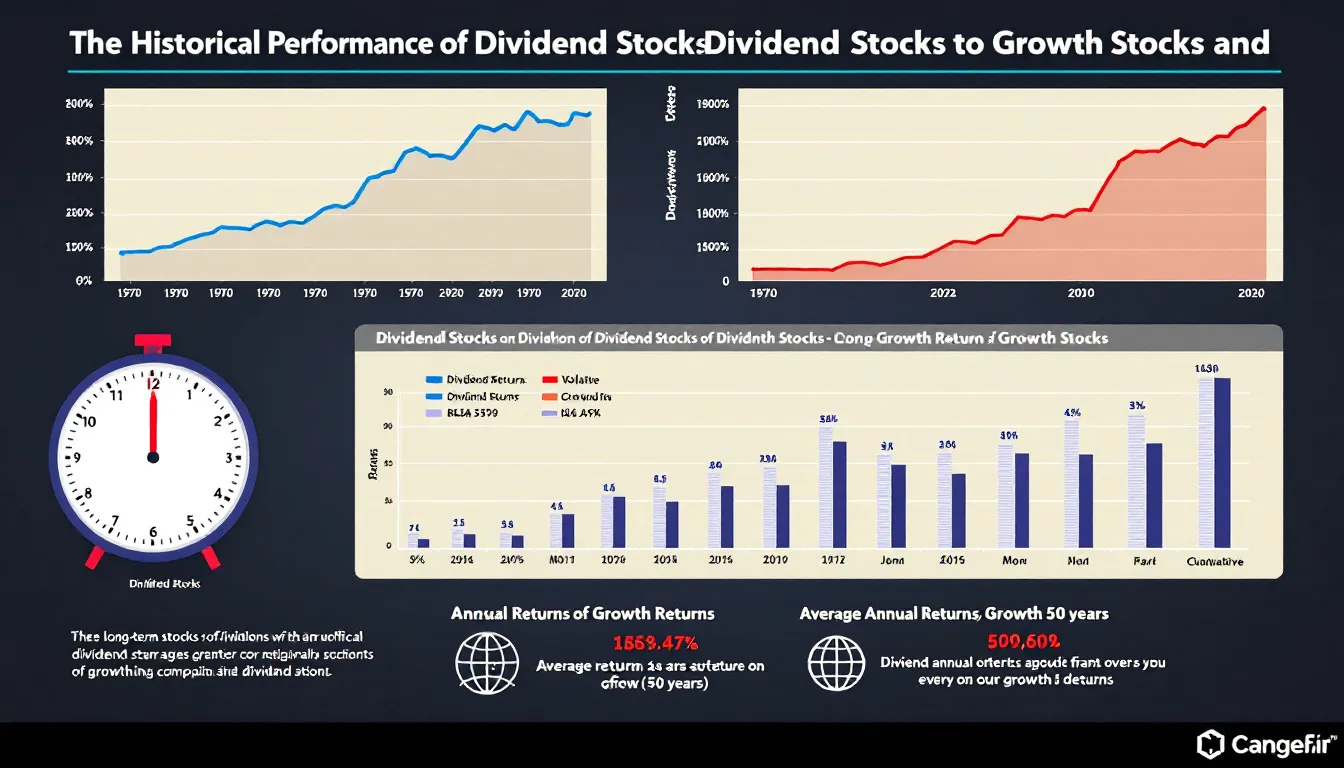
Consider the "safe" dividend plays of the last decade compared to companies that aggressively reinvested their capital. While the income investor was bragging about their 4% yield, the growth investor was seeing 15% compounded annual growth.
The Real Cost of Dividends
| Feature | High Dividend "Safety" | Aggressive Reinvestment |
|---|---|---|
| Tax Efficiency | Poor (Immediate Tax) | High (Deferred until Sale) |
| Compounding | Interrupted by payouts | Uninterrupted |
| Capital Growth | Slow to stagnant | Exponential potential |
| Management Mindset | Defensive/Preservation | Offensive/Expansion |
If you are 45 years old and "investing for income," you are effectively retiring thirty years too early. You are trading the most powerful force in the universe—uninterrupted compounding—for a quarterly check that you probably don't even need to spend yet.
Buybacks: The Superior, Hated Sibling
Wall Street analysts often downplay share buybacks because they aren't as "tangible" to the average retiree. But for the sophisticated investor, buybacks are almost always superior to dividends.
When a company buys back its own shares, it reduces the share count. This increases your proportional ownership of the company without you having to lift a finger or pay a cent in taxes. It’s a "stealth" dividend that doesn't trigger a taxable event until you decide to sell.
If a company has $100 in earnings and 100 shares, the EPS is $1. If they buy back 10 shares, the EPS becomes $1.11. Your slice of the pie just grew.
How to Actually Spot Value (Stop Looking at Yield)
If you must hunt for yield, stop looking at the percentage on the ticker. Look at the Free Cash Flow (FCF) Yield.
$$FCF \text{ Yield} = \frac{\text{Free Cash Flow per Share}}{\text{Price per Share}}$$
This tells you how much actual cash the business is generating relative to its price. A company with a 3% dividend but a 12% FCF yield is a fortress. They have the "dry powder" to pivot, acquire, or weather a storm. A company with a 7% dividend and a 5% FCF yield is a zombie. They are liquidating themselves to keep you happy.
The Psychological Trap of the "Passive Income" Myth
The term "passive income" has become a toxic buzzword. It suggests that you can just set a portfolio on cruise control and live off the checks. This mindset leads to complacency.
I’ve seen investors hold onto declining assets like AT&T for years because they "liked the dividend," while the principal value of their investment eroded by 30%. They weren't making money; they were just getting their own capital back in installments while the core asset rotted.
Stop Asking "What is the Yield?"
The wrong question is "What is the yield?" The right question is "What is management's hurdle rate for new capital?"
If a company can reinvest $1 and turn it into $1.20 within a year, I don't want a single penny in dividends. I want them to keep every cent. If they can't find a way to grow that dollar, only then should they give it back. Most "top analyst picks" are companies that have reached the end of their innovation lifecycle. They are the dinosaurs of the S&P 500.
The Brutal Truth for Income Seekers
If you are retired and need the cash to pay for groceries, fine. Take the dividend. But realize you are paying for that convenience with your total net worth.
For everyone else: A dividend is an admission of defeat. It is management saying, "We don't know what to do with this money to make it grow, so here, you take it."
Don't celebrate the dividend. Question why the company has run out of ideas.
Kill the "income" mindset. Focus on Owner Earnings. Focus on Return on Invested Capital (ROIC).
Stop being an income collector and start being a business owner.
If you want a check every month, get a job. If you want to build a legacy, stop chasing yields and start chasing growth.
The analysts won't tell you this because they need you to keep churning through their "top picks." I'm telling you this because your portfolio is bleeding out while you're distracted by a 5-cent-per-share payout.
Pick your side: the check-clipper or the wealth-builder. You cannot be both.