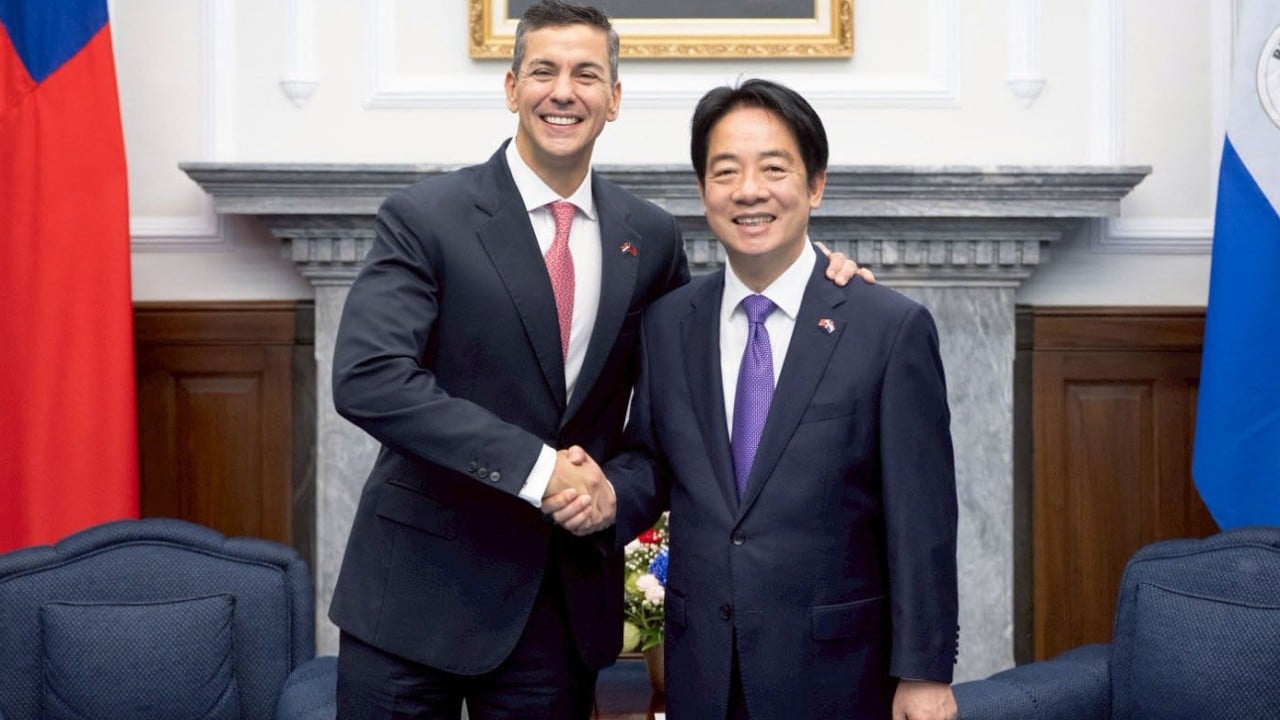
The Mercosur Lone Wolf
As the geopolitical rift between Washington and Beijing widens, Paraguay stands as a curious, stubborn anomaly. It is the last nation in South America to maintain formal diplomatic ties with Taiwan, a stance that has transformed the landlocked country into a central theater for "checkbook diplomacy." Beijing recently sharpened its rhetoric, labeling Paraguayan leadership as "chess pieces" following a high-profile visit to Taipei. This is not merely a spat over protocol. It is a fundamental struggle over who will dictate the economic future of the Southern Cone.
For Paraguay, the cost of this loyalty is measurable in billions of dollars in missed infrastructure projects and restricted access to the world’s largest consumer market. For China, Paraguay represents a frustrating gap in its Belt and Road Initiative, a missing piece in a continental puzzle that is nearly complete. The tension has reached a boiling point because the trade-offs are no longer theoretical. They are hitting the ledgers of Paraguayan ranchers and soybean farmers who watch their neighbors in Brazil and Argentina profit from direct Chinese investment.
Sovereignty or Subsidy
The administration in Asunción argues that their relationship with Taiwan is built on shared democratic values and a history of mutual support. Taiwan provides significant aid, technical assistance in agriculture, and educational scholarships. However, the scale of this assistance is a drop in the bucket compared to what Beijing offers. China does not just offer aid; it offers massive credit lines for hydroelectric dams, highways, and telecommunications networks.
Beijing’s strategy is simple. By framing Paraguayan officials as puppets or "chess pieces," they aim to undermine the domestic legitimacy of the current government. They want the Paraguayan public to see their leaders not as principled defenders of democracy, but as obstacles to national prosperity. It is a psychological operation designed to turn the powerful agricultural lobby against the political establishment.
The math is brutal. Paraguay is one of the world's top exporters of soybeans and beef. Currently, these products often reach Chinese markets through intermediaries, which eats into profit margins. Direct trade would be a windfall. The question for the Paraguayan state is whether the sovereignty of choosing their allies is worth the "China Tax" they effectively pay every year in lost opportunity.
The Washington Shadow
You cannot talk about the Paraguay-Taiwan-China triangle without looking toward the United States. Paraguay’s persistence in recognizing Taiwan is a major strategic win for U.S. interests in the region. It prevents China from having a clean sweep of diplomatic influence in South America and maintains a pro-Western foothold in a region that has drifted toward non-alignment.
Washington rewards this stance with security cooperation and preferential treatment in certain trade programs, but the U.S. has been slow to match the sheer volume of capital that China can deploy. If the U.S. wants Paraguay to remain a "loyal ally," it needs to provide more than just diplomatic praise. It needs to facilitate private sector investment that can compete with the state-backed juggernauts of the Chinese construction industry.
The current geopolitical friction isn't just about Taiwan's status. It's about the standard of living in the heart of South America. When a Paraguayan farmer looks at a new bridge in Brazil funded by Chinese banks, the abstract concept of "democratic solidarity" starts to feel very expensive.
The Meat and Soy Lobby
Power in Paraguay does not reside solely in the presidential palace. It sits in the hands of the Rural Association of Paraguay (ARP) and the massive agribusiness cooperatives. These groups are increasingly vocal about the need for "pragmatism." They see the world through the lens of commodities and logistics.
To these stakeholders, the "chess piece" insult from Beijing is a signal. It tells them that the door to the East is open, provided the political landscape shifts. There is a growing consensus among the elite that the country is being left behind. While Uruguay and Ecuador move toward free trade agreements with China, Paraguay remains tethered to a diplomatic policy established during the Cold War.
Infrastructure as a Weapon
China’s primary tool for diplomatic flipping is the promise of infrastructure. In Paraguay, the infrastructure needs are immense. The country shares the massive Itaipu Dam with Brazil, but it lacks the modern industrial base to fully capitalize on its cheap energy. Beijing knows this. They have hinted at financing industrial parks and technology hubs that would transform Paraguay from a raw material exporter into a regional manufacturing player.
This isn't charity. It's a debt-trap risk that many other nations have encountered, but for a developing nation, the immediate influx of cash is often more persuasive than long-term warnings about fiscal sovereignty.
The Taiwan Response
Taiwan is not sitting idly by. They have shifted their strategy from simple aid to "investment-led diplomacy." They are encouraging Taiwanese companies to relocate factories to Paraguay to take advantage of the country's low taxes and young workforce. The goal is to create high-quality jobs that make the relationship indispensable to the average Paraguayan voter.
The "Chess Piece" narrative is an attempt by Beijing to simplify a complex, multi-layered survival strategy into a story of manipulation. Paraguay’s leaders are not pawns; they are high-stakes gamblers. They are betting that they can leverage their unique position to extract maximum concessions from Taiwan and the United States, while keeping the door just a crack open for China.
The Mercosur Complication
Paraguay’s stance also creates friction within Mercosur, the regional trade bloc. Brazil and Argentina have deep ties with China. When Paraguay blocks bloc-wide negotiations with Beijing due to its recognition of Taiwan, it creates internal resentment. This isolation is dangerous. If Paraguay becomes a pariah within its own neighborhood, the pressure to flip will become irresistible.
The internal politics of the bloc are shifting. With leaders like Lula in Brazil prioritizing South-South cooperation, Paraguay finds itself increasingly at odds with the regional consensus. The "chess piece" comment was likely intended as much for a regional audience as a domestic one, reinforcing the idea that Paraguay is an outlier preventing the continent from achieving its full economic potential.
Strategic Ambiguity is Dead
The era of trying to please everyone is over. Beijing has made it clear that "neutrality" is not an option. You are either with the "One China" policy, or you are an adversary. This binary choice is forcing Paraguay into a corner where it must decide if its diplomatic identity is a luxury it can still afford.
The rhetoric will only get sharper. As elections approach and economic cycles fluctuate, the debate over Taiwan will become the defining issue of Paraguayan foreign policy. The "chess piece" label is a warning shot. It signifies that China is losing patience and is ready to use its full economic weight to force a resolution.
Paraguay is currently holding a weak hand against a global superpower, and the only way to stay in the game is to convince its Western partners that the price of their loyalty just went up. If the United States and Taiwan cannot provide a credible economic alternative to the Chinese windfall, the "chess piece" might eventually decide that it is tired of the game and move itself across the board.