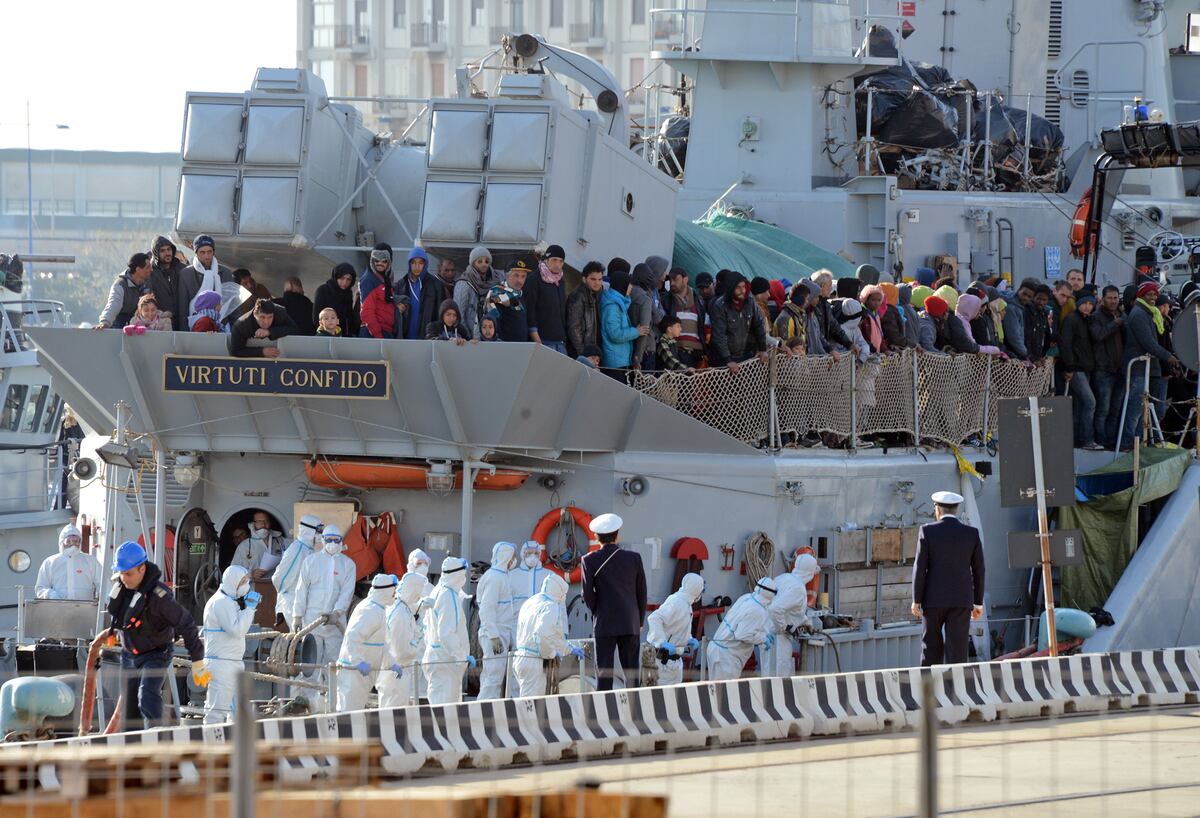
In the predawn mist of a Madrid morning, before the metro begins its rhythmic screeching and the scent of toasted churros fills the air, thousands of men and women are already moving. They are the invisible gears of the city. They scrub the floors of corporate offices where they aren’t allowed to work. They harvest the bright red tomatoes in Almería that feed the rest of Europe. They change the linens of the elderly in quiet apartments, offering a gentle touch to hands that no longer remember their names.
For years, these people have existed in a strange, liminal state. They are physically present but legally absent. They have heartbeats, fingerprints, and histories, yet on paper, they are ghosts. For another perspective, check out: this related article.
Spain just decided to change that.
With a stroke of legislative intent, the Spanish government has launched a massive regularization process aimed at 500,000 undocumented migrants. This isn't just a policy shift. It is a tectonic movement in the way a modern nation-state views the people who have been hiding in plain sight. Further reporting on this trend has been shared by The New York Times.
The Ledger of the Unseen
Consider a woman we’ll call Amina. This is a hypothetical name, but her story is replicated in every corner of the Iberian Peninsula. Amina arrived three years ago. She has worked every single day since then. She pays for her groceries, she pays her rent in cash, and she contributes to the local economy. But because she lacks a "papel"—the document—she cannot access the social security system. She cannot sign a formal labor contract. If she is underpaid, she has no recourse. If she is injured, she relies on the grace of strangers.
Spain's new reform targets exactly this vulnerability. Under the new rules, the path to residency has been shortened and the barriers lowered. Migrants who have lived in the country for at least two years can now access work permits more easily, whether they are self-employed or working for a business.
The logic is brutally simple: Why keep half a million people in the shadows when they are already the backbone of your service and agricultural industries?
Spain is facing a demographic winter. The birth rate is plummeting. The population is aging. Without a steady influx of young, able-bodied workers, the pension system—the very promise of a dignified old age for Spanish citizens—threatens to collapse. By bringing 500,000 people into the light, the government isn't just performing an act of charity. They are performing an act of survival. They are turning "ghosts" into taxpayers.
The Resistance of the Walls
Changing the law is the easy part. Changing the culture is where the friction begins.
There is a palpable tension in the plazas of Seville and the bars of Bilbao. You can hear it in the hushed conversations over coffee. People ask: "Is this a pull factor? Will more boats arrive on the shores of the Canary Islands because they know a permit awaits them?" It is a valid fear, or at least a deeply human one. The instinct to protect one's borders is as old as the concept of home itself.
But the reality on the ground tells a different story. People do not risk their lives on "cayucos"—flimsy wooden boats—because of a specific tweak in Spanish residency law. They do it because the alternative is a slow death of opportunity in their homelands. They are already here. They have been here.
The regularization doesn't invite 500,000 new people; it acknowledges the 500,000 who are already eating at the next table, sitting on the same bus, and picking the fruit in the supermarket aisles. It is an admission that the walls we build are often made of paper, and those paper walls have finally crumbled under the weight of economic necessity.
The Mechanics of Belonging
How does one stop being a ghost?
The new framework simplifies the "Arraigo"—the concept of "rooting" oneself in Spanish society. Previously, the requirements were a labyrinth of bureaucracy that could swallow a person whole. You needed three years of residence, a full-year contract, and a mountain of evidence that often felt designed to fail.
Now, the focus shifts toward training and integration. There is a new category: "Arraigo para la Formación." It allows migrants to stay legally if they commit to vocational training in sectors where Spain desperately needs workers. Think of it as a social contract. The state says: "Learn how to build our houses, fix our cars, or nurse our sick, and we will give you a place to belong."
This is where the business community finds common ground with the human rights activists. Employers in the hospitality and construction sectors have been screaming for help. They have jobs. They have people willing to do them. Until now, the law was the only thing standing in the way of a paycheck and a tax contribution.
The Weight of a Signature
Imagine the moment a man who has spent five years looking over his shoulder every time he sees a police uniform finally walks into a government office. He holds a folder of documents—utility bills, a rental agreement, a certificate from a local language class. He hands them over.
There is a silence as the official reviews the papers. Then, the stamp.
In that instant, the man's world expands. He can open a bank account. He can rent an apartment in his own name rather than subletting a mattress in a crowded room. He can visit his family back home and know that he will be allowed to return to his life in Spain. He is no longer a "migrant" in the pejorative sense; he is a resident.
The emotional relief of this transition is impossible to quantify in a budget report. It is the lifting of a low-grade, constant fever of anxiety. It is the ability to plan for next year, rather than just next Tuesday.
A Gamble on Human Potential
Spain is taking a gamble that much of the rest of the West is too terrified to attempt. While other nations are tightening borders and leaning into the rhetoric of exclusion, Madrid is betting on the power of integration. They are betting that a person with a legal stake in society will contribute more, care more, and build more than a person who is forced to live in the margins.
The stakes are immense. If this works, Spain becomes the blueprint for a grey-haired Europe. It proves that migration can be managed not just as a crisis to be diverted, but as a resource to be embraced. If it fails—if the infrastructure of health and education cannot buckle under the new official numbers—it will provide fuel for the very movements that wish to see these 500,000 people gone.
But walk through the Lavapiés neighborhood in Madrid. Look at the faces. The world is already there. The colors, the languages, the smells of cumin and saffron blending with the local air. The integration has already happened in the streets; the law is simply catching up to the reality of the sidewalk.
There is a particular kind of silence that follows a long-overdue decision. It isn't the silence of emptiness, but the silence of a held breath finally being released. Across the country, in greenhouses, in kitchens, and in construction sites, half a million people are breathing a little deeper today. They are looking at their hands—the hands that have built, cleaned, and served—and realizing that for the first time, those hands are officially recognized as part of the nation they call home.
The ghosts are gone. In their place are 500,000 neighbors, finally allowed to say their names out loud.