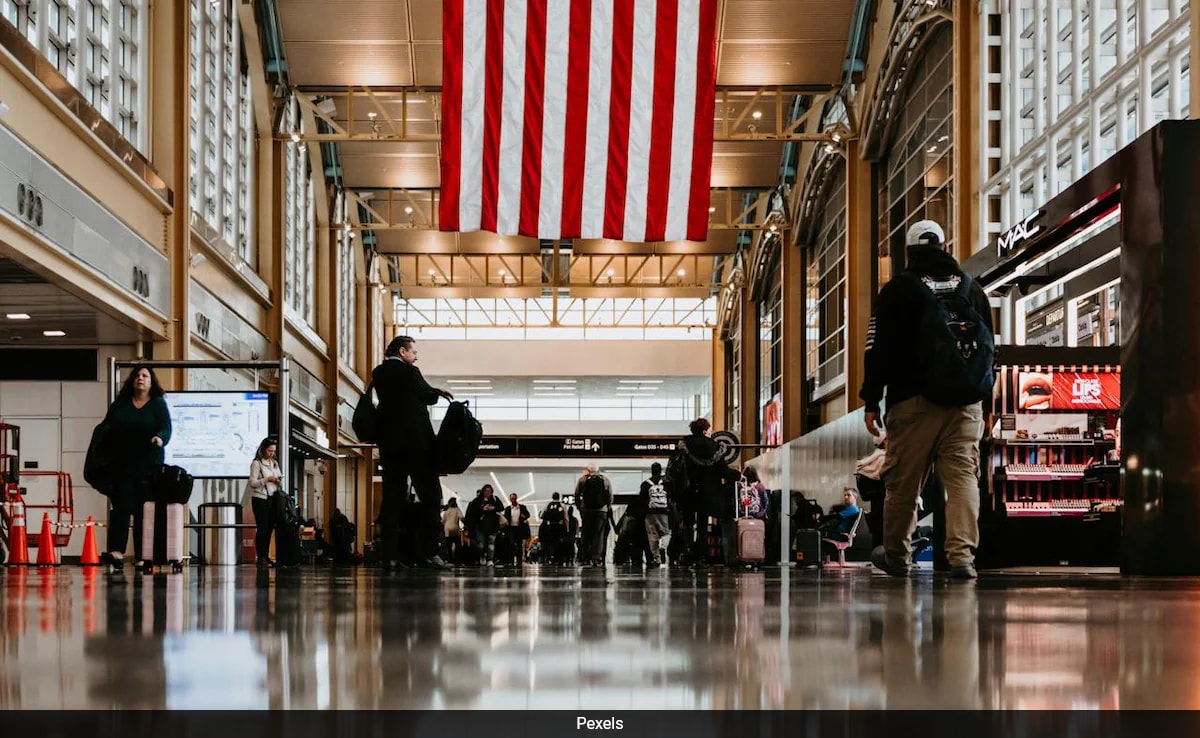
The proposed three-year suspension of H-1B visa issuances represents a fundamental shift from incremental immigration reform toward a protectionist labor market intervention. This strategy, introduced by key legislative aides within the current political cycle, seeks to force a decoupling between the domestic technology sector and international human capital. To evaluate the efficacy of such a pause, one must analyze the interaction between labor supply elasticity, corporate overhead, and the structural dependencies of the United States innovation economy.
The Triple-Axis Impact of a Visa Moratorium
The proposed "pause" functions as an exogenous shock to the labor market, operating across three distinct economic axes: the immediate talent bottleneck, the long-term capital flight risk, and the valuation of domestic wage floors.
1. The Domestic Wage Displacement Mechanism
Proponents of the pause argue that the H-1B program creates an artificial ceiling on wages by introducing a high volume of skilled labor willing to accept lower compensation than the domestic market equilibrium. By removing the annual influx of 85,000 new H-1B recipients, the bill intends to tighten the supply of entry-level and mid-career software engineers, theoretically forcing firms to compete for resident talent through aggressive salary increases.
However, this logic assumes that domestic labor is perfectly fungible with international labor. In reality, the "skills gap"—the delta between the specific technical competencies required by high-growth firms and the existing qualifications of the domestic workforce—creates a non-linear relationship between visa counts and wage growth. If the domestic talent pool lacks the specific specialized certifications or experience levels required, a pause does not increase wages; it simply increases the "time-to-fill" metric for critical roles, leading to project stagnation.
2. Operational Hedging and Geographic Arbitrage
A three-year pause is long enough to alter corporate site-selection strategies. For a Fortune 500 technology firm, the inability to recruit globally into the United States does not necessarily result in hiring locally; it often results in the expansion of "near-shore" or "off-shore" engineering hubs.
The mechanism here is geographic arbitrage. If a firm cannot bring a specialized distributed systems engineer to Mountain View, they will establish a satellite office in Vancouver, Toronto, or London. This creates a permanent leak in the U.S. tax base. Once the infrastructure for an international hub is built, the firm is unlikely to shutter it even after the three-year pause expires. This represents a structural shift in where research and development (R&D) capital is deployed.
3. The Venture Capital Friction Point
Early-stage startups rely on the H-1B program to secure "10x" engineers during their most resource-constrained phases. Large-cap tech firms can weather a three-year pause by shifting resources to existing international offices. Startups lack this infrastructure. For a Seed or Series A company, the inability to hire the best possible candidate—regardless of nationality—can be the difference between achieving product-market fit and insolvency. A moratorium effectively raises the barrier to entry for new firms, inadvertently strengthening the monopolies of established incumbents who have the legal and operational reach to bypass domestic labor constraints.
Deconstructing the Proposed Legislative Pillars
The bill introduced by aides to the administration is not merely a pause; it is a recalibration of the "Prevailing Wage" system and the "Employer-Employee Relationship" definition. To understand the gravity of the proposal, we must quantify the specific changes to the H-1B lifecycle.
The Wage Level IV Mandate
The proposal suggests reclassifying the minimum salary requirements for H-1B holders. Currently, the Department of Labor (DOL) uses a four-tier wage system. By mandating that all H-1B holders be paid at the 70th or 90th percentile of the local market (Wage Level IV), the bill effectively turns the H-1B into a "high-earner" visa rather than a "general-skilled" visa.
The cost function for a company hiring an H-1B worker under these rules becomes:
$$Total Cost = Salary (Level IV) + Legal Fees + Compliance Audits + Training Tax$$
When the Total Cost exceeds the domestic market rate by a significant margin, the "foreign labor discount" is erased. While this achieves the goal of protecting domestic wages, it also disqualifies thousands of mid-tier firms from participating in the global talent market, concentrating talent in the hands of the "Magnificent Seven" tech giants who can afford the premium.
Elimination of the H-4 Work Authorization
A critical but often overlooked component of the proposed changes is the rescinding of work permits for H-4 visa holders (spouses of H-1B workers). From a behavioral economics perspective, this introduces a "household income penalty." If a highly skilled engineer from India or China is considering a three-year stint in the U.S. but their spouse is legally barred from working, the household's total utility decreases. This makes the U.S. a less attractive destination compared to Canada or Germany, where spousal work rights are standard.
Structural Dependencies and the Risk of "Brain Drain"
The U.S. university system acts as a massive funnel for global talent. Over 70% of full-time graduate students in computer science and electrical engineering at U.S. universities are international students.
The three-year pause creates a "blocked exit" in this funnel. If a student completes a PhD at Stanford or MIT but knows there is a zero-percent chance of obtaining a work visa upon graduation, their rational move is to repatriate or seek residency in a competing nation. This results in the U.S. subsidizing the elite education of workers who will then build the next generation of AI and biotech competitors in their home countries.
The economic cost is measured in "lost externalities." When a founder starts a company in the U.S., they create downstream jobs for domestic accountants, lawyers, recruiters, and office managers. If that founder is forced to start their company in Bangalore or Lisbon due to a visa pause, those secondary and tertiary jobs are lost to the U.S. economy forever.
The Logic of the "Merit-Based" Pivot
The aides behind the bill argue that the current H-1B lottery is flawed because it treats a person with a Master’s degree from a top-tier university the same as someone with basic technical training. They propose replacing the random lottery with a points-based system.
Points-Based Ranking Variables
A transition to a merit-based system would likely weigh the following variables:
- Education Level: PhD holders receiving maximum points.
- Salary Offer: Higher offers indicating higher market value.
- Age: Prioritizing younger workers with longer career horizons.
- English Proficiency: Reducing integration friction.
- Priority Sectors: Extra points for semiconductors, AI, and cybersecurity.
While a points-based system is more logically sound than a lottery, implementing it simultaneously with a three-year pause creates a vacuum. The pause stops the flow of talent, and by the time the points-based system is active, the global perception of the U.S. as a stable destination for high-skilled labor may have permanently shifted.
Quantitative Projections: The Three-Year Window
If the pause is enacted, the first twelve months will see a surge in "O-1" (Extraordinary Ability) visa applications as firms attempt to shoehorn top talent into more rigorous categories. By year two, we can expect a measurable decline in the growth rate of U.S.-based patent filings in the software sector. By year three, the "hiring debt" will have accumulated to approximately 255,000 unfiled H-1B slots.
This deficit will likely trigger a massive inflation in technical wages, but one that is decoupled from productivity. Firms will be paying more for the same—or lower—levels of output because they are restricted from optimizing their teams.
Strategic Recommendations for Corporate Leadership
- Immediate Diversification of Engineering Hubs: Firms should aggressively establish legal entities in "Tier 2" global cities (e.g., Warsaw, Guadalajara, or Ho Chi Minh City) to ensure continuity of talent pipelines.
- L-1 Visa Pathway Optimization: Since the pause primarily targets the H-1B, companies must utilize the L-1 (Intracompany Transferee) visa. This requires hiring international talent in foreign offices for at least one year before transferring them to the U.S.
- Automation of Mid-Tier Functions: The increased cost and scarcity of H-1B labor necessitate a pivot toward AI-assisted coding and automated DevOps to reduce the total headcount required for product maintenance.
The move to pause H-1B visas is a high-stakes gamble on the resilience of the domestic labor market. It assumes that the United States can maintain its technological hegemony while intentionally severing its access to the global talent pool. For the individual firm, the only viable strategy is to build a "borderless" operational model that treats U.S. residency as a luxury rather than a necessity for high-performance engineering.