The transition happens every Friday around 4:15 PM. You can feel it in the air—a collective, unspoken sigh that ripples through office buildings, suburban cul-de-sacs, and crowded commuter trains. It is the sudden, desperate realization that the coming forty-eight hours represent our only shield against the grinding routine of modern life.
We live in an era of constant digital noise and escalating costs. The price of a simple dinner out can trigger mild financial panic. Because of this, our backyards, balconies, and small patches of grass have quietly become the most valuable real estate we own. They are our sanctuaries. Yet, a strange cultural myth tells us that creating a personal oasis requires a massive renovation budget, a landscape architect, and a second mortgage.
That myth is wrong.
The real magic of a weekend doesn't require a grand reinvention. It requires a few deliberate, affordable changes that shift our physical environment from a place where we merely exist to a place where we actually live.
Consider a hypothetical homeowner named Marcus. On any given Friday, Marcus is exhausted. His backyard is currently a purgatory of patchy grass and a couple of faded plastic chairs. He wants to host his friends, he wants to read in the fresh air, and he wants his kids to look at something other than a glowing screen. But when he looks online for patio upgrades, he is met with thousand-dollar conversation sets and high-end bistro lighting packages. He closes the laptop, defeated. The weekend arrives, and nothing changes.
But what if the barrier to entry isn't a mountain of cash? What if the difference between a forgotten yard and a vibrant summer evening is a crisp twenty-dollar bill?
The Psychology of the Patio Light
To understand how to fix Marcus’s problem, we have to look at the psychology of space. Human beings are profoundly sensitive to lighting. Harsh overhead bulbs signal productivity and stress—think of a hospital wing or a corporate cubicle. Warm, low-key illumination signals safety, intimacy, and rest.
When you string a set of heavy-duty solar Edison bulbs across a rusted chain-link fence or weave them through the branches of an old oak tree, the physical boundaries of your yard disappear. At dusk, the darkness usually swallows the grass, shrinking your world to the view from your kitchen window. But with a single, strategically placed light source that costs less than a fast-food meal, the night opens up. Suddenly, you aren't sitting in a dark yard; you are sitting inside a room without walls.
This isn't about luxury. It is about reclaiming the hours after sunset.
The Micro-Upgrades That Alter Your Senses
True comfort is sensory, and it is remarkably cheap to manipulate. Think about the texture of a standard plastic lawn chair. It is sticky in June, freezing in October, and generally uninviting. Now, place a single, weather-resistant geometric outdoor pillow onto that same chair.
Hypothetically, let’s look at Marcus again. He buys a couple of outdoor cushions and a simple, woven plastic utility rug for his concrete slab of a porch. Total investment? Under forty dollars. The physical transformation is minor, but the mental transformation is massive. His feet no longer touch cold concrete. His lower back is supported. The visual cue of the rug defines a specific zone for relaxation.
Our brains crave these visual boundaries. Without them, an outdoor space feels chaotic and unfinished. With them, it feels intentional.
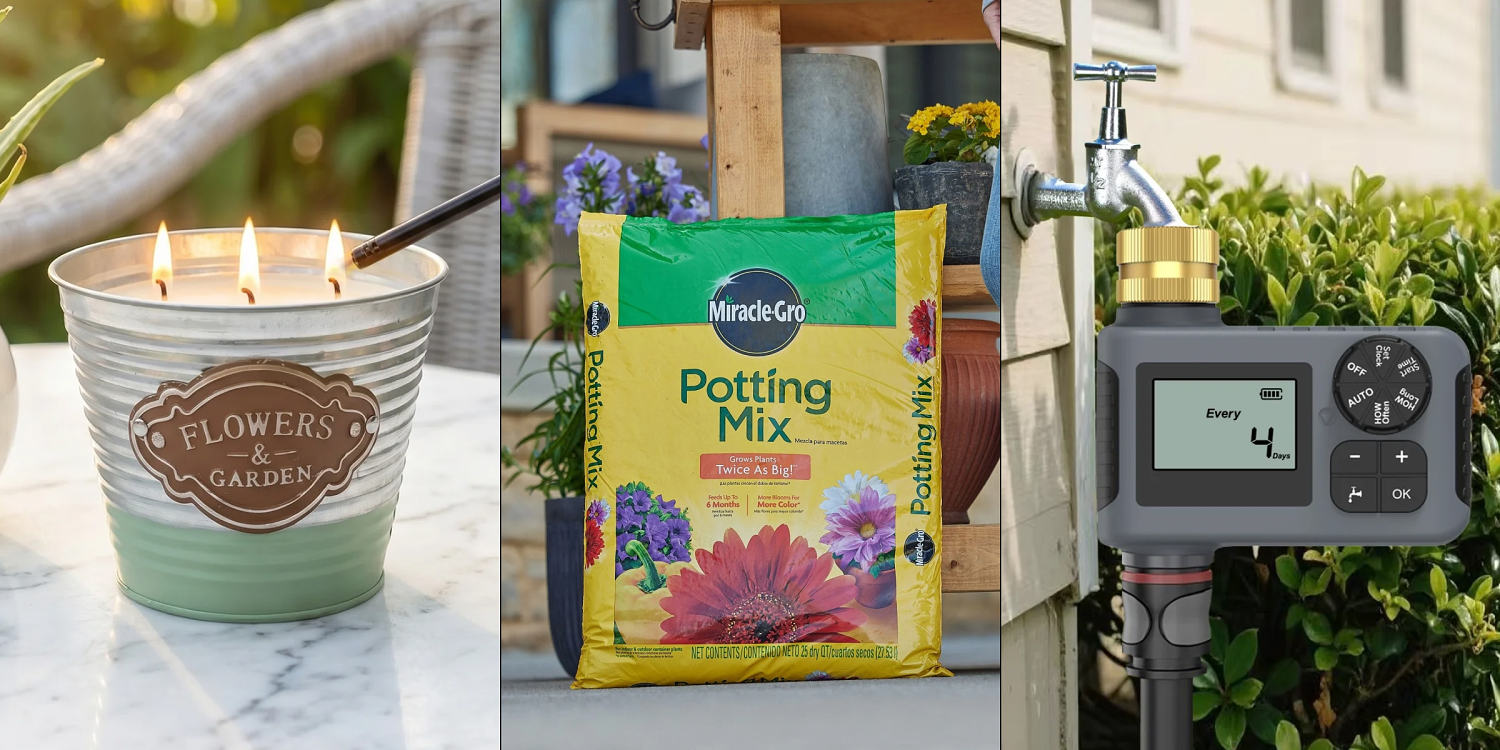
We can apply this same logic to the smells and sounds of the outdoors. The buzz of mosquitoes is perhaps the quickest way to ruin a Saturday night. A citronella candle housed in a heavy, textured ceramic pot pulls double duty. It acts as a sculptural element on a tabletop during the afternoon, and shields you from pests when the sun goes down.
Add to that a small, dynamic citronella torch staked near the perimeter, and you have created a physical barrier against the annoying realities of nature. You can find these tools at any mass retailer for the price of a cup of coffee, yet their value in peace of mind is immeasurable.
Gathering Around the Flame
There is a reason human civilization developed around the campfire. Fire draws us in. It forces us to slow down, to watch the shifting shapes of the embers, and to speak in quieter, more contemplative tones.
While a massive, stone-built fire pit is a beautiful luxury, a portable, steel fire bowl achieves the exact same human result. For less than twenty-five dollars, a compact fire pit transforms a random Saturday night into an event. It gives your hands something to do—tending the wood, roasting a marshmallow—and gives your eyes a break from the relentless flicker of a smartphone.
Imagine the shift in Marcus's household. Instead of the family scattering to different rooms to watch separate streaming apps, they are sitting in a circle. The air smells of woodsmoke. The conversation flows naturally because there are no notifications interrupting the rhythm of the evening. This isn't a lifestyle magazine layout; it is a functional, real-world connection happening on a budget that doesn't cause a fight over the bank statement.
The Art of the Host
Hospitality has become overcomplicated. We think we need artisanal cocktail shakers, matching porcelain plates, and complicated recipes to invite people over. This perfectionism kills community.
True hospitality is simply making someone feel cared for. A durable, shatterproof melamine serving tray filled with basic snacks and a few insulated tumblers that keep water ice-cold for hours can be acquired for pennies on the dollar. When you serve your guests from a dedicated outdoor tray, it signals that their presence is an occasion. It shows that you prepared for them.
The tumblers prevent the constant, annoying trips back inside to refill melting ice cubes. It keeps the host outside, anchored in the conversation, rather than playing waiter in the kitchen.
Cultivating Life in Small Vessels
Sometimes the loneliness of modern life stems from a disconnection from growth. We spend our days staring at pixels that never change unless a programmer wills it. Planting something fixes this.
You do not need a massive garden plot to experience the quiet joy of watching something grow. A collection of simple, terracotta-colored resin planters arranged on a step or a window sill offers a massive psychological return on investment. Planting a few starts of basil, mint, or rosemary costs almost nothing.
Weeks later, when you step outside to tear off a few leaves of fresh basil to drop onto a pizza or into a glass of lemonade, you experience a profound sense of capability. You made that happen. You nurtured that life. It connects you to the seasons in a way that buying a plastic clam-shell of herbs from the grocery store never can.
Moving Beyond the Clutter
The danger of shopping for deals is the temptation to buy junk. We have all seen yards littered with cheap, sun-faded plastic knick-knacks that end up in a landfill by next spring. That is not what this is about.
The strategy requires discipline. You must look for clean lines, neutral colors, and utilitarian value. A matte black metal plant stand, a simple cream-colored outdoor throw, a galvanized steel bucket used as an ice chest—these items endure because they don't rely on fleeting trends. They do their job quietly, without screaming for attention.
When you curate your outdoor space with هذه Economy-focused pieces, you are participating in a long tradition of practical American ingenuity. It is the art of making do, of optimizing what you have, and refusing to let a lack of wealth dictate your quality of life.
The True Cost of Waiting
We often tell ourselves we will enjoy our lives when. When we get the raise. When we move to the house with the bigger yard. When we have the time to do a full renovation.
But time is a non-renewable resource. The weekends of this year will slip away just as quickly as the ones from last year. Waiting for the perfect circumstances means missing the beautiful, messy, imperfect reality of right now.
Marcus’s yard might never feature in an architectural digest. The fence might still need paint, and the grass might still have patches of crabgrass. But tonight, under a strand of warm, solar-powered lights, with a small fire crackling in a steel bowl and the smell of fresh mint in the air, none of that matters. His friends are laughing. His kids are chasing lightning bugs.
The entire transformation cost less than a tank of gas. The true value, however, is something that cannot be bought at any price. It is the feeling of being entirely at home, right where you are.