The United States Senate just voted to repeal the Biden-era ban on mining near the Boundary Waters Canoe Area Wilderness. The predictable screams of "environmental catastrophe" from the urban elite are already deafening. They are also wrong.
Most reporting on the Twin Metals project and the Duluth Complex treats this as a binary choice: pristine water or corporate greed. That is a lazy, suburban fantasy. If you want a Tesla in every driveway and a wind turbine on every hill, you have to dig. There is no "immaculate conception" for copper. There is no carbon-neutral way to summon nickel from the ether.
By locking up the largest untapped copper-nickel deposit in the world, we aren't "saving" the planet. We are just outsourcing the ecological damage to regions with zero environmental oversight, child labor, and a total disregard for the very carbon footprint we claim to be reducing.
The Green Energy Hypocrisy
The math of the "energy transition" is brutal and unforgiving. An electric vehicle requires six times the mineral inputs of a conventional car. An offshore wind plant requires nine times more mineral resources than a gas-fired plant.
The International Energy Agency (IEA) isn't a mining lobby. They are the gold standard for energy data. Their projections show that to meet Paris Agreement goals, we need a 40-fold increase in lithium and a 20-fold increase in nickel and cobalt.
Where is that coming from? Currently, it comes from places like the Democratic Republic of the Congo and Indonesia. When we block mining in Minnesota—a state with some of the most stringent environmental regulations on the planet—we are effectively saying: "We want the batteries, but we want the Congolese to deal with the toxic runoff."
That isn't environmentalism. It’s NIMBYism (Not In My Backyard) scaled to a geopolitical level. It is a moral failure masked as conservation.
The Sulfide Mining Boogeyman
The primary argument against mining in the Rainy River Watershed is the risk of Acid Mine Drainage (AMD). Opponents talk as if it is 1890 and we are still using pickaxes and open-air sluices.
Let's dismantle the technical ignorance. Modern mining in the 21st century involves "dry stack tailings" and sophisticated water treatment plants that return water to the environment at a higher quality than the baseline levels in the soil.
The Duluth Complex is not a secret. We know the geology. We know that the copper and nickel are bound in sulfide minerals. Yes, if you leave those rocks exposed to air and water indefinitely, they create sulfuric acid. But the industry has spent decades perfecting encapsulation and neutralization techniques.
I have seen projects in Scandinavia—hardly a region known for lax environmental laws—operate in sensitive watersheds for years without a single catastrophic breach. The idea that Minnesota, a state built on the back of the Iron Range, is incapable of regulating a modern copper mine is an insult to the state’s own regulatory agencies.
Outsourcing the Carbon Footprint
Every pound of copper we don't mine in Minnesota has to be shipped from Chile or Peru. Every ounce of nickel we don't extract from the Duluth Complex comes from a Chinese-backed operation in the South Pacific.
Think about the logistics. Think about the massive, bunker-fuel-burning cargo ships. Think about the lack of carbon capture in overseas processing plants. By banning domestic mining, we are actively increasing the global carbon intensity of the green transition.
If you are a "climate hawk" but you oppose mining in the US, you are statistically illiterate. You are choosing a local aesthetic preference over a global atmospheric necessity.
The Myth of the "Pure" Wilderness
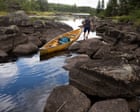
The Boundary Waters is a treasure. I’ve paddled it. I’ve portaged through the mosquitoes. But the idea that a mine located miles away, outside the wilderness boundaries, in a designated mining district, will somehow "destroy" the experience is a projection of anxiety, not a reflection of reality.
The Iron Range has been an industrial engine for over a century. The wilderness exists alongside a massive taconite industry that literally built the steel for the tanks that won World War II. The sky didn't fall then, and it won't fall now.
We are told that the recreation economy is a viable replacement for high-wage mining jobs. This is a lie sold by people who have never had to pay a mortgage in St. Louis County. You cannot replace a $100,000-a-year mining job with a $15-an-hour seasonal gig renting canoes to tourists from Minneapolis.
Strategic Suicide in the Face of China
While we debate "environmental impact statements" for twenty years, China is locking up the global supply chain. They control nearly 80% of the world’s battery cell manufacturing. They own the mines. They own the refineries.
The US Senate’s vote isn't just about Minnesota; it’s about national security. Relying on a geopolitical rival for the fundamental building blocks of our future energy grid is strategic insanity.
Imagine a scenario where a trade war or a hot conflict in the Pacific cuts off the flow of rare earth elements and base metals. Our "green revolution" would grind to a halt in six weeks. We would be left with half-finished battery factories and a fleet of cars that can't run.
The Biden-era ban was a political gift to the suburban donor class. It was never about the science. If it were about the science, the administration would have let the environmental review process finish instead of preemptively pulling the rug out from under the project.
The Price of Perfectionism
The obsession with "zero risk" is the enemy of progress. There is no human activity that carries zero risk. Building a highway carries risk. Building a skyscraper carries risk. Installing a massive solar farm in the desert destroys habitat.
We have reached a point of paralysis where we refuse to build anything because someone, somewhere, might see a ripple in the water. This perfectionism is a luxury of the wealthy. It is a way to feel virtuous while reaping the benefits of an industrial civilization that someone else is forced to build for us.
If we want a clean future, we have to get our hands dirty. We have to be willing to trust our engineers, our regulators, and our own soil.
The Senate didn't vote to destroy the Boundary Waters. They voted to stop pretending that we can save the world without ever opening a mine. They voted for reality.
Stop mourning the "ban" and start demanding that we build the cleanest, most advanced mining operation the world has ever seen. That is the only way forward. Anything else is just performance art.
Dig the hole. Build the battery. Save the planet. In that order.