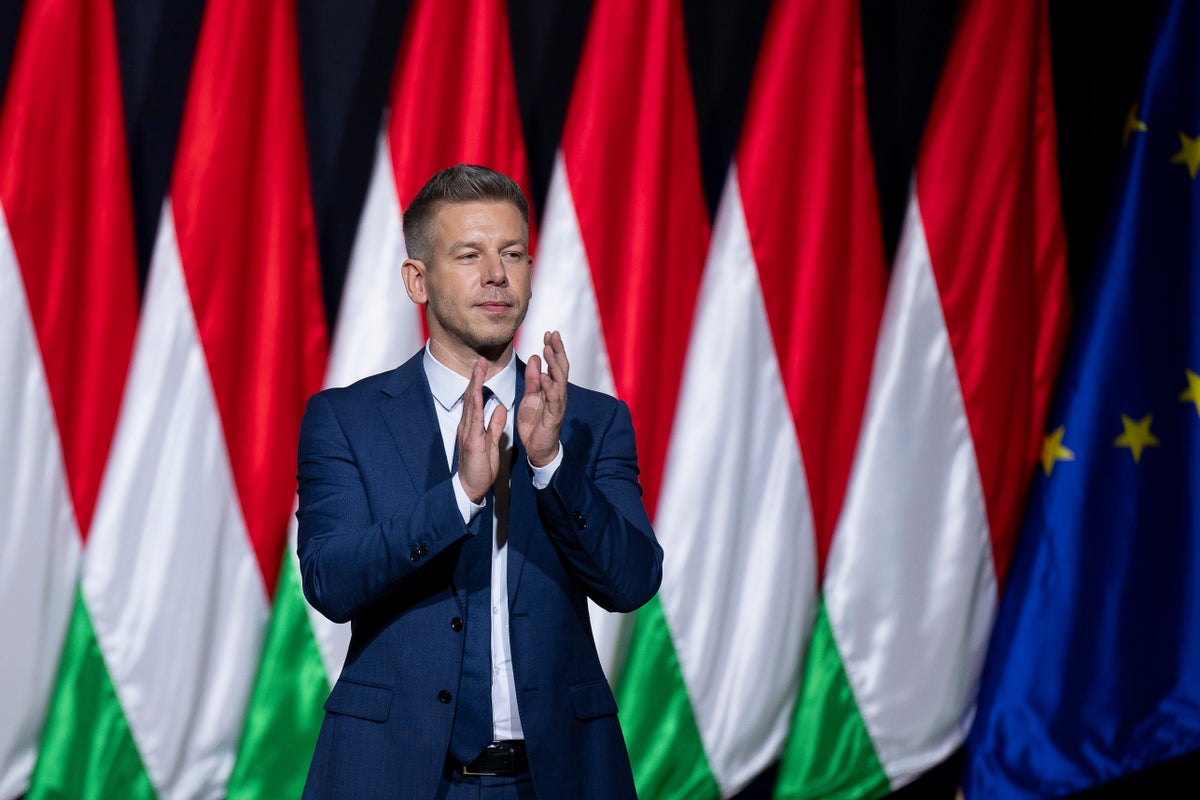
The headlines are predictable. A new Hungarian leader emerges, makes a grand gesture about traveling to Moscow, and promises to "ask" Vladimir Putin to end the war in Ukraine. The media laps it up. It fits the narrative of the lone peacemaker, the bridge-builder, or the naive populist—depending on which outlet you read.
It is all performance art.
The idea that a Hungarian Prime Minister—or any head of state from a mid-sized European power—can simply walk into the Kremlin and "convince" Putin to stop is a fantasy. It ignores the cold, hard mechanics of power, security architecture, and the actual incentives driving the Russian state. We need to stop treating diplomatic photo-ops as if they are strategic breakthroughs.
The Myth of the Great Persuader
The "lazy consensus" among pundits is that this move represents a shift in Hungarian foreign policy or a unique diplomatic opening. It does neither. In reality, this is a domestic signaling exercise masquerading as international statesmanship.
When a leader says they will "ask" for peace, they aren't talking to Putin. They are talking to their own voters. They are positioning themselves as the only adult in the room while the rest of the West sends tanks. It is a brilliant branding exercise. But as a strategy for ending a high-intensity kinetic conflict? It is useless.
I have spent years analyzing how these power dynamics play out in Eastern Europe. If you think a 45-minute sit-down in a gilded room changes the calculus of a leader who has staked his entire historical legacy on a territorial land bridge to Crimea, you aren't paying attention. Nations do not stop wars because they were asked nicely. They stop wars when the cost of continuing exceeds the benefit of winning.
The Economic Reality of Hungarian Neutrality
Let’s look at the data the mainstream reports choose to ignore. Hungary’s economy is deeply tethered to Russian energy. Paks II, the nuclear power plant project, is financed by Russian loans. The Druzhba pipeline is a literal lifeline for Hungarian refineries.
- Russian Gas Dependency: Hungary remains one of the few EU members still heavily reliant on Gazprom.
- Inflationary Pressure: The Forint is volatile; any sudden break with Moscow would send energy prices—and political approval ratings—into a tailspin.
- EU Leverage: By playing the "peacemaker," Budapest gains a bargaining chip in Brussels. They use their relationship with Moscow to extract concessions on frozen EU funds.
This isn't about peace in Ukraine. It is about the price of gas in Budapest and the survival of a political machine. The "peace mission" is a shield against Western criticism of their ongoing economic ties to the Kremlin.
Why the "Peacemaker" Premise is Flawed
People often ask: "Isn't any talk better than no talk?"
The answer is: No. Not if the talk provides a PR victory for an aggressor without extracting a single concession.
When a NATO leader flies to Moscow under the guise of an independent peace mission, they fracture the "united front" that is the only real leverage the West has. Putin views these visits as proof that the alliance is brittle. He doesn't see a negotiator; he sees a crack in the wall.
If you want to stop a war, you don't ask. You create conditions where the other side has no choice but to stop. That involves logistics, ammunition production, and secondary sanctions—things that don't make for good "man of the people" press releases.
The Security Architecture Trap
The competitor’s article suggests this move might "open a channel" for communication. This assumes the channel is closed. It isn't. Backchannels between Washington, Paris, Berlin, and Moscow are constantly humming. Intelligence agencies talk. Defense ministries have red lines.
The "channel" Budapest offers isn't a secret line to peace; it's a megaphone for Russian talking points.
Imagine a scenario where a local mayor tries to negotiate a ceasefire between two warring cartel bosses. The mayor has no enforcement mechanism. He has no territory to offer. He has no way to punish a breach of contract. All he has is a suit and a camera crew. The cartel bosses will use the mayor to send messages to each other, sure, but the mayor isn't the one doing the negotiating. He’s the postman.
The Hard Truth About Peace Negotiations
Real diplomacy is boring. It happens in windowless rooms in neutral cities like Geneva or Vienna, involving career diplomats and military attaches who haven't slept in three days. It involves thousands of pages of technical documents regarding troop withdrawals, monitoring missions, and security guarantees.
It does not happen because a Prime Minister had a "candid" conversation over tea.
The status quo media loves the "Great Man" theory of history—the idea that individual personalities drive global events. It’s an easy story to tell. But history is driven by geography, demographics, and the industrial capacity to wage war. Hungary lacks the weight to move any of those needles.
The Price of This Performance
There is a downside to this contrarian view: cynicism. If we acknowledge that these missions are theater, we have to admit that the war will likely be settled by attrition, not by a brilliant diplomatic stroke. That is a grim reality that most people don't want to face.
But pretending that a "peace mission" to Moscow is a viable path to ending the conflict is dangerous. it creates a false sense of hope and shifts the focus away from the actual requirements of a durable peace:
- Security Guarantees: Ukraine will not stop until it knows it won't be invaded again in three years.
- Economic Rebuilding: Who pays for the $500 billion in damages?
- Territorial Sovereignty: How do you reconcile the Russian constitution (which now claims Ukrainian land) with international law?
A Hungarian Prime Minister cannot answer these questions. He can't even influence them.
Stop reading the headlines about "asking for peace." Start looking at the shipping manifests of artillery shells and the flow of natural gas through the TurkStream pipeline. That is where the war is being managed. Everything else is just a press release designed to keep a domestic audience happy while the world burns.
If you want to be a serious observer of geopolitics, learn to distinguish between the signal and the noise. This "peace mission" is high-decibel noise. It changes nothing on the ground in Donbas. It changes nothing in the halls of the Pentagon. It only changes the perception of a leader who wants to look bigger than he actually is.
Turn off the cameras and the "negotiations" vanish.