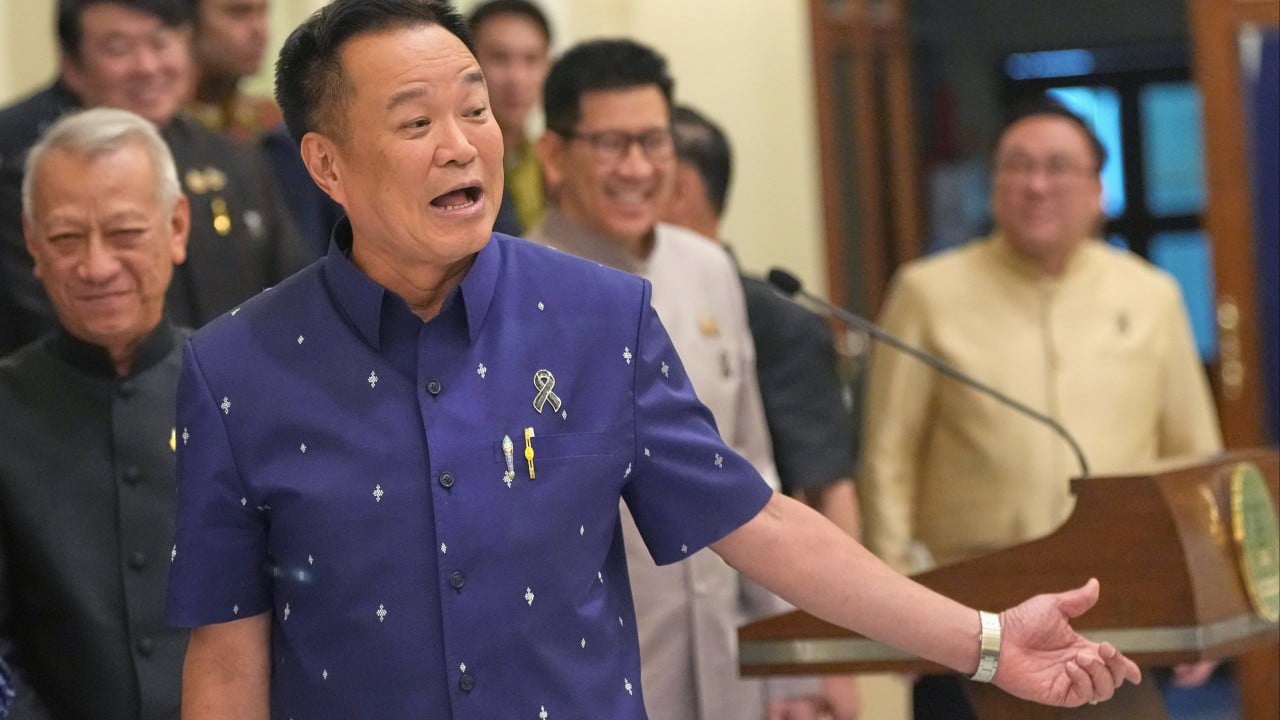
The termination of the 2001 Memorandum of Understanding (MOU) between Thailand and Cambodia regarding the 26,000-square-kilometer Overlapping Claims Area (OCA) represents a prioritized commitment to territorial integrity over immediate energy security. By scrapping this 25-year-old framework, the Thai administration has signaled that the technical extraction of subsea hydrocarbons is secondary to the resolution of maritime boundaries. This decision halts progress on an estimated 11 trillion cubic feet of natural gas and 500 million barrels of condensate, effectively locking these assets behind a diplomatic firewall while regional energy costs continue to climb.
The Structural Failure of the 2001 MOU
The 2001 MOU failed because it attempted to decouple two inherently linked variables: maritime delimitation and joint resource development. The agreement divided the OCA into two distinct zones, yet mandated that progress on both must occur simultaneously. This "simultaneity clause" created a structural bottleneck where a disagreement on a single nautical mile of boundary line could—and eventually did—freeze the entire joint development process. You might also find this similar coverage interesting: The Faith and Fury Behind the Trump Rubio Vatican Collision.
The 2001 framework rested on three fragile pillars:
- The Upper Zone (Above 11°N): Intended for maritime delimitation based on international law (UNCLOS).
- The Lower Zone (Below 11°N): Intended for a Joint Development Area (JDA) modeled after the Thailand-Malaysia success story.
- The Connectivity Requirement: Progress on the JDA was legally tethered to progress on the boundary definition in the north.
This architecture ensured that if nationalistic sentiment or domestic legal challenges arose regarding the sovereignty of the upper zone, the economic benefits of the lower zone remained inaccessible. The recent termination suggests that the Thai government views the 2001 framework not as a bridge to energy wealth, but as a legal liability that could inadvertently weaken its territorial claims. As reported in recent reports by The New York Times, the effects are worth noting.
The Economic Calculus of Inaction
Thailand’s domestic gas production is in a state of natural decline, particularly in the Erawan and Bongkot fields. To compensate, the state has increased its reliance on Liquified Natural Gas (LNG) imports. These imports are subject to global price volatility, unlike the regulated wellhead prices associated with domestic Gulf of Thailand production.
The opportunity cost of abandoning the MOU can be quantified through three primary economic stressors:
- The LNG Import Premium: Spot market LNG prices frequently trade at a 300% to 500% premium over domestic gas production costs. Every year the OCA remains undeveloped, the Thai industrial sector absorbs billions in avoidable energy surcharges.
- Infrastructure Underutilization: Thailand possesses an extensive network of subsea pipelines and processing facilities. As domestic fields deplete, this infrastructure operates below peak efficiency. Tapping the OCA would allow for the immediate integration of new supply into existing midstream assets, maximizing the Internal Rate of Return (IRR) on historical investments.
- The Transition Risk: The window for "bridge fuels" like natural gas is narrowing. Global capital is shifting toward renewables. By delaying extraction by another decade, the Net Present Value (NPV) of the OCA reserves diminishes as carbon taxes and green energy mandates increase the cost of long-term fossil fuel projects.
The Legal Impasse of Ko Kut
The central friction point remains the island of Ko Kut. The 1907 Franco-Siamese Treaty is the foundational document for the region's borders, but its interpretation varies significantly between Bangkok and Phnom Penh. Cambodia’s claim line bisects the island, whereas Thailand maintains full sovereignty.
Under the 2001 MOU, any joint development in the adjacent waters was perceived by critics as a de facto recognition of the Cambodian claim line. This created a political "sovereignty trap." For a Thai administration, the risk of being accused of "selling out" national territory far outweighed the bureaucratic reward of lower electricity bills. The termination of the agreement is an act of political risk mitigation, removing the legal platform upon which sovereignty challenges could be built.
Comparative Mechanics: The Malaysia-Thailand JDA
The failure of the Cambodia-Thailand negotiations stands in stark contrast to the Malaysia-Thailand Joint Development Area (MTJDA). The MTJDA succeeded because it utilized a "75-year freeze" on sovereignty claims. The participants agreed that resource extraction did not constitute a waiver of territorial rights.
However, the MTJDA involved uninhabited waters. The presence of Ko Kut and its permanent population introduces a human and emotional element that makes the "MTJDA model" difficult to replicate. In the Gulf of Thailand, the maritime boundary isn't just a line on a map; it is a constitutional sensitivity. Without a mechanism to permanently isolate the Ko Kut dispute from the subsea minerals, no framework—new or old—can function.
Strategic Realignment and the Path Forward
The scrap of the 2001 MOU necessitates a move toward a "Sovereignty-First" negotiation model. Future attempts to unlock the OCA must likely abandon the simultaneity requirement. A more viable, though politically difficult, approach involves:
- Ring-fencing the Northern Zone: Completely removing the disputed area around Ko Kut from the energy discussion.
- Functional Sovereignty: Establishing a new legal entity that holds the rights to the minerals without defining the ownership of the seabed, specifically for the southern sections of the OCA where the hydrocarbon density is highest.
- Third-Party Arbitration: Moving toward the International Tribunal for the Law of the Sea (ITLOS) to resolve the boundary first, rather than trying to negotiate it bilaterally alongside commercial interests.
The immediate reality is a return to the status quo of the 1970s: two nations sitting on a massive energy windfall that neither can touch. As Thailand maneuvers to secure its energy future, the strategy will shift from regional cooperation toward aggressive LNG procurement and domestic renewable expansion. The "energy bridge" offered by the OCA has been dismantled; the focus now shifts to whether a more robust, less politically flammable structure can be built in its place, or if these reserves will simply remain stranded as the world moves beyond the age of hydrocarbons.
The termination is not a failure of diplomacy, but a recognition that the 2001 logic was fundamentally flawed. The path to the OCA does not go through energy policy; it goes through a definitive, legally binding settlement of the 1907 treaty's modern application. Until that occurs, the Gulf’s gas remains a theoretical asset with zero market value.