Moscow is screaming about Finnish and Baltic airspace because Moscow is terrified.
The standard media narrative, peddled by outlets like WION and the usual crop of "defense analysts," treats Russia's recent warnings to Finland and the Baltic states as a prelude to a wider war. They look at the map, see a drone flight path, and conclude that we are on the precipice of a NATO-Russia kinetic collision. They are reading the script, but they are ignoring the physics.
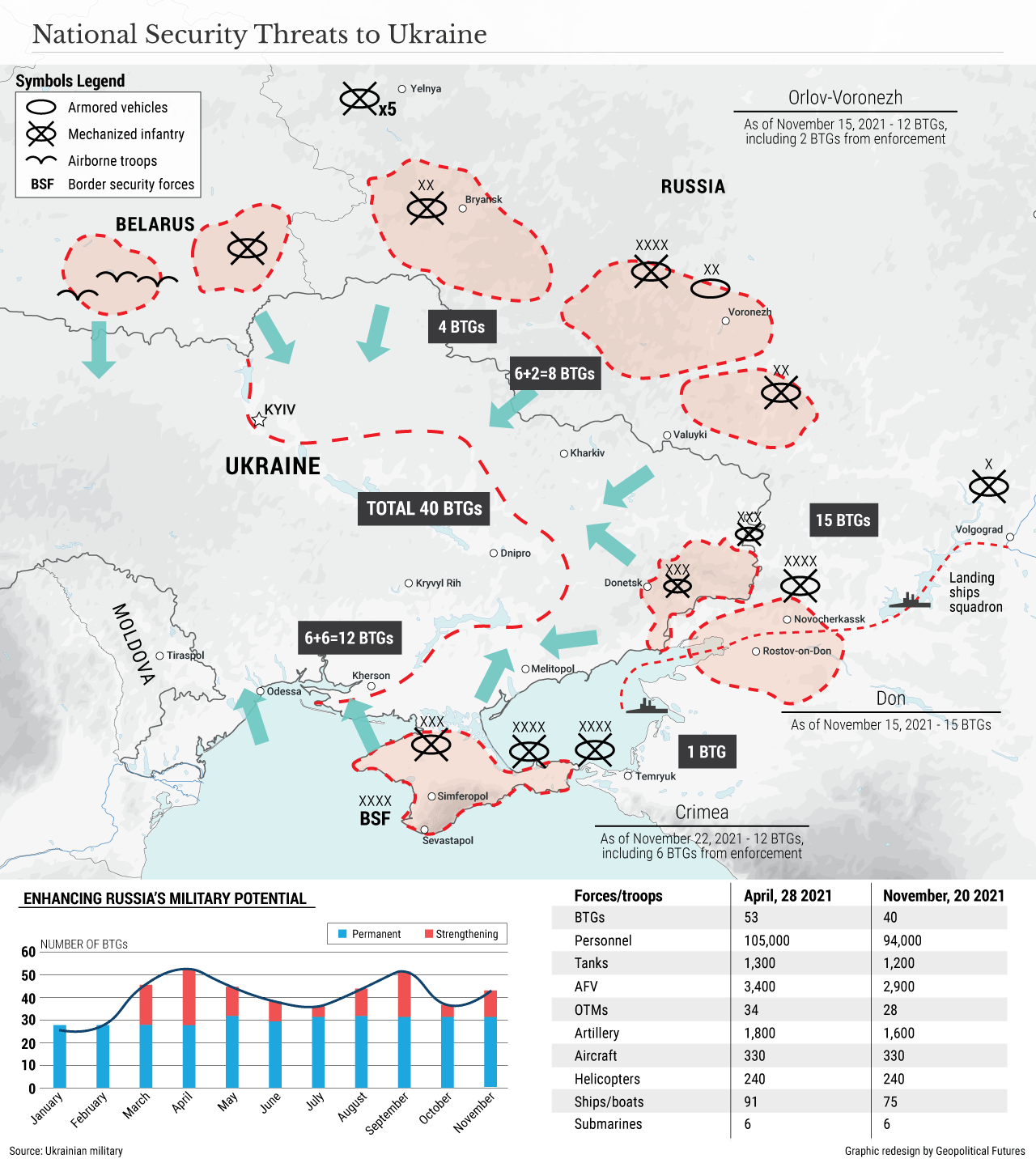
Russia isn't warning the West to prevent an escalation. Russia is warning the West because it has lost control of its own perimeter. When a drone strikes an airbase 1,000 kilometers from the Ukrainian border, the failure isn't a diplomatic one. It is a fundamental collapse of the Russian Integrated Air Defense System (IADS).
By blaming Finland, Estonia, Latvia, and Lithuania, the Kremlin is attempting to outsource its incompetence. If the drones came from NATO, then the Russian military didn't fail—it was "backstabbed." It’s a classic face-saving maneuver designed for internal consumption, and the Western press is falling for it.
The Geography of Misdirection
The "lazy consensus" assumes that because these drones operate near the border, they must be crossing it. This ignores the reality of modern attritional warfare and the sheer scale of the Russian border.
Russia claims that Ukraine cannot possibly hit targets in the Leningrad region or the Kola Peninsula without using Baltic or Finnish airspace. This is a lie designed to exploit a lack of technical literacy in the general public. Ukraine has been iterating on long-range Unmanned Aerial Vehicles (UAVs) like the Lyutyi and various repurposed Soviet-era Tu-141 Strizh platforms. These aren't hobbyist quadcopters. They are low-observable, long-range cruise missiles in all but name.
Let’s look at the math. A drone launched from the Chernihiv region in Ukraine does not need to enter Estonian airspace to hit a target near St. Petersburg. It needs to navigate a corridor of "dead zones" in Russian radar coverage. Russia has moved a significant portion of its S-400 and Pantsir-S1 units to the front lines in Donbas and to protect the Kremlin. This has left the Russian interior as porous as Swiss cheese.
The Kremlin would rather you think NATO is cheating than admit their vaunted air defense is a paper tiger.
The Myth of the Baltic Launchpad
One of the loudest accusations from Maria Zakharova and the Russian Foreign Ministry is that these drones are being launched from within the Baltic states.
Think about the sheer logistical stupidity required to believe this.
- NATO is Risk-Averse: The idea that Estonia—a country with a total population smaller than a Moscow suburb—would risk a direct nuclear exchange by hosting Ukrainian launch crews is a fever dream.
- Signal Intelligence (SIGINT): If a drone were launched from Finland, Russian ELINT (Electronic Intelligence) would pick up the control links and the thermal signature immediately. They haven't produced a single shred of telemetry to back up their claims. Why? Because the telemetry shows the drones coming from the south, deep within Ukrainian territory.
- Physical Footprint: Launching high-end drones requires a footprint. You need ground control stations, transport vehicles, and specialized fuel. In the age of satellite surveillance and local cell phone cameras, you cannot hide a drone operation in the Baltics.
Russia is using these "warnings" as a form of Reflexive Control. This is a Soviet-era psychological technique where you feed your opponent information that causes them to act against their own interests. By threatening the Baltics, Russia hopes to scare NATO into "reining in" Ukraine. They want the West to impose more restrictions on where Ukraine can fly its hardware.
The Technical Reality: Why Airspace Doesn't Matter
The debate over "whose airspace" is being used is a 20th-century distraction in a 21st-century war.
Modern drones use a combination of Inertial Navigation Systems (INS), GPS (when not jammed), and Terrain Contour Matching (TERCOM). They fly low—often below 100 meters—to stay beneath the radar horizon ($R_h$).
The formula for the radar horizon is roughly:
$$d \approx 3.57 \sqrt{h}$$
where $d$ is the distance in kilometers and $h$ is the height of the radar antenna in meters.
If a Russian radar is sitting on flat ground, it cannot see a drone flying at 50 meters until that drone is less than 30 kilometers away. By the time the radar sees the "threat," the drone has already bypassed the primary defense line. Ukraine isn't using Baltic airspace; they are using Russian physics. They are flying through the gaps created by Russia's own geography and resource depletion.
The High Cost of "Safety"
I’ve seen defense departments waste billions on the assumption that borders are solid walls. They aren't. They are digital filters.
Russia’s current strategy is to create a "gray zone" of fear. They want the Finnish government to start second-guessing its integration into NATO. They want the Baltic states to feel like they are being used as a shield for Ukraine.
But the risk isn't to the Baltics. The risk is to the Russian energy infrastructure. The drone strikes on the Ust-Luga oil terminal and the various refineries in the north are gutting the Russian war chest. Every time a refinery goes up in flames, Russia loses millions in export revenue.
They cannot stop the drones. So, they try to stop the permission to fly the drones.
The Logic of the Bluff
If Russia actually believed NATO was facilitating these strikes, they would have triggered Article 5-adjacent responses. They haven't. They've issued "warnings."
In the world of high-stakes geopolitics, a warning is what you give when you lack the power to actually retaliate. Russia is currently bogged down in a meat-grinder offensive in eastern Ukraine. They do not have the spare capacity to open a second front against a NATO that is currently revitalized and rearming.
Why the Status Quo is Wrong
The media says: "Russia is threatening the Baltics because it might attack them."
The truth is: "Russia is threatening the Baltics because it is helpless to stop Ukraine's reach."
Stop asking if the Baltics are safe. Start asking why the "second greatest army in the world" can't protect its own national heritage sites from a country it claimed would fall in three days.
Actionable Reality for the West
The correct response to Russia’s posturing isn't "de-escalation." It is saturation.
If Russia is complaining about drone strikes, it means the drone strikes are working. The vulnerability of the Russian rear is the greatest leverage the West has. Instead of debating the sanctity of airspace that isn't even being violated, NATO should be doubling down on providing Ukraine with the EW (Electronic Warfare) suites and satellite guidance kits necessary to make these long-range strikes even more precise.
We are witnessing the democratization of precision strike capability. A $100,000 drone is destroying a $50 million radar system or a $1 billion refinery. This is an asymmetric return on investment that makes traditional air superiority look like a relic of the Victorian era.
Russia's warnings are a desperate attempt to maintain the illusion of a "red line." But red lines only work if you have the paint to draw them and the steel to back them up. Right now, Russia is running out of both.
The Baltics aren't the problem. The Finnish border isn't the problem. The problem is that the Kremlin’s map of the world is 500 days out of date, and the drones are the only things delivering the updated version.
Stop listening to the threats. Watch the refineries burn.