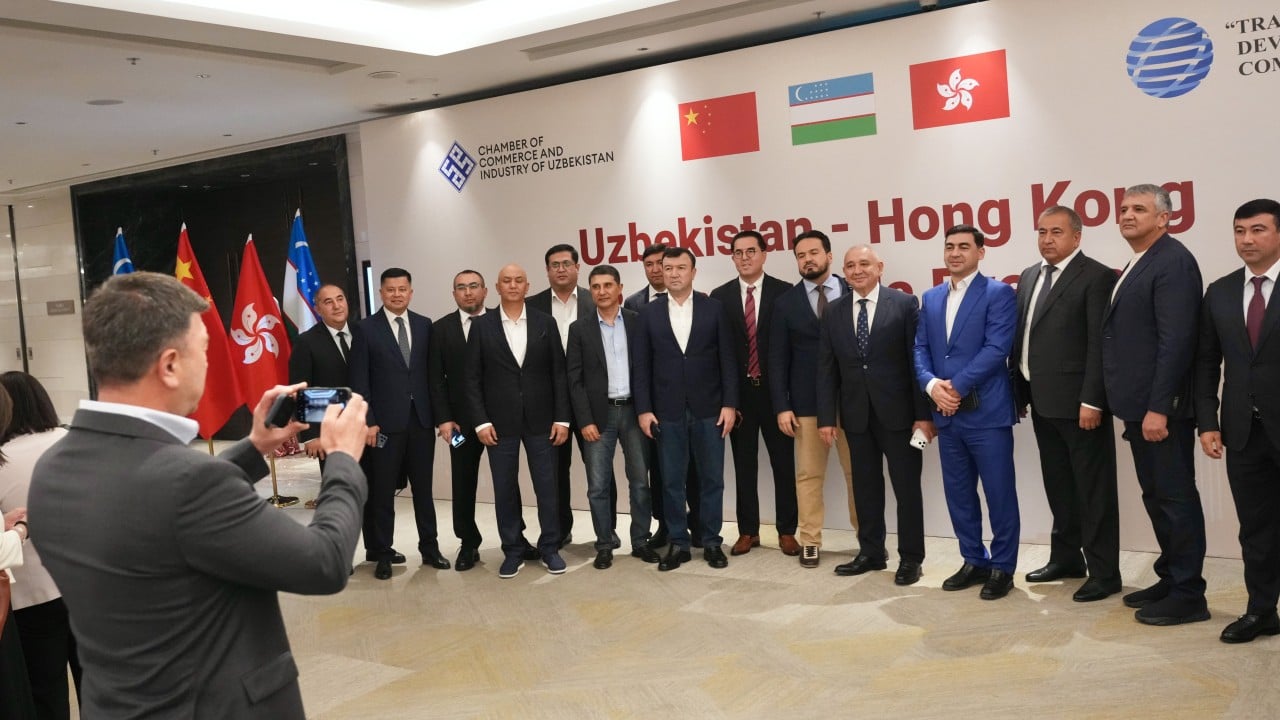
Uzbekistan’s deployment of a 200-member delegation led by Prime Minister Abdulla Aripov to Hong Kong represents a calculated shift from traditional bilateral diplomacy toward a specialized financial arbitrage strategy. By bypassing the broader political friction associated with sovereign-level Beijing relations and focusing on the Hong Kong Special Administrative Region (HKSAR), Tashkent is attempting to solve a specific liquidity and diversification problem. This mission functions as a bridge between the "New Uzbekistan" privatization drive and the deep pools of institutional capital that remain concentrated in Hong Kong’s financial ecosystem.
The Tri-Pillar Framework of Uzbek Economic Integration
The mission operates across three distinct logic gates, each designed to mitigate a specific vulnerability in the current Uzbek domestic economy.
1. Capital Depth and IPO Readiness
The Uzbek government is currently executing a massive privatization program involving over 1,000 state-owned enterprises (SOEs). However, the Tashkent Stock Exchange (UZSE) lacks the domestic liquidity to absorb multi-billion dollar valuations without significant price distortion. Hong Kong serves as the primary exit ramp for these assets. The presence of a 200-member delegation signals a "bulk" marketing approach to institutional investors, aiming to secure cornerstone investors for future dual-listings.
2. Technological Transfer via the Greater Bay Area (GBA)
Uzbekistan faces a critical bottleneck in manufacturing sophistication. By engaging with Hong Kong, they gain a low-friction entry point into the GBA’s supply chain. The goal is not merely purchasing hardware but establishing joint ventures that facilitate the assembly of green energy components and telecommunications infrastructure within Uzbek Special Economic Zones (SEZs).
3. De-risking and Sanction-Resilient Trade
Central Asian economies are currently navigating a complex compliance environment. Hong Kong’s robust legal framework—specifically its common law tradition—provides a layer of transactional security for Uzbek entities seeking to trade globally without the direct jurisdictional risks associated with mainland-only banking systems.
Quantifying the Value Proposition: Why Hong Kong
The selection of Hong Kong over other financial hubs like Dubai or Singapore is driven by the specific synergy between the Belt and Road Initiative (BRI) and Uzbek infrastructure needs. Uzbekistan is no longer content being a landlocked transit point; it is positioning itself as a land-linked regional hub.
The Multiplier Effect of the CKU Railway
The China-Kyrgyzstan-Uzbekistan (CKU) railway project is the physical substrate upon which this diplomatic mission rests.
- Freight Efficiency: The railway reduces transit times to Europe by 7–8 days compared to existing routes.
- Cost Reduction: Logistics overhead is projected to drop by 15-20% upon completion.
- Hong Kong’s Role: Hong Kong-based logistics firms possess the sophisticated "soft" infrastructure—insurance, maritime law expertise, and trade finance—necessary to manage the increased volume of goods that the CKU will generate.
Structural Constraints and Execution Risks
While the scale of the delegation is impressive, its efficacy is throttled by several structural realities that the Aripov administration must address to convert interest into finalized Term Sheets.
The Transparency Deficit
International institutional investors in Hong Kong operate on a diet of audited financial statements and ESG compliance. Many Uzbek SOEs, while profitable on paper, have historically operated with opaque accounting standards. The delegation’s success depends on their ability to present "investment-grade" data that meets the Hong Kong Stock Exchange (HKEX) listing requirements.
Currency Volatility and Repatriation
A primary concern for any Hong Kong-based private equity firm is the stability of the Uzbek Som and the ease of profit repatriation. While Uzbekistan has liberalized its currency market since 2017, the shadow of potential capital controls during regional instability remains a deterrent. The Prime Minister must provide concrete guarantees—perhaps through the use of the Astana International Financial Centre (AIFC) or similar legal "islands"—to protect foreign capital.
Geopolitical Neutrality Maintenance
Uzbekistan’s "multi-vector" foreign policy is under pressure. Deepening ties with Hong Kong allows the country to draw closer to the Chinese economy while maintaining a technical distinction from Beijing’s central political apparatus. This is a delicate balancing act; too much reliance on Chinese capital via Hong Kong could compromise Tashkent’s autonomy, while too little leaves the privatization drive underfunded.
The Mechanism of Modern Silk Road Diplomacy
The traditional model of diplomacy—signing vague Memorandums of Understanding (MoUs)—has been replaced by a "Roadshow" model. This 200-member delegation is structured like a corporate sales force, divided into sectoral clusters:
- The Energy Cluster: Focusing on the transition from natural gas exports to solar and wind integration.
- The Tech Cluster: Seeking partnerships for the "Digital Uzbekistan 2030" initiative.
- The Agriculture Cluster: Attempting to move up the value chain from raw cotton exports to finished textile manufacturing and high-end food processing.
Each of these clusters faces a different competitive landscape. In energy, Uzbekistan is competing with Gulf nations for the same pool of "Green Finance" available in Hong Kong. In tech, they are competing with Southeast Asian nations that have more established digital ecosystems.
The Cost Function of Non-Integration
If Uzbekistan fails to secure deep-seated financial ties with Hong Kong, the cost is not merely a lack of growth, but a stagnation of its reform agenda. The "Aripov Doctrine" relies on external capital to fund internal social stability. Without the liquidity provided by a hub like Hong Kong:
- Privatization stalls: State assets remain inefficient and a drain on the national budget.
- Youth Unemployment rises: 50% of the Uzbek population is under 30; without foreign direct investment (FDI) in high-tech sectors, the economy cannot generate sufficient high-value jobs.
- Infrastructure Decay: The ambitious rail and power projects require capital expenditures that exceed domestic savings rates.
Strategic Forecast: The Hong Kong-Tashkent Nexus
The success of this mission will be measured not by the number of MoUs signed, but by the volume of HKSAR-domiciled capital that enters the Uzbek market over the next 24 months. We should expect the establishment of a dedicated "Uzbekistan Investment Desk" in Hong Kong, and potentially the issuance of a "Panda Bond" or a Hong Kong-denominated sovereign bond to benchmark the risk for private investors.
The most probable outcome is a tiered investment flow. Initially, we will see heavy involvement from Hong Kong’s family offices and specialized "Belt and Road" funds, followed by larger institutional players once the legal protections for these investments are codified and tested in Uzbek courts.
For the Uzbek delegation, the mandate is clear: translate the narrative of a "Rising Central Asia" into the clinical language of Internal Rate of Return (IRR) and risk-adjusted yields. Anything less is merely a diplomatic excursion. The integration of the Uzbek economy into the Hong Kong financial matrix is the necessary condition for Tashkent to move from a frontier market to an emerging powerhouse.
To maximize this opportunity, the Uzbek administration must immediately establish a permanent regulatory liaison office in Hong Kong to harmonize listing requirements and provide a continuous feedback loop between Tashkent’s reformers and Hong Kong’s capital allocators. This removes the "information asymmetry" that currently plagues Central Asian investments. Priority should be given to the creation of a cross-border "Regulatory Sandbox" that allows Hong Kong fintech firms to test digital payment and micro-lending solutions in the Uzbek market, creating a high-velocity proof-of-concept for wider institutional entry.