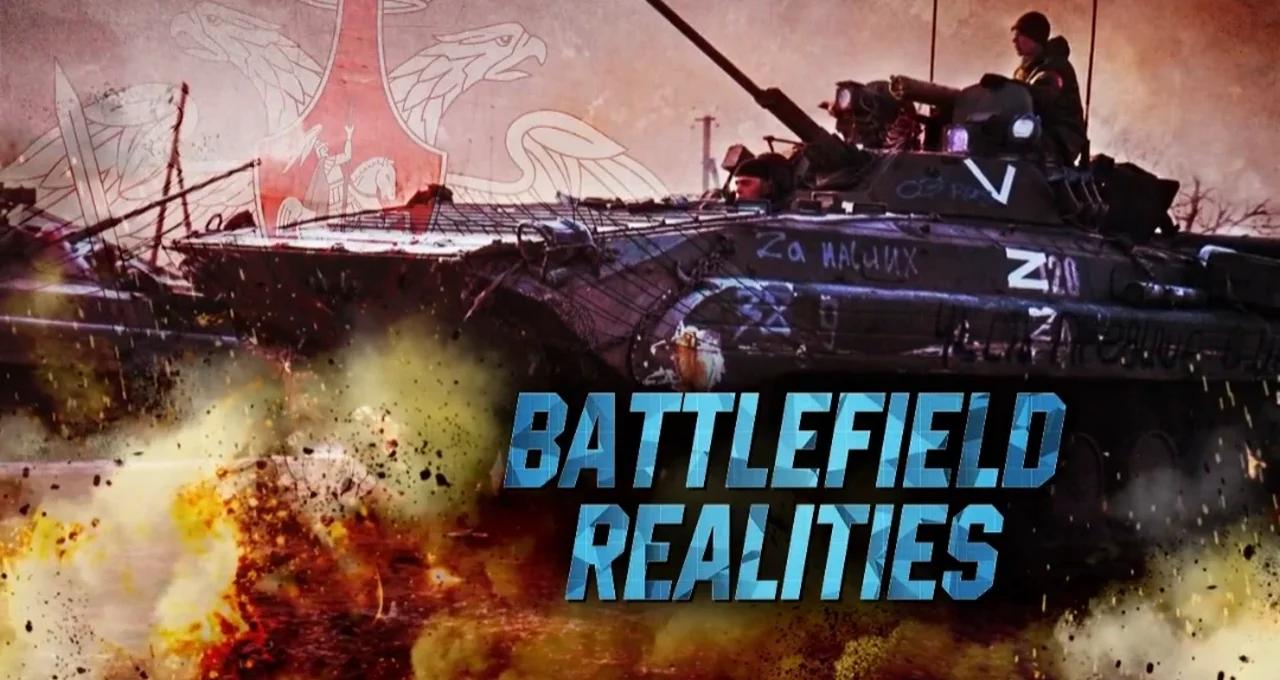
Donald Trump insists the current military campaign against Iran is a four-week process. He claims the United States is ahead of schedule. History, however, suggests that the Middle East has a way of stretching weeks into decades and "precision strikes" into generational quagmires. While the White House paints a picture of a rapid, surgical dismantling of the Iranian state, the tactical reality on the ground and in the water suggests a far more grinding and expensive entanglement.
The president’s "four-week" timeline is not a military projection. It is a political one. By framing the conflict as a brief, high-intensity cleanup operation, the administration attempts to bypass the ghost of the Iraq War and the skepticism of an American public weary of "forever wars." But the Iranian military, unlike the hollowed-out Iraqi army of 2003, has spent forty years preparing for this exact scenario.
The Architecture of Asymmetric Resistance
Iran does not need to win a conventional dogfight to win a war of attrition. Its strategy rests on three pillars: the "Axis of Resistance" proxy network, a massive ballistic missile inventory, and the ability to choke global energy markets at the Strait of Hormuz.
The recent strikes, dubbed Operation Epic Fury, have targeted hardened missile sites and naval assets. Trump boasted of sinking nine Iranian ships, claiming they would soon be "floating at the bottom of the sea." Yet, the sinking of a few large hulls does little to neutralize the thousands of fast-attack boats and sea mines that can turn the Persian Gulf into a graveyard for tankers.
The 12-Day War in June 2025 provided a preview. During that brief flare-up, the U.S. and Israel managed to damage nuclear facilities, but at a staggering cost. The U.S. depleted roughly 25% of its entire global stockpile of THAAD (Terminal High-Altitude Area Defense) interceptors just to keep its bases and allies from being leveled. We produce about a dozen of these missiles a year. Iran, meanwhile, has thousands of relatively cheap drones and missiles. The math of this "four-week" war is fundamentally broken.
The Oil Nightmare and the $100 Barrel
While Washington focuses on regime change, the markets are focusing on the flow. The Strait of Hormuz carries nearly 25% of all seaborne oil trade. Even a partial disruption has already pushed Brent crude toward $80 per barrel. If the "four weeks" stretch into two months, analysts at Goldman Sachs and Capital Economics warn of a surge past $100.
This is not just a problem for commuters in Ohio. The Gulf Cooperation Council (GCC) states—Saudi Arabia, the UAE, and Qatar—are currently in the middle of massive economic diversification projects. A prolonged conflict threatens to vaporize the foreign investment that fuels these "non-oil" economies. Dubai has already seen Iranian drones intercepted over its skyscrapers. The "island of stability" the region has tried to build is currently shaking.
Weaponizing Unrest
The White House is betting heavily on internal Iranian collapse. Widespread protests sparked by currency devaluation in late 2025 gave the U.S. a tactical opening. Trump’s message of "helping" the Iranian people is a clear signal that the military campaign is designed to facilitate a domestic uprising.
It is a high-stakes gamble. Historically, external attacks tend to rally a population around the flag, at least initially. The Iranian leadership is treating this as an existential struggle. Unlike the "Midnight Hammer" operation of last year, which saw a telegraphed, performative retaliation from Tehran, the current IRGC leadership is cornered. Cornered regimes do not look for exit ramps; they look for ways to maximize the cost of their demise.
The Technology Gap is Closing
The Pentagon's Task Force Scorpion Strike recently debuted low-cost, one-way attack drones in combat for the first time. It is a mirror image of the tactics Iran pioneered. The war has become a laboratory for automated attrition.
However, the U.S. military footprint in the region is actually more limited now than it was during the build-up of mid-2025. While B-2 stealth bombers can strike with impunity, the lack of a sustained carrier presence compared to previous years means the U.S. is relying more on land-based assets in places like Kuwait and Qatar. These locations are fixed, vulnerable, and increasingly targeted by Iranian proxies in Yemen and Iraq.
The "four-week" promise ignores the reality of repair and replenishment. If Iran manages to disable a single U.S. carrier or significantly damage a major regional hub like Al-Udeid Air Base, the timeline becomes irrelevant. The war would transition from a "process" into a regional wildfire.
The Toll of Precedent
Every major American intervention in the Middle East since 1953 has begun with a version of the four-week promise. The 1953 coup that installed the Shah was supposed to be a quick fix for oil nationalization; it led to the 1979 revolution. The support for Iraq in the 1980s was supposed to contain Iran; it led to the 1991 Gulf War. The 2003 invasion was supposed to be a "cakewalk."
Trump’s assertion that the military is "ahead of schedule" assumes the enemy will eventually stop fighting. In an asymmetric theater, the enemy's definition of "fighting" includes staying alive, maintaining a presence on social media to fuel unrest, and waiting for the American political appetite for high oil prices to vanish.
The White House wants a clean victory and a new "deal." Tehran wants survival and a scorched-earth exit. Between these two goals lies a gap that four weeks of bombing cannot bridge. The "four-week process" is less a strategy and more a prayer that the infrastructure of the Islamic Republic is as brittle as the rhetoric suggests. If it isn't, the American public should prepare for a very long month.
Would you like me to analyze the specific impact of these strikes on the current global semiconductor supply chain?