The media wants you to believe that a highly sophisticated, shadowy network of elite Iranian commandos just penetrated the United States homeland, weaponized a terrifying new proxy force, and came within inches of taking out a sitting president. The headlines read like a Tom Clancy thriller: "Iran-Backed Terrorist Plotted Trump Assassination Through New Proxy Group."
It is a great story. It sells papers. It drives clicks. It is also an absolute joke.
The lazy consensus in Washington and across mainstream newsrooms is that the recent conviction of Pakistani national Asif Merchant in a Brooklyn federal court proves Tehran has established a lethal, seamless assassination apparatus inside the American domestic sphere. Hawkish pundits are screaming for immediate military escalation, treating this as a watershed moment of foreign penetration.
They are missing the entire mechanics of modern statecraft and asymmetric warfare.
If you actually look at the data, the court transcripts, and the bizarrely amateurish reality of the plot, you discover something far more unsettling. This was not an elite operation. It was a desperate, outsourced, bargain-bin failure that tells us more about the terminal decay of foreign intelligence capabilities than it does about their strength.
The Orange Vape and the Napkin Blueprint
Let us dismantle the myth of the "elite proxy force" immediately by looking at what actually happened in a Queens, New York motel room.
When Asif Merchant—a failed banana exporter and former banker from Pakistan—sat down to map out the assassination of the most heavily guarded political figure on earth, he did not use encrypted military software. He did not have satellite imagery or tactical maps.
He used a napkin. And to represent Donald Trump, he placed an orange vape pen on the table.
This is the "cutting-edge" mastermind the media is hyperventilating over. Merchant arrived in the United States, immediately raised red flags with immigration authorities in Houston, and promptly went about trying to recruit what he called "Mafia" members to execute a three-part master plan: steal USB drives, organize a protest, and shoot a high-profile politician.
To fund this global operation of terror, Merchant paid his recruited hitmen an advance. Was it a multi-million-dollar Swiss bank transfer? Was it a dead drop of untraceable untaxed cryptocurrency?
It was $5,000 in rubber-banded cash.
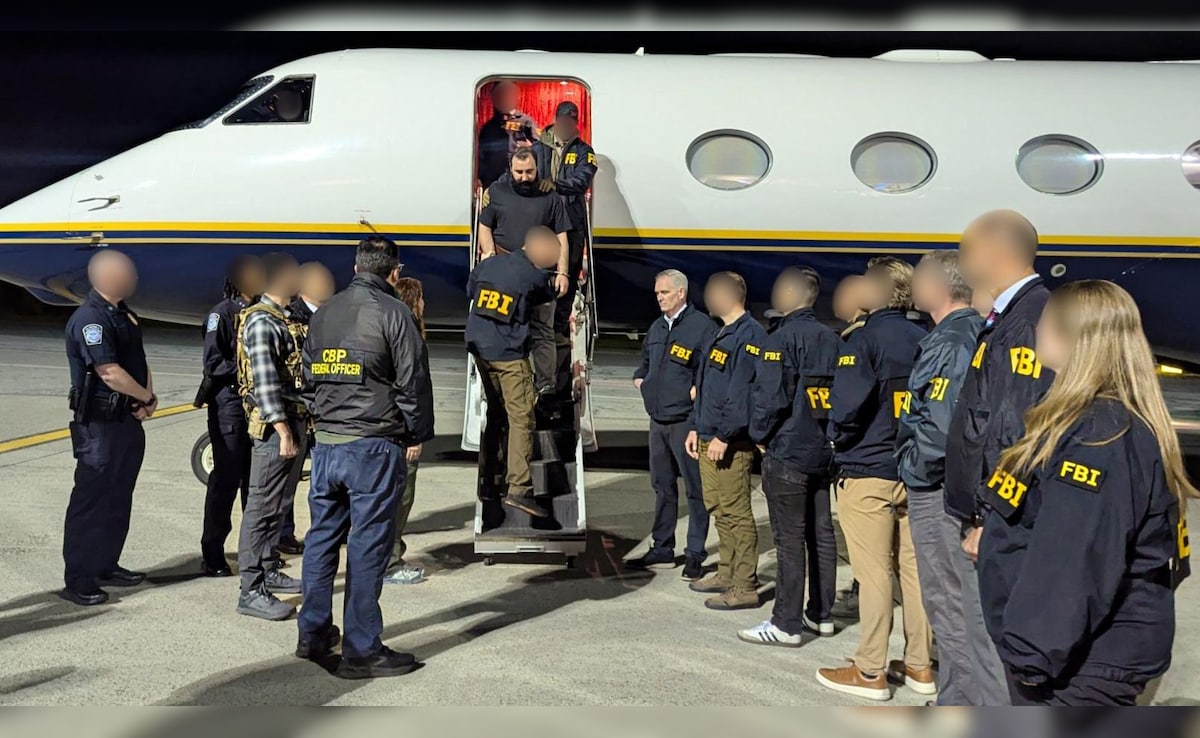
Worse yet, the "mafia hitmen" he painstakingly recruited were actually undercover FBI agents who recorded the entire napkin-and-vape performance on a hidden camera. Merchant was arrested on July 12, 2024, before he could even leave the country, and a Brooklyn jury convicted him in a swift two-hour deliberation.
I have seen corporate risk assessments with more tactical sophistication than this operation. To call this a "new proxy group" implies a level of institutional structure, ideological alignment, and operational capability that simply does not exist. It was one desperate guy with family ties in Tehran, a failed business history, and a mandate from handlers who clearly did not care if he succeeded or failed.
The Myth of the Omnipotent Persian Mastermind
Why would a state intelligence apparatus like the Islamic Revolutionary Guard Corps (IRGC) back something so blatantly doomed from the start?
The mainstream press assumes Iran’s intelligence operations are a monolith of flawless execution. They point to the devastating effectiveness of regional proxies like Hezbollah or the Houthis in the Bab el-Mandeb Strait and assume that same capability translates to the streets of New York or Washington.
This is a fundamental misunderstanding of geography, tradecraft, and operational environments.
In Iraq, Syria, or Lebanon, the IRGC operates within a native ecosystem. They have cultural alignment, deep historical roots, financial networks, and geographic contiguity. They can move assets like chess pieces.
Inside the United States, they have virtually nothing. The domestic environment is intensely hostile to foreign intelligence operations. The financial surveillance system is suffocating. The counterintelligence coverage by agencies like the FBI is relentless.
Because the IRGC cannot deploy their own trained operatives to walk into a political rally with a rifle without immediately triggering every tripwire in the intelligence community, they are forced to scavenge. They look for desperate actors on the periphery—like a compromised Pakistani businessman looking for a million-dollar payday to salvage his finances.
When an intelligence agency resorts to hiring random civilian intermediaries to scout local street gangs, it is not a demonstration of power. It is an admission of operational bankruptcy.
This is the paradox the hawks refuse to admit: the sloppiness of the plot is direct evidence that domestic defenses are working. Iran is reduced to throwing low-budget, high-risk, outsourced garbage at the wall to see what sticks because their premium options have been completely neutralized.
The Real Danger of the Low-Cost Aggression Model
Am I arguing that we should ignore these plots? Absolutely not. But we are asking the wrong questions entirely.
The media asks: How do we stop this powerful new network?
The real question is: How do we deter a state actor that realizes failing costs them almost nothing?
Think about the cost-benefit analysis from Tehran’s perspective. They did not lose an elite Quds Force commander in this operation. They did not burn a highly placed double agent inside the Pentagon. They lost $5,000 in cash and a disposable asset who got caught before he even received the name of his definitive target.
Meanwhile, what did they gain?
- They forced the United States government to spend millions of dollars upgrading security details for political figures.
- They generated weeks of chaotic, polarizing domestic media coverage.
- They signaled to their domestic audience that they are actively trying to fulfill their parliamentary bills promising millions for retaliation over the 2020 killing of Qassem Soleimani.
This is asymmetric psychological warfare, not a genuine military threat to the life of a president. It is the geopolitical equivalent of spam emails. Millions of them are blocked by spam filters, but the cost of sending them is so close to zero that the sender keeps hitting transmit anyway.
The Uncomfortable Truth About Domestic Informants
There is an uncomfortable downside to exposing how these plots actually function. When you examine the mechanics of how the FBI foils these operations, you realize how heavily the state relies on a very fragile mechanism: the casual informant.
Merchant did not get caught because of a high-tech satellite intercept or an AI-driven predictive policing algorithm. He got caught because an acquaintance he trusted in New York, Nadeem Ali, looked at him, realized he was completely out of his depth, and immediately walked into a police station to cut a deal.
If that single individual decides not to talk, or if a future bumbling operative happens to stumble across an actual criminal element instead of a confidential informant, the napkin blueprint suddenly becomes a live-fire scenario.
We are relying on the sheer incompetence of the adversary rather than an impenetrable defensive shield. That is the vulnerability. The threat is not that Iran has created an elite proxy army on American soil; the threat is that in a numbers game where you send enough amateur, low-budget actors across the border, sheer chaotic probability dictates that eventually, one of them might get lucky.
Stop looking for a highly organized, cinematic terror cell hiding in the shadows of American cities. It does not exist. The enemy we are actually facing is far more chaotic: a desperate foreign regime outsourcing its vengeance to the lowest bidder, using vapes and napkins to plan operations because it has no other options left.