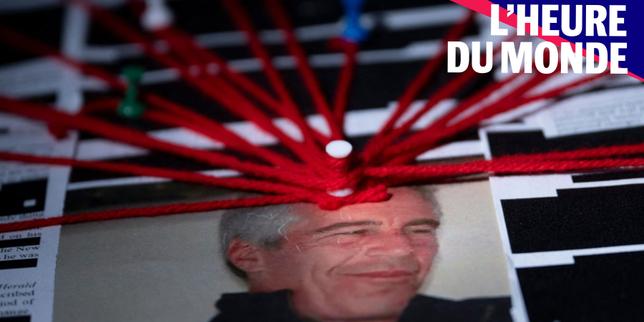
The Jeffrey Epstein case isn't just a tabloid scandal or a true crime binge-watch. It’s a systemic failure. If you think we’ve seen the "final" version of this story just because the main players are dead or behind bars, you’re missing the point. This investigation represents the largest, most complex puzzle in modern legal history, involving dozens of jurisdictions and the most powerful names in global finance and politics.
Most people focus on the island or the private jet. Those are the set pieces. The real story lies in the "how." How did a man with no clear source of massive wealth manage to manipulate the world’s most sophisticated banking systems and legal frameworks for decades? To understand the investigation, you have to look at the mechanics of power and the silence it buys.
The Paper Trail That Almost Didn't Exist
When the FBI raided Epstein’s Upper East Side townhouse in July 2019, they weren't just looking for digital evidence. They found a literal trove of physical data. We're talking about diamonds, fake passports, and stacks of hard drives. But the most important piece of the puzzle was the "black book" and the flight logs.
These logs aren't just names. They're timestamps of proximity. Investigating this wasn't as simple as calling everyone on the list. It required cross-referencing years of tail numbers with air traffic control records and personal schedules of high-profile figures. The logistical nightmare of proving who was where and when is why this took years, not months. The legal teams had to fight through layers of offshore entities and shell companies designed specifically to hide the movement of money and people.
Banks and the Business of Silence
You don't operate a global network of this scale using cash under a mattress. You use banks. For years, the investigation stalled because of the sheer wall of corporate protection. It wasn't until the U.S. Virgin Islands filed a massive lawsuit against JPMorgan Chase that the public saw the internal gears grinding.
The bank eventually settled for $290 million. Think about that number. That isn't a "we're sorry" payment; that's a "we knew and we didn't stop it" penalty. The investigation revealed internal emails where compliance officers flagged Epstein’s behavior, yet the business relationship continued because of his high-net-worth connections. This is a crucial lesson in how institutional inertia allows crime to flourish. If the people at the top of the financial food chain ignore the red flags, the investigation is dead before it starts.
Why the Non-Prosecution Agreement Changed Everything
In 2008, a deal was struck in Florida that essentially gave Epstein a free pass. It's often called the most controversial plea deal in history. This wasn't just a failure of the local prosecutor; it was a total breakdown of the Department of Justice's mandate to protect victims.
The investigation into that specific deal is what eventually reopened the doors. When the Miami Herald published the "Perversion of Justice" series, it didn't just report news. It provided a roadmap for federal prosecutors to realize the 2008 deal was legally flimsy. It ignored the Crime Victims' Rights Act. By failing to notify the victims about the plea deal, the government accidentally left a door open for future prosecution.
The Maxwell Factor and the New Phase
Ghislaine Maxwell’s trial wasn't the end. It was a bridge. Her conviction on five of six counts proved that the "facilitator" model of crime is prosecutable at the highest levels. But honestly, the investigation into her network is still ongoing in shadows we don't see yet.
Many people ask why more names haven't been released from the "list." It’s important to understand the difference between being in a contact book and being a co-conspirator. Investigators have to meet a high burden of proof. Just being on a plane doesn't make you a criminal in the eyes of a grand jury. However, the civil suits—like those brought by Virginia Giuffre—have done more to bring facts to light than many criminal proceedings. Civil discovery allows for a broader range of questioning, and that's where the most damning details usually leak out.
Global Jurisdictions and the Great Wall of Secrecy
The investigation didn't just happen in New York. It spanned Paris, London, the Virgin Islands, and New Mexico. Each of these locations had different laws and different levels of cooperation.
In France, the investigation into Jean-Luc Brunel showed how these networks functioned across borders. When Brunel was found dead in his cell, it mirrored the Epstein "suicide" in a way that fueled endless skepticism. Whether you believe the conspiracies or not, the objective fact is that the deaths of key figures during active investigations represent a catastrophic failure of the state to preserve evidence and testimony.
The Reality of Victim Advocacy
What actually moved the needle wasn't a hero cop or a brilliant fed. It was the women. For years, survivors like Courtney Wild and Annie Farmer were told to go away. They were ignored by police and belittled by defense attorneys.
The investigation's success is a direct result of victims refusing to be silent. They used the media when the courts failed them. They used civil litigation when the criminal justice system turned its back. This shift in power—from the accused’s wealth to the survivors’ voices—is the most significant change in how high-profile sex crimes are handled today.
Technical Realities of the Case
The FBI's forensic team had to deal with legacy technology. We're talking about servers from the late 90s and early 2000s that were encrypted or physically damaged. Recovering that data isn't like the movies. It takes thousands of man-hours. Every deleted email and every fragmented file had to be reconstructed to build a timeline that could hold up in front of a jury.
The sheer volume of data is staggering. Millions of pages of documents. Terabytes of video and photo evidence. The prosecution's job wasn't just finding the "smoking gun." It was connecting ten thousand tiny dots to show a pattern of racketeering and conspiracy.
Following the Money Today
If you want to keep track of where this goes next, stop looking at the celebrities. Start looking at the estates and the trusts. The Epstein estate has been the subject of intense legal battles in the U.S. Virgin Islands.
The government is still clawing back assets. They're looking for where the money went after Epstein died. Was it funneled to other co-conspirators? Are there offshore accounts still active? These are the questions that keep the investigation alive behind the scenes. It's less about a "list" of names and more about a "map" of transactions.
How to Stay Informed Without the Noise
It's easy to get lost in the fringe theories. If you want to understand the facts, stick to the unsealed court filings. The Southern District of New York (SDNY) and the U.S. Virgin Islands Attorney General’s office are the primary sources for verified information.
Don't expect a single "drop" of information that explains everything. This is a slow burn. The investigation is a series of legal victories and setbacks that will likely continue for another decade as more victims come forward and more civil suits reach discovery.
The best way to respect the process is to focus on the accountability of the institutions. Whether it’s the banks that processed the money or the police departments that looked the other way, the investigation's real value is in exposing the cracks in the system that allowed this to happen in the first place.
Check the public dockets for the Southern District of New York regularly. Many documents are released with redactions that eventually get lifted. Look for updates on the "Epstein Victims' Compensation Program" to see how the estate is being liquidated. This isn't just history; it's an active legal precedent that is currently reshaping how the law handles powerful predators and their enablers.
Stay skeptical of headlines that promise "The Final List." The truth is usually found in the boring, 400-page financial audits and the deposition transcripts that nobody wants to read. That’s where the secrets are hiding.