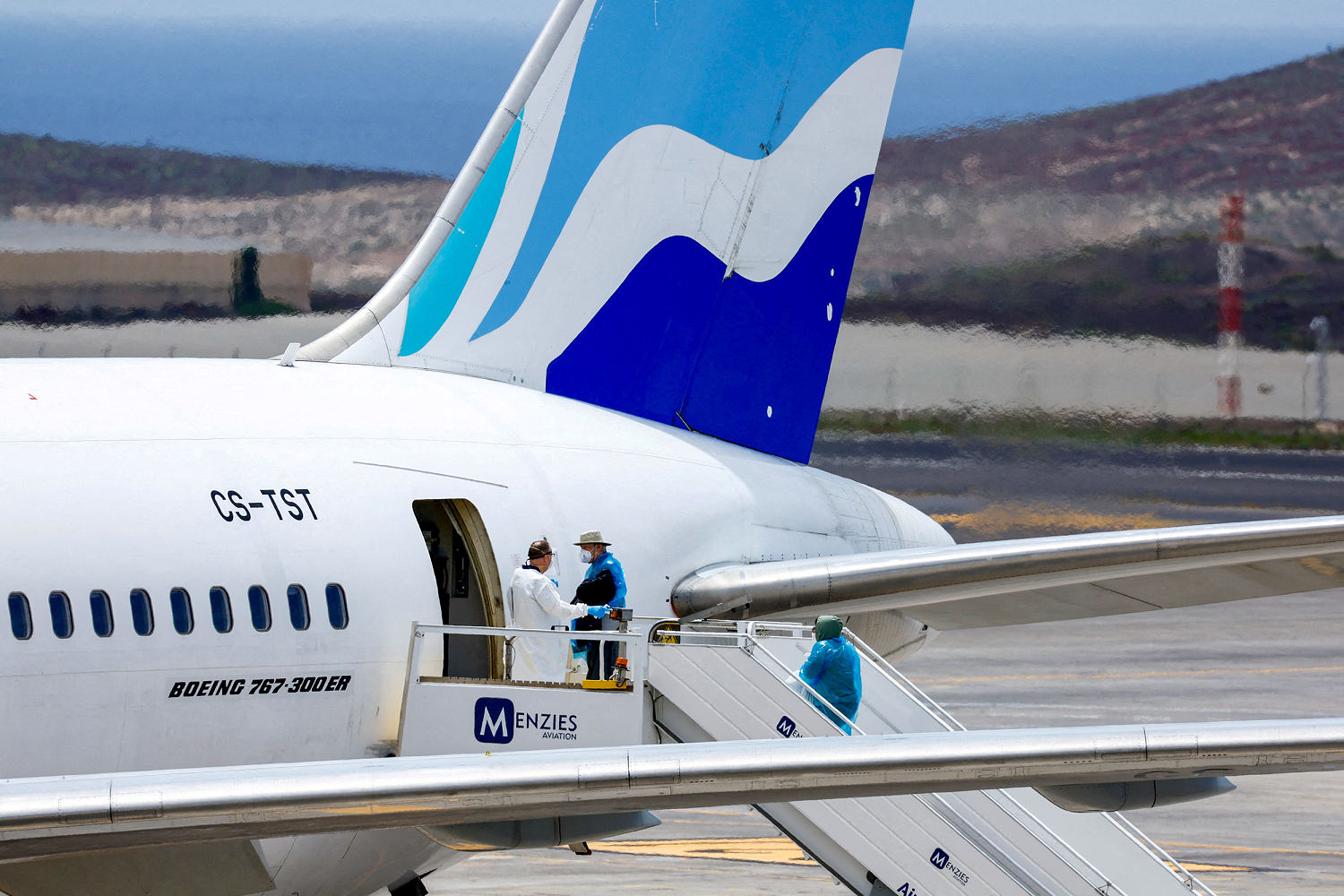
The presumptive positive test for the Andes strain of hantavirus in a Canadian passenger repatriated from the MV Hondius exposes the systemic vulnerabilities of maritime biosecurity. While public health communication emphasizes that the public risk remains low, an analytical dissection of the outbreak reveals a complex interplay of long incubation kinetics, enclosed-space transmission dynamics, and the logistical friction of global contact tracing.
Evaluating this outbreak requires shifting away from generalized panic or false equivalencies with respiratory pandemics like COVID-19. Instead, the situation must be quantified through the lens of specialized epidemiological metrics: the secondary attack rate in confined environments, the mathematical constraints of a 42-day quarantine, and the clinical demands of a pathogen carrying a historical case fatality ratio approaching 50%.
The Structural Mechanics of the Outbreak
The index event of the MV Hondius cluster originated on land, reinforcing the fundamental epidemiological principle that cruise ships act as amplifiers rather than incubators of novel pathogens. Environmental exposure occurred during land excursions in South America, where sylvatic rodent reservoirs shed the virus. The primary vector for hantavirus is the inhalation of aerosolized excreta, meaning the initial breach was environmental.
Once the virus entered the vessel, the containment challenge shifted from vector-to-human transmission to human-to-human transmission. This dynamic is specific to the Andes strain of hantavirus. The structural architecture of a cruise ship creates an optimization framework for viral propagation due to three distinct variables:
- Volumetric Air Exchange Limitations: Standard HVAC systems in maritime vessels often recirculate a percentage of internal air to optimize thermal efficiency. In the presence of a pathogen capable of human-to-human transmission through close-range droplets or aerosols, this recirculation reduces the dilution ventilation rate, increasing the probability of exposure for individuals in adjacent quarters.
- Proximity-Induced Micro-Environments: Passenger cabins, communal dining facilities, and corridors represent high-density zones where the radius of physical interaction drops below the threshold required to prevent droplet transmission.
- Prolonged Exposure Duration: Unlike transient public transport networks, maritime itineraries mandate continuous, multi-week exposure within the same enclosed ecosystem, effectively compounding the cumulative viral load experienced by close contacts.
The Mathematical Challenge of the 42-Day Incubation Window
The defining operational bottleneck for public health authorities tracking the MV Hondius passengers is the temporal distribution of hantavirus pathogenesis. The incubation period spans a highly variable timeline, typically ranging from 1 to 6 weeks. This prolonged window undermines traditional short-term containment strategies.
[Day 0: Initial Exposure] ──► [Days 1-7: Asymptomatic Latency] ──► [Days 14-42: Pathogenesis Window]
                                                                        │
                                                                        └──► Risk of Secondary Transmission
The 42-day quarantine mandated by the World Health Organization is mathematically derived from the maximum upper bound of this incubation curve. This extended timeline creates significant systemic friction across multiple sectors:
Clinical Surveillance Attrition
Maintaining strict isolation adherence for six weeks introduces human-factor degradation. Compliance rates degrade over extended durations, increasing the risk of community leaks if monitoring protocols are not institutionalized via active daily surveillance.
Diagnostic Timing Bottlenecks
A patient can harbor the virus for weeks without demonstrating measurable viral loads or antibody responses. Testing too early yields false negatives, which means individuals must remain isolated regardless of early negative PCR assays. The Canadian case illustrates this timeline perfectly: the patient remained asymptomatic upon arrival on May 10, only developing mild symptoms several days into a planned 21-day domestic quarantine.
Resource Allocation Burn Rate
Quarantining individuals for 42 days demands significant public health infrastructure. It requires dedicated bio-containment transport, dedicated hospital beds for isolation, and continuous epidemiological monitoring. When applied globally across repatriated passengers in Canada, the United States, France, Spain, and the United Kingdom, the cumulative operational cost scales linearly with the number of traced contacts.
Transmission Dynamics: Droplet vs. Aerosol Profiles
The Andes hantavirus variant demands a precise clinical definition to avoid mischaracterization. Unlike classic hantaviruses found in North America (such as the Sin Nombre strain), which require direct inhalation of rodent excreta and do not spread between humans, the Andes strain exhibits a unique capability for inter-human transmission.
This transmission occurs primarily through close contact and exposure to respiratory droplets. Emerging data from historical outbreaks in South America suggest that transmission can occur in shared indoor spaces without direct physical contact, hinting at short-range aerosol dynamics in poorly ventilated rooms.
The clinical progression of Hantavirus Pulmonary Syndrome (HPS) further complicates containment. The initial prodromal phase presents with non-specific symptoms: fever, headache, myalgia, and gastrointestinal distress. These symptoms mimic benign viral infections, introducing diagnostic delays.
The secondary phase involves a sudden escalation to respiratory distress and hypotension, driven by increased capillary permeability in the lungs. Because the transition from mild prodrome to critical respiratory failure can occur within hours, the medical protocol requires immediate access to intensive care units equipped with advanced respiratory support, such as Extracorporeal Membrane Oxygenation (ECMO).
Operational Friction in Global Contact Tracing
The dispersion of passengers from the MV Hondius via international flights prior to widespread containment protocols created a multi-jurisdictional tracking problem. The contact tracing network can be disaggregated into two distinct risk tiers:
[MV Hondius Cluster]
       │
       ├─► High-Risk Cohort (Direct Ship Contacts) ──► 42-Day Strict Isolation / Bio-containment
       │
       └─► Moderate-Risk Cohort (Flight Manifests) ──► Passive Surveillance / Radial Tracing
The primary tier comprises individuals with direct cabin or social exposure on the vessel. These cases require absolute isolation, as demonstrated by the direct transfer of the four Canadian travelers to dedicated facilities in British Columbia.
The secondary tier involves radial contact tracing based on flight manifests. For instance, Canadian public health authorities are monitoring dozens of individuals who shared commercial flights with confirmed cases. Because these individuals were not close contacts on the ship, they are classified as low-risk, shifting the strategy from active isolation to passive symptom surveillance.
The logistical friction of this operation is dictated by data asymmetry between international health agencies. Flight manifests frequently lack precise passenger contact information, creating a time lag between initial case confirmation and the notification of adjacent travelers. In a disease with a 50% potential mortality rate, a three-day delay in locating a secondary contact significantly increases the probability of an unmanaged clinical crisis.
Strategic Vector Management and Port Infrastructure
The containment protocol implemented for the MV Hondius itself represents a shift toward strict maritime exclusion. Retaining a skeleton crew of 25 personnel to sail the vessel back to the Netherlands under strict physical distancing protocols isolates the mechanical vector from global commercial networks.
The deep-cleaning and disinfection protocols required upon the ship's arrival must target both biological and environmental elements. Standard surface disinfection is insufficient. The decontamination strategy must employ specialized viral eradication procedures:
- HVAC System Remediation: Complete gaseous decontamination of internal air handling units using hydrogen peroxide vapor or chlorine dioxide to neutralize any lingering particulate vectors.
- Rodent Eradication Verification: Deploying intensive structural pest analytics to confirm the complete absence of rodent vectors within the hull, ensuring that no endemic colony amplifies the imported strain.
- Effluent and Waste Bio-containment: Treating all blackwater and greywater systems with specialized chemical neutralizers prior to municipal discharge to prevent environmental leakage into port ecosystems.
The long-term economic consequence for the cruise sector lies in the inevitable tightening of health clearance protocols at international ports. Nations are likely to transition from passive maritime declarations of health to mandatory pre-disembarkation screening windows for vessels originating from regions with known endemic zoonotic pathogens. This structural shift adds operational friction to cruise itineraries, increasing port turnaround times and modifying the insurance risk profiles of expedition vessels operating in remote regions.