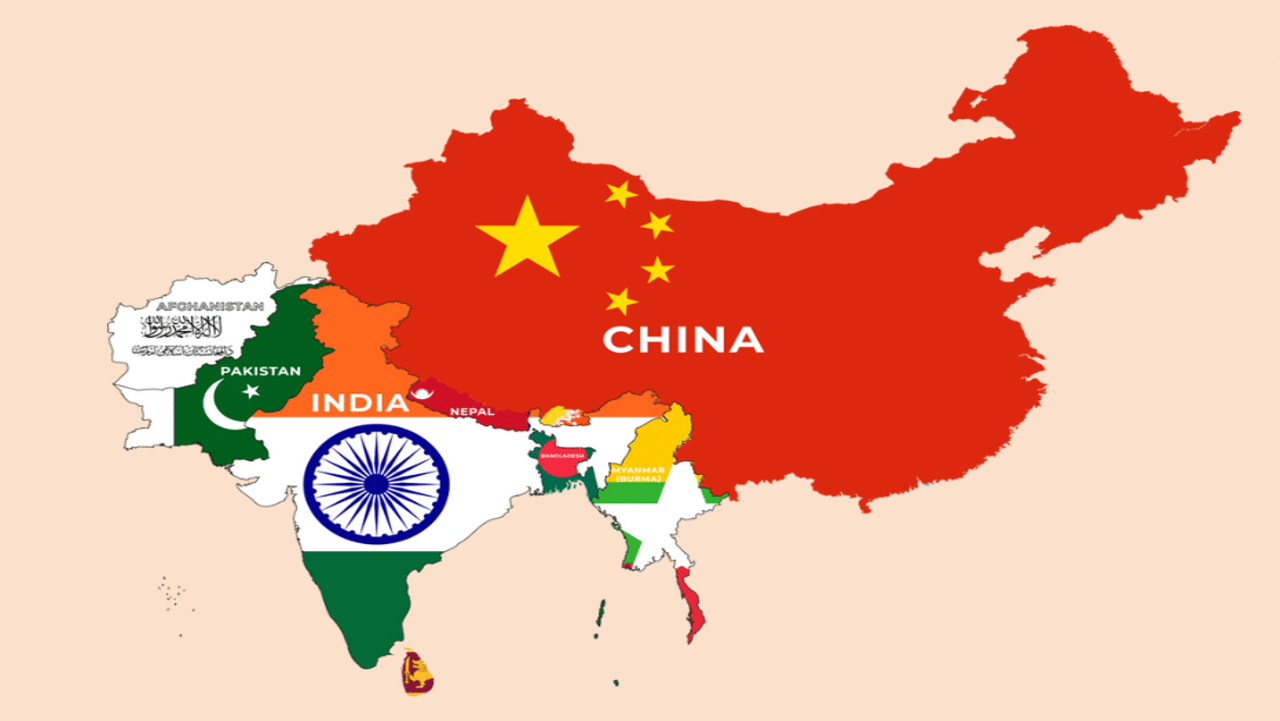
Donald Trump built his political identity on the idea that American trade policy was a series of surrender documents signed by "stupid" people. When he took office, he didn't just tweak the knobs of global commerce; he smashed the console. By imposing massive tariffs on hundreds of billions of dollars in Chinese goods and alienating traditional allies through steel and aluminum levies, he initiated a systemic decoupling of the world’s two largest economies. Now, as the dust settles on those initial skirmishes, we see a leader attempting to manage the very volatility he engineered. This is not a simple "fix." It is a high-stakes effort to recalibrate a global supply chain that proved far more resilient—and far more stubborn—than his initial rhetoric suggested.
The trade war was never just about a deficit. It was an ideological assault on the consensus of the last forty years. For decades, the mantra was that deeper trade ties with Beijing would lead to a more liberal, Western-aligned China. Trump bet that this was a lie, and in many ways, he was right. However, the mechanism he chose to address it—aggressive, unilateral tariffs—acted as a blunt instrument in a world that required a scalpel.
The Friction of Decoupling
Moving a factory is not like moving a chess piece. It is an agonizing, multi-year process involving local permits, logistical nightmares, and the training of thousands of workers. When the Trump administration began its tariff campaign, the goal was to force a mass exodus of manufacturing back to American shores. That didn't happen in the volume predicted. Instead, we saw a "China Plus One" strategy. Companies moved the final assembly of their products to Vietnam, Mexico, or Thailand to dodge duties, while still sourcing the vast majority of their components from Chinese state-linked suppliers.
The result was a shell game. Trade data often shows a narrowing deficit with China but a ballooning deficit with Southeast Asia. If you look under the hood of a "Made in Vietnam" electronics suite, you will frequently find Chinese circuit boards and Chinese software. Trump’s current challenge is realizing that the tariffs created a detour rather than a dead end. To truly "fix" the situation, the administration has had to shift from simple taxes to complex industrial policy—subsidies like the CHIPS Act (which built on his momentum) and more targeted export blocks on high-end semiconductors.
The Agriculture Hostage Situation
American farmers were the frontline infantry in this conflict, and they took the heaviest fire. When China retaliated by cutting off purchases of U.S. soybeans and pork, the administration was forced to scramble. They didn't fix the trade dynamic; they masked the pain with roughly $28 billion in federal subsidies. It was a classic case of taking money from one pocket to patch a hole in the other.
The "Phase One" trade deal was supposed to be the grand resolution. China promised to buy an additional $200 billion in American goods. They fell short. Significantly short. This failure highlights the inherent flaw in transactional diplomacy with a command economy. You cannot force a state-run system to buy your products through a signed piece of paper if the underlying geopolitical tension makes them want to diversify away from you. Trump is now dealing with a China that has learned how to live without American agriculture, finding new partners in Brazil and Argentina. Reclaiming those lost markets is a task that may take a generation, if it’s even possible.
The Inflationary Tax on the American Consumer
There is a persistent myth that China pays the tariffs. They do not. The importer of record—the American company—pays the duty to U.S. Customs. To maintain profit margins, those costs are passed down the line. We saw this manifest in the "laundry detergent" effect. When tariffs hit washing machines, the price of the machines went up, but so did the price of dryers, which weren't even under tariff. Why? Because manufacturers saw an opportunity to raise prices across the board under the cover of trade volatility.
The administration’s attempt to mitigate this has been a messy system of "exclusions." Thousands of companies have begged the government for permission to import specific parts without the 25% tax because there is simply no domestic alternative. This created a massive, opaque bureaucracy where political connections often felt as important as economic necessity. To fix this war, the administration has to decide which industries are "essential" enough to protect and which are "expendable" enough to be sacrificed to the inflationary fire. It is a form of central planning that would have made old-school Republicans shudder.
The Steel and Aluminum Mirage
Protecting the "rust belt" was the emotional heart of Trump's trade strategy. Section 232 tariffs on steel and aluminum were intended to revive the American foundry. On the surface, it worked for a time. Prices rose, and domestic mills roared back to life. But for every one job saved in a steel mill, roughly 15 to 20 jobs were put at risk in the "steel-consuming" industries—auto parts, construction, and appliances.
When the cost of raw materials goes up, the competitiveness of the American finished product goes down. An American car becomes more expensive to build than a Japanese car, even if the labor costs are the same. This is the paradox of protectionism. By shielding the upstream producers, you inadvertently poison the downstream manufacturers. Trump’s attempts to "fix" this have involved a series of quotas and "gentleman's agreements" with countries like South Korea and the EU, replacing free trade with a managed trade system that feels more like a 19th-century mercantile empire than a 21st-century economy.
The Geopolitical Cost of Unilateralism
You cannot fight a trade war on five fronts and expect to win them all simultaneously. By targeting the EU, Canada, and Japan with the same vigor as China, the Trump administration initially found itself isolated. The "fix" in the latter half of his term, and continuing into the current political climate, has been a realization that allies are force multipliers.
The US-Mexico-Canada Agreement (USMCA) was the first major step in this pivot. It wasn't a total revolution—it was a rebranded NAFTA with stricter labor rules and higher "regional content" requirements for cars. But it signaled a shift toward "friend-shoring." The idea is simple: if we can't make it in Ohio, we'd rather make it in Monterrey than in Shenzhen. This is the new architecture of American trade. It is less about "America First" in a vacuum and more about "Anyone But China."
The Tech Cold War
The most enduring part of the trade war isn't about soy or steel; it's about silicon. The blacklisting of companies like Huawei and the restrictions on SMIC (Semiconductor Manufacturing International Corporation) represent a total departure from the "fix it through trade" mentality. This is where the trade war becomes a cold war.
The administration realized that trade wasn't just an economic tool, but a national security vulnerability. If China controls the 5G towers and the subsea cables, they control the data. The "fix" here has been a brutal, effective decoupling of the tech stacks. We are moving toward a "splinternet," where the world is divided into two distinct technological ecosystems. This is incredibly expensive and creates massive inefficiencies, but from a veteran analyst's perspective, it is the only part of the strategy that has a clear, long-term strategic logic.
The Reality of the "New Normal"
Anyone looking for a return to the pre-2016 trade world is chasing a ghost. The "fix" isn't a return to zero-tariff globalization; it's the institutionalization of the conflict. We have moved from an era of "just-in-time" supply chains to "just-in-case" supply chains.
The cost of doing business has permanently increased. Companies now have to bake "geopolitical risk" into their quarterly projections. They have to hire teams of trade lawyers to navigate the ever-changing list of prohibited entities and tariff codes. This is the friction that Trump introduced to the system. While it has successfully forced a conversation about China's predatory economic practices, it has also stripped away the efficiency that kept consumer prices low for three decades.
The real investigative question isn't whether Trump can fix the war, but whether the war has become the engine itself. The volatility creates political capital. It allows for the "hero's journey" narrative: create a crisis, swoop in to negotiate a "deal," and claim victory, even if the deal simply returns things to a slightly worse version of the status quo.
The American consumer is left holding the bill for this education. We have learned that we are more dependent on global trade than the rhetoric suggested, and that "bringing the jobs back" requires more than just a tax at the border. It requires a total overhaul of education, infrastructure, and energy costs—things that a tariff can't touch.
The trade war didn't end because a deal was signed. It simply changed its shape. It moved from the front pages of the newspapers into the fine print of shipping manifests and the backrooms of the Commerce Department. The conflict is no longer an anomaly; it is the policy.
The era of cheap, frictionless globalism is dead, and no amount of "fixing" will bring it back. The new goal is managed decline of the old order, replaced by a fractured, expensive, and intensely political map of the world's goods.
Stop looking for a peace treaty. This is the new way of the world.