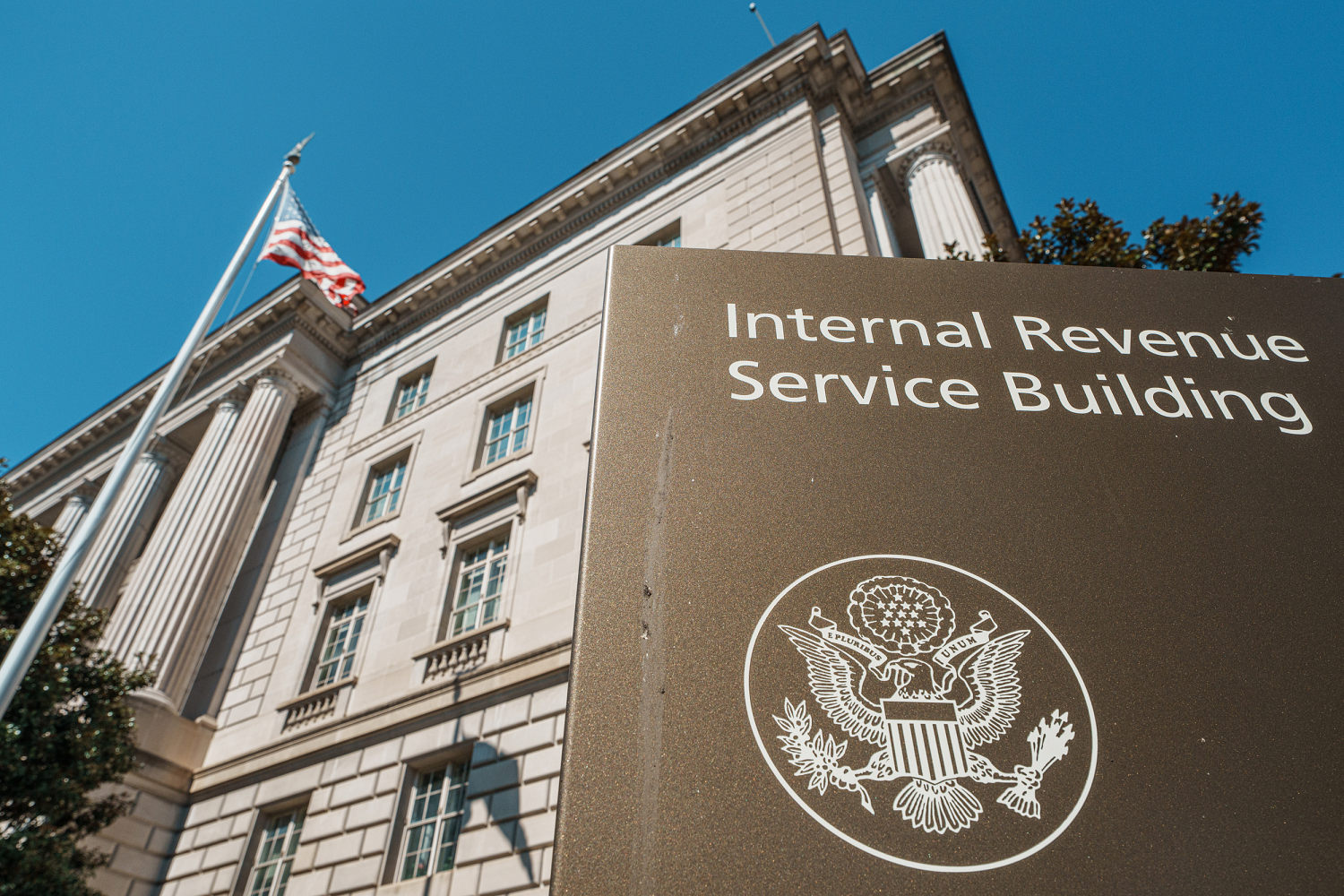
The legal skirmish between Donald Trump and the Internal Revenue Service has moved from the quiet halls of tax audits into a federal courtroom, where a staggering $10 billion damages claim now hangs by a thread. At the heart of the dispute is a fundamental question of whether a former president can sue a government agency for what he describes as a coordinated campaign of "lawfare" and harassment. However, early judicial skepticism suggests that the case faces a steep uphill battle against the massive wall of sovereign immunity.
The Massive Reach of Section 7433
To understand why this case is even in a courtroom, you have to look at the narrow window provided by the Internal Revenue Code. Specifically, Section 7433 allows taxpayers to sue the United States if an IRS official recklessly or intentionally disregards any provision of the tax code during the collection of federal taxes.
There is a catch. A big one.
The law distinguishes between the "assessment" of taxes—determining how much you owe—and the "collection" of those taxes—the actual process of getting the money. Federal judges have historically been obsessive about this distinction. If the IRS is just auditing you or calculating a bill, Section 7433 usually doesn't apply. Trump’s legal team argues that the agency’s behavior went beyond mere calculation, crossing the line into a targeted, punitive crusade designed to bankrupt or discredit him. The IRS, represented by Department of Justice attorneys, views it differently. They see a standard, albeit high-stakes, audit process that the former president is attempting to weaponize into a massive payout.
Judicial Skepticism and the Sovereign Immunity Wall
During recent proceedings, the presiding judge didn't pull punches. The court’s primary concern isn't whether the IRS likes Donald Trump; it is whether the law even allows this specific type of lawsuit to proceed. The United States government generally cannot be sued unless it explicitly gives permission. This is sovereign immunity. When Congress wrote the laws governing the IRS, they gave very limited permission for taxpayers to fire back.
The judge’s questions focused on the lack of specific instances of "collection" activity. If there was no lien, no levy, and no seizure of assets, the legal foundation for a $10 billion claim starts to look like sand. You cannot sue the taxman for $10 billion simply because an audit was long, intrusive, or politically motivated. You have to prove they broke the law while trying to take your property.
The Complexity of the Partnership Audit
A significant portion of the tension stems from the 2017 Tax Cuts and Jobs Act and the way the IRS handles "Large Partnership" audits. Trump’s business empire is a dizzying maze of limited liability companies and partnerships. These structures are designed to pass income through to owners, but they also create a nightmare for auditors.
The IRS has recently received a massive influx of funding specifically to target these complex tiers. From an analyst's perspective, what Trump calls harassment, the IRS calls "modernized enforcement." The government argues that the sheer volume of entities and the complexity of the "carryover" losses involved necessitated a years-long deep dive. The defense is simple: the bigger the pile of paperwork, the longer it takes to read.
The Motive and the Math
Why $10 billion? The number is so large it feels more like a political statement than a calculated legal demand. In high-end litigation, an "ask" of this magnitude is often used to grab headlines and force a settlement, but the government rarely settles out of fear of a big number.
To reach $10 billion, the Trump team would have to prove not just that the IRS was wrong, but that their actions caused a total collapse of business opportunities, massive reputational damage, and legal fees that reach into the stratosphere.
- Direct Costs: Actual money paid to lawyers and accountants to fight the IRS.
- Opportunity Costs: Business deals that fell through because of the "cloud" of a permanent audit.
- Punitive Elements: Money meant to punish the agency for bad behavior.
The problem is that Section 7433 limits damages to actual, direct economic exhaustion. It is not a lottery. It is a reimbursement mechanism. Even if the judge finds that the IRS acted in bad faith, the chances of a ten-figure award are virtually zero under current statutory caps.
The Shadow of the Presidential Audit Program
Since the Nixon era, the IRS has had a policy of auditing the sitting president and vice president every year. This is the Presidential Audit Program. Trump’s team argues that this program was distorted into a permanent surveillance state. They claim the agency leaked private data to the press and allowed partisan actors within the Treasury Department to steer the investigation.
The government’s rebuttal is grounded in the "Presumption of Regularity." This is a legal principle where courts assume that government officials have properly discharged their official duties unless there is "clear evidence to the contrary." A judge isn't going to take a plaintiff's word that a federal agency is corrupt. They need a smoking gun—an internal email, a whistleblower, or a documented breach of protocol that shows the audit was a sham from day one.
Tax Law as a Political Weapon
We are entering an era where the tax code is being used as a primary theater of political warfare. This case is a bellwether. If Trump succeeds in even getting this to a discovery phase—where his lawyers can look at internal IRS communications—it opens the floodgates. Every wealthy individual with a political grievance would have a roadmap for suing the IRS.
The IRS knows this. The Department of Justice knows this. This is why they are fighting so hard to kill the case at the motion-to-dismiss stage. They want to ensure that the "assessment" vs. "collection" barrier remains unbreached. If a judge rules that a politically motivated audit counts as "collection activity," the IRS's ability to investigate complex tax shelters will be effectively neutered by the threat of endless litigation.
The Problem with Proving Intent
To win, the Trump legal team must prove intent. They have to show that IRS agents didn't just make a mistake or act slowly, but that they "intentionally" disregarded the law. This is one of the highest bars in the American legal system.
Usually, the IRS wins these cases by showing that their interpretation of the tax code, even if eventually proven wrong in Tax Court, was a "reasonable" interpretation at the time. Professional skepticism is the job description of an auditor. Turning that skepticism into a "reckless disregard" for the law requires a level of evidence that has not yet appeared in the public filings for this case.
The Strategy of Delay
For the Trump camp, a "win" might not actually be a $10 billion check. In the world of high-stakes power plays, sometimes the win is simply staying in the fight. By keeping this case alive, Trump maintains a narrative of victimization that resonates with his base. It frames the IRS not as a neutral collector of revenue, but as an arm of the "Deep State."
However, courts are not campaign rallies. Judges are concerned with "standing" and "statutory interpretation." During the most recent hearing, the judge repeatedly steered the conversation back to the text of the law, ignoring the political rhetoric. This focus on the "black letter law" is the greatest danger to the lawsuit. If the judge follows the strict precedent of the D.C. Circuit and other federal courts, the case may be dismissed before it ever gets to a jury.
The Irony of the $72 Million Refund
Much of this legal animosity traces back to a massive $72 million tax refund Trump received years ago, which the IRS later sought to challenge. This refund, stemming from losses reported in 2008 and 2009, has been the "white whale" for IRS investigators for over a decade. The fact that this specific audit has lasted through three different presidential administrations suggests that the delay isn't just about Trump—it's about the inherent difficulty of auditing "pass-through" entities that operate across dozens of jurisdictions.
The IRS claims the delay is due to the complexity of the math. Trump claims the delay is a form of slow-motion execution.
If this case proceeds, it will force a reckoning over how much power the IRS should have to keep a taxpayer in a state of perpetual investigation. There is currently no law that says an audit must end within a certain number of years, provided the taxpayer agrees to extend the statute of limitations—which wealthy taxpayers often do to avoid an immediate, aggressive "jeopardy assessment."
What Happens if the Case Collapses
If the judge dismisses the suit, as many legal analysts expect, it will reinforce the nearly impenetrable shield of the IRS. It will signal that "harassment" during an audit is not a valid cause of action unless it results in the actual seizure of property without due process.
The $10 billion figure will vanish, but the political fallout will remain. The IRS is currently trying to rebuild its public image as a modernized, service-oriented agency. A prolonged legal battle with the former president—even one the agency eventually wins—is a branding disaster. It keeps the focus on the agency's power to disrupt lives rather than its role in funding the government.
The legal basis for this case isn't just thin; it is an attempt to rewrite the rules of taxpayer litigation. Trump is betting that he can find a crack in the sovereign immunity wall that has protected the IRS for decades. If he fails, the wall gets even higher for everyone else.
The court's decision will likely hinge on a single paragraph of legal reasoning: whether an audit is an act of "collection" or an act of "investigation." In the eyes of the law, that distinction is the difference between a $10 billion payday and a dismissed complaint.
Taxpayers should watch the outcome carefully. Not because of the man at the center of it, but because the result will define exactly how much "reckless disregard" a government agent is allowed to exhibit before they are held accountable in a court of law. The precedent set here will outlast the political careers of everyone involved. It is a fight over the boundaries of the state's power to peek into your pockets. If the judge decides the IRS cannot be sued for how it conducts an audit, the agency becomes essentially untouchable during the pre-collection phase, leaving the taxpayer with no recourse but to wait for the final bill.