The travel industrial complex has a fetish for "rare" events that aren't actually rare. Every few years, when a specific sequence of Pacific moisture hits the Mojave, the digital masses descend on Death Valley National Park to witness the "Superbloom." They treat it like a glitch in the Matrix—a fleeting, miraculous defiance of a hostile environment.
They are wrong.
The bloom isn't a miracle. It’s a survival strategy. More importantly, the narrative that this ecosystem is "coming to life" implies that it was dead to begin with. That mindset is the peak of ecological illiteracy. We’ve been conditioned to value nature only when it puts on a show that looks like a desktop wallpaper. If it’s not purple, yellow, and vibrant, we call it a wasteland.
We need to stop mourning the end of the bloom and start respecting the brilliance of the drought.
The Myth of the Fragile Desert
The standard take on Death Valley is that it’s a land of extremes where life "barely clings on." This is a fundamental misunderstanding of biological engineering.
The desert doesn't "struggle" to survive. It is optimized for scarcity. When you see a Superbloom, you aren't seeing the desert finally succeeding; you’re seeing a massive, desperate reproductive gamble triggered by an excess of resources. For many species, like the Desert Gold (Geraea canescens), the bloom is a frantic race to dump seeds into the soil before the heat returns.
I’ve spent a decade tracking these patterns. I’ve watched tourists trample biological soil crusts—living communities of cyanobacteria, lichens, and mosses—just to get a shot of a flower that will be gone in seventy-two hours. They destroy the foundation of the desert to celebrate its makeup.
The real "life" of Death Valley happens in the quiet years. It’s in the Creosote bush (Larrea tridentata), which can live for thousands of years by cloning itself in a slow-motion radial march. It’s in the pupfish that survive in water four times saltier than the ocean. That is the real story. But that doesn't get clicks.
Stop Asking When the Flowers Are Coming
The most common question I hear is, "When is the best time to see the flowers?"
It’s the wrong question. It assumes the flowers are the point.
When you visit Death Valley specifically for the bloom, you are engaging in "trophy tourism." You’re looking for a specific, Instagram-validated aesthetic. If you arrive and the valley is "just brown," you feel cheated.
This is the equivalent of going to a symphony and leaving because they’re still tuning the instruments. The "tuning"—the heat, the wind-scoured canyons, the silence that is so heavy it rings in your ears—is the actual performance.
Why the "Superbloom" Label is Marketing Fluff
There is no scientific definition of a "Superbloom." It is a PR term used to drive park attendance and hotel bookings in the shoulder season.
Historically, massive blooms occurred roughly once a decade. Now, because of our desperate need for "once-in-a-lifetime" content, any year with a decent rainfall gets branded as a Superbloom. We’ve diluted the term to the point of irrelevance.
In reality, a "good" bloom year is often a sign of instability. Invasive species like Mediterranean grass thrive in these wet windows, choking out the native flora and creating a massive fuel load for fires in a landscape that isn't built to burn. Your "beautiful" field of yellow might actually be an ecological ticking time bomb.
The Economic Mirage of Disaster Tourism
The media loves to frame the end of the bloom as a tragedy. "Catch it before it's gone!" they scream. This creates a surge of "last-chance tourism" that the infrastructure cannot handle.
- Soil Compaction: Thousands of feet stepping off-trail to find the perfect angle compress the earth. This kills the very seeds waiting for the next decade's rain.
- Resource Strain: Death Valley is the largest national park in the lower 48, but it has a skeleton crew. When 30,000 people show up on a Saturday for flowers, the actual conservation work stops so rangers can manage parking lot brawls.
- The Instagram Effect: We’ve seen this in Lake Elsinore and Antelope Valley. People don't just look; they pick. They lay in the flowers. They kill the things they claim to love.
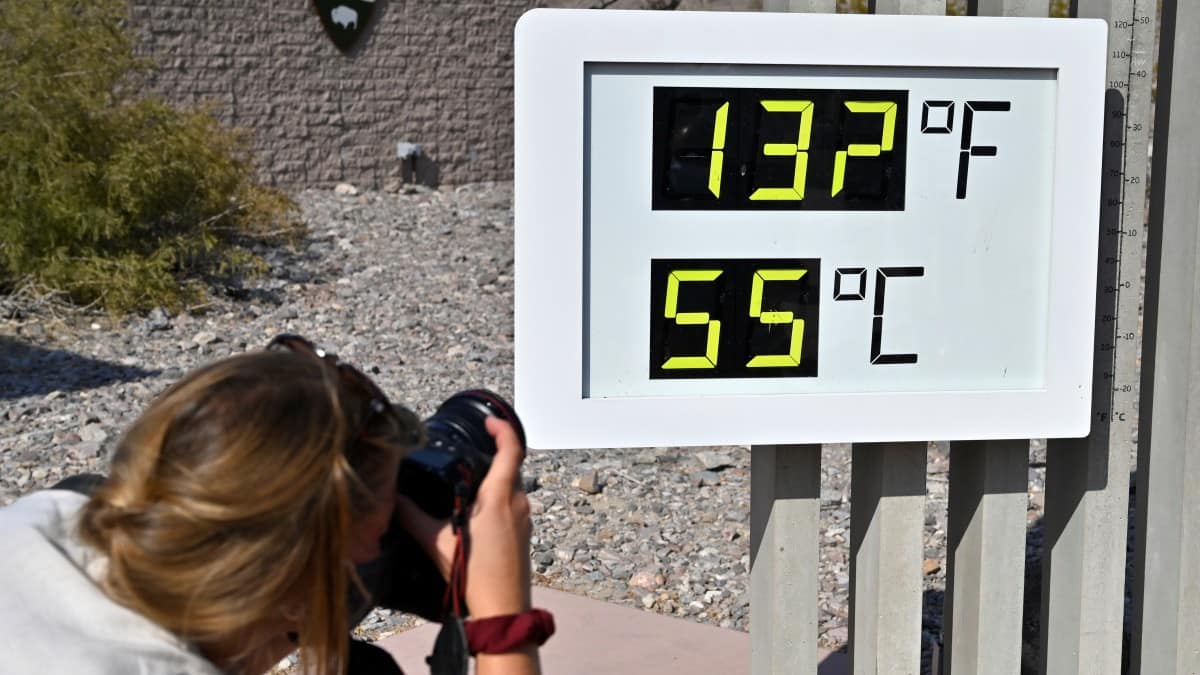
If you actually want to experience the desert, go when there are no flowers. Go when it’s $120^{\circ}F$. Go when the salt flats are blinding and the wind feels like a hair dryer. That is when the pretenders stay home, and the desert reveals its true character.
The Logic of Scarcity
Let’s look at the math of desert survival.
If a plant in a temperate forest produces 1,000 seeds, maybe ten survive. In the desert, a plant might produce 10,000 seeds that sit dormant for twenty years. They aren't "waiting" for life; they are in a state of suspended animation that is more resilient than anything in a rainforest.
This is the nuance the "death and rebirth" articles miss. The desert doesn't need to be reborn. It is already perfect.
We struggle with this because we are an additive species. We think more is better. More water, more green, more life. But the desert is a subtractive masterpiece. It is what remains when you take away everything unnecessary.
Forget the National Park Service Recommendations
The NPS will give you a map of the "scenic drives." If you follow it, you’ll be surrounded by rental SUVs and people complaining about the heat.
If you want the authentic Death Valley—the one that exists regardless of the rain—get out of your car and walk into the alluvial fans.
Look at the rocks. The geology of Death Valley is a billion-year record of the planet’s violent history. The flowers are a blink of an eye. The "Turtleback" formations in the Black Mountains tell a story of the earth’s crust being stretched and ripped apart. That’s a "miracle" that doesn't wilt.
The Checklist for the Non-Basic Traveler
If you must go, go for the right reasons. Stop treating the desert like a botanical garden and start treating it like a library.
- Respect the Crust: If you see "lumpy" dirt that looks like burnt popcorn, stay off it. That’s biological soil crust. It’s a living shield against erosion. Walking on it is an act of ecological vandalism.
- Ignore the Heat Warnings (Sort Of): Don't be stupid, but don't be afraid. The heat is the soul of the place. If you haven't felt the midday sun at Badwater Basin, you haven't seen Death Valley. You’ve seen a postcard.
- Look for the Micro, Not the Macro: Instead of searching for a sea of color, look for a single Mohavea confertiflora (Ghost Flower). Look at how it mimics other flowers to trick bees into pollinating it without offering any nectar. That’s the "contrarian" of the plant world. It’s a hustler.
The Truth About the "End"
The competitor articles tell you the bloom "won't last long." They say it with a sigh, as if the desert is about to return to a state of mourning.
That is pure projection.
The desert doesn't miss the flowers. It doesn't miss you. The "death" of the bloom is actually a massive victory for the ecosystem. It means the seeds are back in the ground. The energy has been stored. The cycle is complete.
The heat isn't the end of the show; it’s the beginning of the long, slow, magnificent endurance test that makes this place worth visiting in the first place.
If you can’t handle the desert without its floral mask, you don’t deserve the desert at all.
Stop waiting for the rain. Go find the beauty in the bones.