Leo is eight years old, and he is vibrating. It starts in his ankles, a low-frequency hum of stored kinetic energy that travels up his calves, through his knees, and settles in his restless, tapping fingers. He is sitting in a hard plastic chair, staring at a whiteboard covered in the skeletal remains of long division. To Leo, the numbers aren't math. They are bars.
He glances at the clock. The red second hand sweeps with agonizing indifference. In twelve minutes, the bell will ring, and Leo will be granted his twenty minutes of sovereignty. He will run until his lungs burn. He will negotiate the complex social hierarchy of a kickball game. He will stare at a beetle in the grass. He will, for a brief window of time, be a human being instead of a data point.
But then the teacher’s voice cuts through the daydream. She is kind, but tired. She announces that because the class struggled with their quiet reading transition, five minutes of recess will be docked. Then, because the state testing scores were lower than projected last quarter, the administration has mandated an extra block of instructional time.
Leo’s twenty minutes just became seven.
The hum in his ankles turns into a frantic twitch. He drops his pencil. He kicks the chair in front of him. By the time the bell finally rings, Leo isn't ready to play; he is ready to explode. We call this a behavioral issue. The American Academy of Pediatrics calls it a crisis.
The Cognitive Fallacy of the Grind
We have convinced ourselves that the human brain is a bucket. We believe that if we keep pouring "instructional minutes" into it, the bucket will eventually fill with knowledge. If the bucket isn't filling fast enough, our instinct is to pour harder, faster, and longer.
The reality is that the brain is more like a muscle. It fatigues. It requires recovery.
When schools cut recess to make room for more "rigorous" academics, they are committing a fundamental biological error. They are trying to run a marathoner at a sprint pace without allowing them to catch their breath. The latest guidance from the nation’s leading pediatricians isn't just a suggestion for "playtime." It is a medical intervention. They are sounding the alarm because the deprivation of unstructured breaks is physically and neurologically damaging our children.
Research shows that the brain does not learn during the input phase alone. It processes and encodes information during the breaks. When a child moves from a math lesson directly into a language arts lesson without a cognitive palate cleanser, the information bleeds together. It becomes a blur.
The "Recess as a Reward" model is the first thing that needs to die. For decades, teachers have used the threat of taking away recess to maintain order. It is the ultimate leverage. But if a child is acting out because they have too much pent-up energy, taking away their only outlet for that energy is like trying to put out a fire with gasoline. It is counter-productive. It is cruel. And according to the new AAP policy statement, it is a violation of a child's developmental rights.
The Invisible Laboratory of the Playground
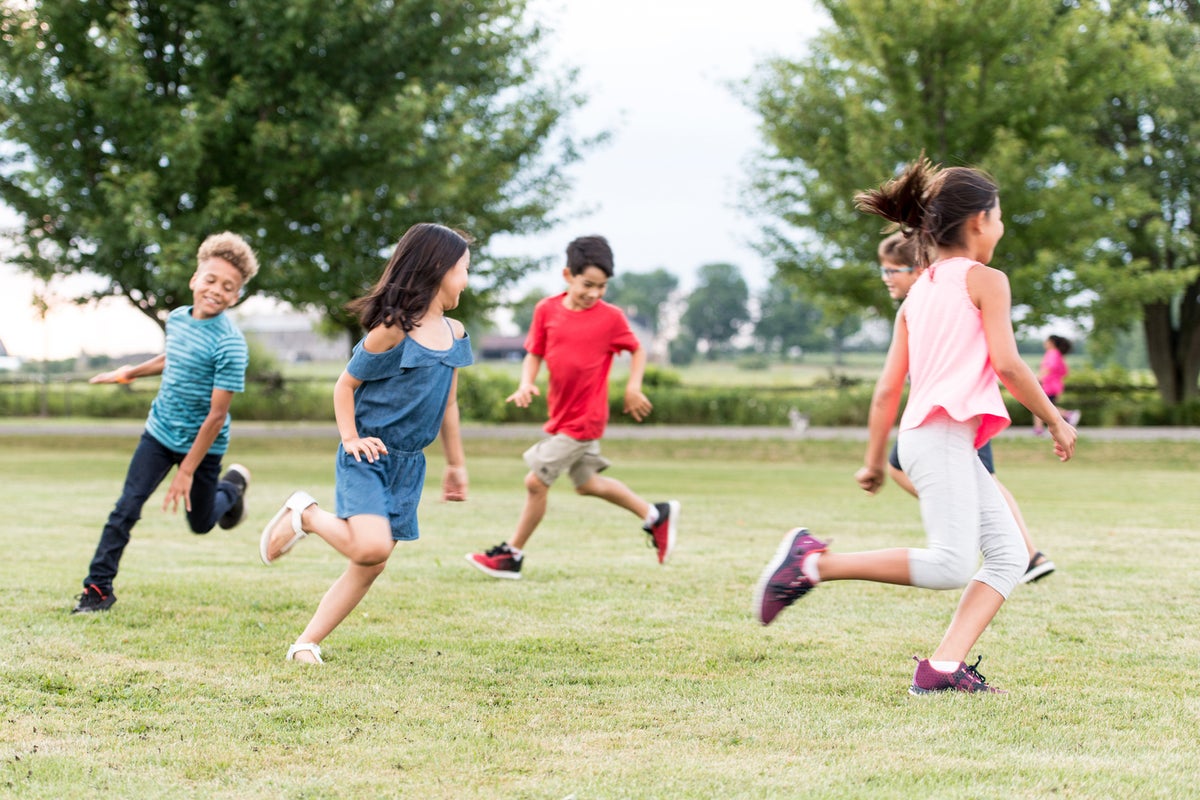
Consider the sheer complexity of a third-grade game of tag.
On the surface, it looks like chaos. Children are screaming, running in erratic patterns, and falling down. But look closer. This is a high-stakes laboratory for the most essential human skills.
First, there is the negotiation. Who is "it"? What are the boundaries? Can you hide behind the slide, or is that out of bounds? These are not small questions. They are lessons in conflict resolution, peer-to-peer diplomacy, and the democratic process. There is no adult mediator here to blow a whistle or hand out a worksheet on "Social-Emotional Learning." The children have to figure it out themselves, or the game ends.
Then, there is the physical literacy. In an era where "near-work"—staring at screens and books—is causing a global spike in myopia, the playground is the only place where a child’s eyes are forced to track moving objects at a distance. Their vestibular systems are being calibrated as they swing. Their fine motor skills are being honed as they grip the monkey bars.
When we replace this with "structured physical education," we lose the most vital ingredient: autonomy.
A gym class is still a controlled environment. There is a curriculum. There is a goal. Recess is the only time in a child’s six-hour day where they are the masters of their own destiny. They choose the activity, they choose the companions, and they choose the intensity. This isn't "wasted time." This is the only time they are practicing how to be adults.
The Poverty of Play
The tragedy of the recess crisis is that it is not distributed equally.
If you visit an affluent suburban school, you will likely see sprawling green fields and multiple breaks throughout the day. These parents understand that play is a component of success. They view it as a "holistic" necessity.
But move into underfunded urban districts, where the pressure to meet standardized testing benchmarks is a matter of survival, and recess is the first thing on the chopping block. In these schools, the children who need the movement the most—children who may live in neighborhoods where it isn't safe to play outside after school—are the ones being tethered to their desks for the longest periods.
We are creating a two-tiered system of childhood. One tier is allowed to be young, messy, and active. The other is being conditioned for a life of sedentary compliance.
The AAP is clear: recess is a necessary break in the day for optimizing a child’s social, emotional, physical, and cognitive development. It should not be withheld for any reason. Not for poor grades. Not for talking in class. Not for a lack of "instructional minutes." You wouldn't withhold a child’s lunch because they failed a spelling test. You shouldn't withhold their movement, either.
The Chemistry of a Breakdown
Let's look at what is happening inside Leo's body when he is denied that break.
Cortisol levels begin to rise. This is the stress hormone. In small doses, it helps us focus. In chronic doses, it shuts down the prefrontal cortex—the part of the brain responsible for impulse control, planning, and complex thought.
By the afternoon, Leo isn't "lazy." He is neurologically incapable of paying attention. His brain has entered a state of survival. He is looking for a way out. He is looking for a way to move. When he finally snaps and pushes a classmate or shouts out of turn, the system punishes him by—you guessed it—denying him the very recess that would have lowered his cortisol and reset his brain.
It is a feedback loop of failure.
The pediatricians are asking us to look at the data, but more importantly, they are asking us to look at the children. We have spent the last twenty years trying to turn schools into academic factories, and the results are in: our kids are more anxious, more sedentary, and more burned out than ever before. We have traded their well-being for a marginal increase in test scores that often evaporates by high school anyway.
The Seven Minute Savior
The bell rings again.
Leo has seven minutes. He doesn't waste a second. He sprints out the heavy double doors, his sneakers slapping against the asphalt. He doesn't have time for a full game of kickball, so he just runs. He circles the perimeter of the fence, the wind whipping past his ears, the hum in his ankles finally finding an exit.
For three hundred and twenty seconds, he is not a student. He is not a "behavioral challenge." He is a blur of blue cotton and kinetic joy.
Then the whistle blows.
The seven minutes are over. He trudges back to the door, his chest heaving, a thin sheen of sweat on his forehead. He sits back down in the hard plastic chair. The red second hand begins its indifferent sweep again.
He picks up his pencil. He looks at the long division. For the first time all day, the numbers don't look like bars. They just look like numbers. He breathes. He begins.
We think we are saving time by cutting the play. We are actually losing the child. The pediatricians are right: it is time to give them back their world, one twenty-minute block at a time, before the hum in their ankles stops entirely.