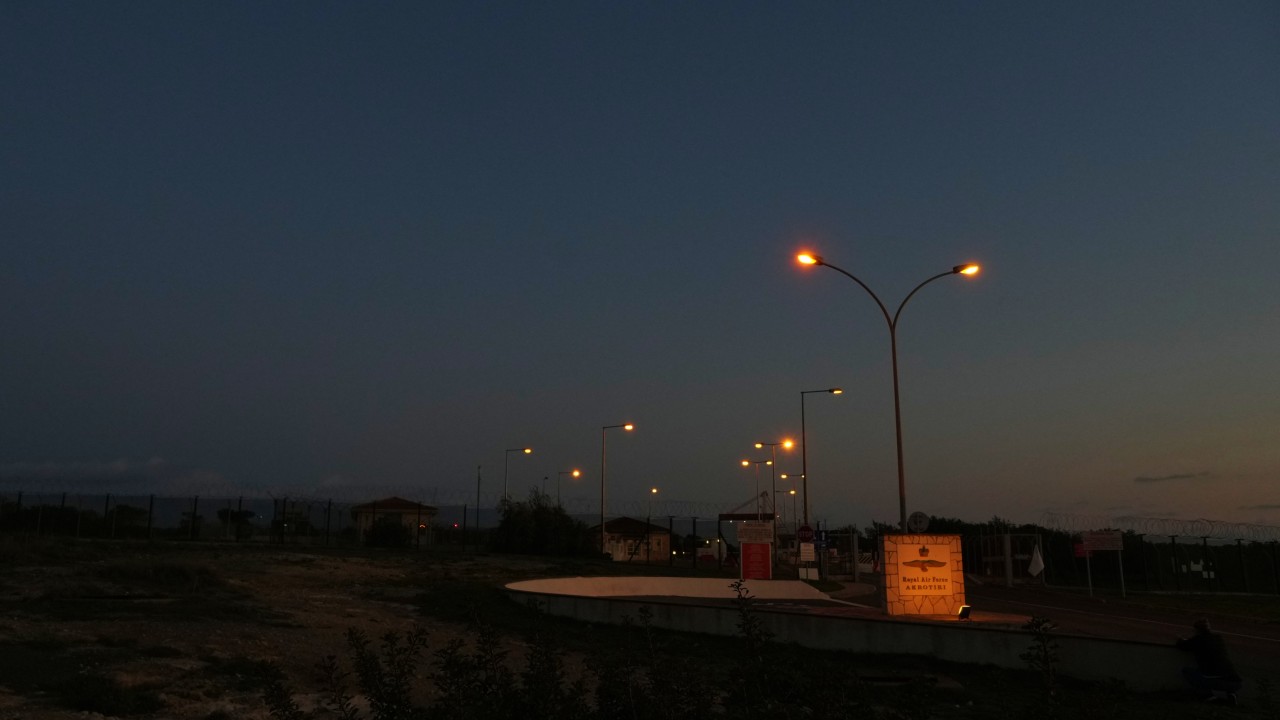
The war between the U.S., Israel, and Iran isn't just a Middle Eastern problem anymore. It officially landed on European soil at midnight on Sunday when an Iranian-made Shahed drone slammed into the runway at RAF Akrotiri in Cyprus. If you thought Britain could keep its hands clean while the regional powers traded blows, think again. This strike marks the first time a British sovereign base in Cyprus has been hit since 1986. It’s a loud, messy signal that the "red lines" we used to talk about are basically gone.
I’ve seen plenty of "limited escalations" over the years, but this feels different. It’s not just about a crater in a runway. It’s about the fact that Iran—or one of its proxies like Hezbollah—just proved they can and will target British assets the moment we lean too far toward Washington. Prime Minister Keir Starmer had just finished telling the world that the U.S. could use British bases for "defensive" strikes against Iran. Hours later, the sirens were screaming in Limassol.
The Myth of the Safe Distance
For decades, RAF Akrotiri has been the crown jewel of British power projection. It’s where we launch Typhoons to hit ISIS and where we monitor the Eastern Mediterranean. We've always treated it like a safe bubble, a bit of British soil floating in the sun, far enough away from the "real" fighting to be a sanctuary. That bubble just popped.
The drone that hit the base was a Shahed—the same kind of "kamikaze" tech that’s been tearing through Ukraine for years. It's cheap, it's effective, and it’s a nightmare for air defenses. The fact that a single, low-tech drone could punch through and hit the runway at 12:03 a.m. on Monday is a massive wake-up call. We're not just watching from the sidelines. We're in the crosshairs.
What Actually Happened at RAF Akrotiri
- A midnight impact: A single Iranian-made drone hit the main runway, causing what's being described as "minor damage." No one was killed, but the psychological impact is massive.
- A second wave: On Monday morning, Cypriot authorities confirmed they intercepted two more drones heading for the same base.
- Panic on the ground: Residents in nearby Akrotiri village described scenes of terror. Many grabbed their kids and fled to Limassol or nearby army barracks.
- The Diego Garcia Connection: The strike happened right after Starmer gave the green light for the U.S. to use the British bases at Diego Garcia in the Indian Ocean and RAF Fairford in Gloucestershire for strikes on Iran's missile sites.
Why Britain Can't Just Say No to the US
We’re caught in the ultimate "special relationship" trap. On one hand, you’ve got Donald Trump—who’s apparently "very disappointed" in Starmer for taking too long to open up British bases. On the other, you’ve got 200,000 to 300,000 British citizens scattered across the Gulf who are now sitting ducks for Iranian retaliation.
If Starmer says no to the U.S., we lose our biggest ally's support when things get truly ugly. If he says yes, we invite more drones onto Cyprus and maybe even the UK mainland. It’s a lose-lose. The government’s legal position is that we’re acting in "collective self-defense," helping our regional allies who’ve been hit. But let’s be honest: it’s about picking a side in a war that’s spiraling out of control.
The Problem With Our Air Defenses
The drone strike has exposed a glaring hole in how we protect our overseas bases. There's a lot of talk about "Sky Sabre" and "CAMM" missile systems, but if a single Shahed can find its way to a runway at midnight, something’s not working.
Most military bases are actually quite exposed to low-tech, low-flying drones. They’re hard to pick up on radar, and they’re so cheap that an attacker can just keep throwing them until one gets through. We’ve seen Russia do it in Ukraine, and now Iran is using that playbook against us.
The Mediterranean Escalation
It’s not just Britain and Iran. This is pulling in everyone.
- Greece is moving in: Greek Defense Minister Nikos Dendias already confirmed he’s sending two frigates and two F-16s to Cyprus. One of those ships has a dedicated anti-drone system.
- Cyprus is on edge: President Nikos Christodoulides is trying desperately to distance his country from the war. "We are not part of the problem," he says. But when you host British bases that are being used to support U.S. strikes, you’re already part of the problem, whether you like it or not.
- The Paphos evacuation: Even civilian infrastructure isn't safe. Paphos International Airport was evacuated on Monday after a "suspect object" appeared on radar. It shows how jumpy everyone is.
Your Next Steps
If you’re traveling to Cyprus or have family there, don't wait for the official "do not travel" warning to take precautions.
- Monitor the FCDO travel advice daily: Things are moving fast. The "substantial" terror threat level in the UK means an attack is likely, and that goes double for British assets abroad.
- Stay away from military perimeters: If you're in Cyprus, avoid the areas around Akrotiri and Dhekelia. They are active targets right now.
- Have an exit plan: If you're a British citizen in the Middle East or Cyprus, make sure your documents are in order and you know where your nearest embassy is.
We’ve officially entered a new phase of this conflict. The era of the "safe distance" is over, and the drone over Akrotiri was the first shot in what looks like a very long, very messy Mediterranean front.
Stay alert and stay informed. The situation is developing by the hour, and the next drone might not just hit a runway.