Don't let the dry military reports fool you. When Taiwan’s Ministry of National Defense (MND) says it detected 24 aircraft and 8 vessels around the island on April 21, 2026, it's not just another morning in Taipei. It's a calculated move in a high-stakes game of nerves.
You've probably seen these headlines before. They happen so often they've started to feel like background noise. But if you look at what actually happened between 6 a.m. Monday and 6 a.m. Tuesday, the pattern is getting more aggressive. We're not just seeing planes in the sky; we're seeing a coordinated squeeze.
Breaking Down the April 21 Numbers
The latest data from the MND isn't just about the sheer volume of metal in the air. Out of those 24 sorties, 11 aircraft didn't just fly around—they crossed the median line. This used to be a "gentleman's agreement" boundary in the Taiwan Strait. Now, Beijing treats it like it doesn't exist.
These flights didn't just stick to one corner. They entered the northern, southwestern, and eastern parts of Taiwan’s Air Defense Identification Zone (ADIZ). This isn't a random patrol. It's a multi-directional demonstration of reach. When you combine that with 7 PLAN (People’s Liberation Army Navy) vessels and an additional official ship, you're looking at a maritime encirclement exercise.
Why the Location Matters
- Northern ADIZ: This is close to the capital, Taipei. It’s designed to keep the government on edge.
- Southwestern ADIZ: This is the gateway to the South China Sea. It’s where China tests its submarine-hunting capabilities.
- Eastern ADIZ: This is the most concerning. Traditionally, Taiwan’s east coast was its "safe" backside. Not anymore. China is showing it can strike from the Pacific side, too.
The Liaoning Factor
If you think 24 planes is a lot, look at what happened just hours before. The Liaoning aircraft carrier—China’s Soviet-built power projection tool—made its way through the Taiwan Strait on Monday.
This isn't a coincidence. Seeing the Liaoning transit the strait while 24 aircraft buzzed the ADIZ is a classic "pincer" signal. The carrier group, officially designated as vessel formation 133, was reportedly heading to the western Pacific for "far-seas" training. Honestly, it’s a flex. They want Taiwan (and the US) to know they can operate on both sides of the island simultaneously.
Gray Zone Tactics Are the New Normal
Experts call this "gray zone" warfare. It's not a full-scale invasion, but it’s definitely not peace. The goal is to wear out Taiwan's pilots and sailors. Every time a Chinese jet crosses that median line, Taiwan has to scramble its own jets. That costs money, burns fuel, and puts hours on airframes that are getting harder to maintain.
Basically, China is trying to win without ever firing a shot. They're hoping that by the time a real conflict starts, Taiwan’s defense forces will be too exhausted to respond effectively. So far this month, Taiwan has tracked Chinese aircraft 128 times and ships 173 times. That’s a massive logistical burden for a nation of 23 million people.
What Happens Next
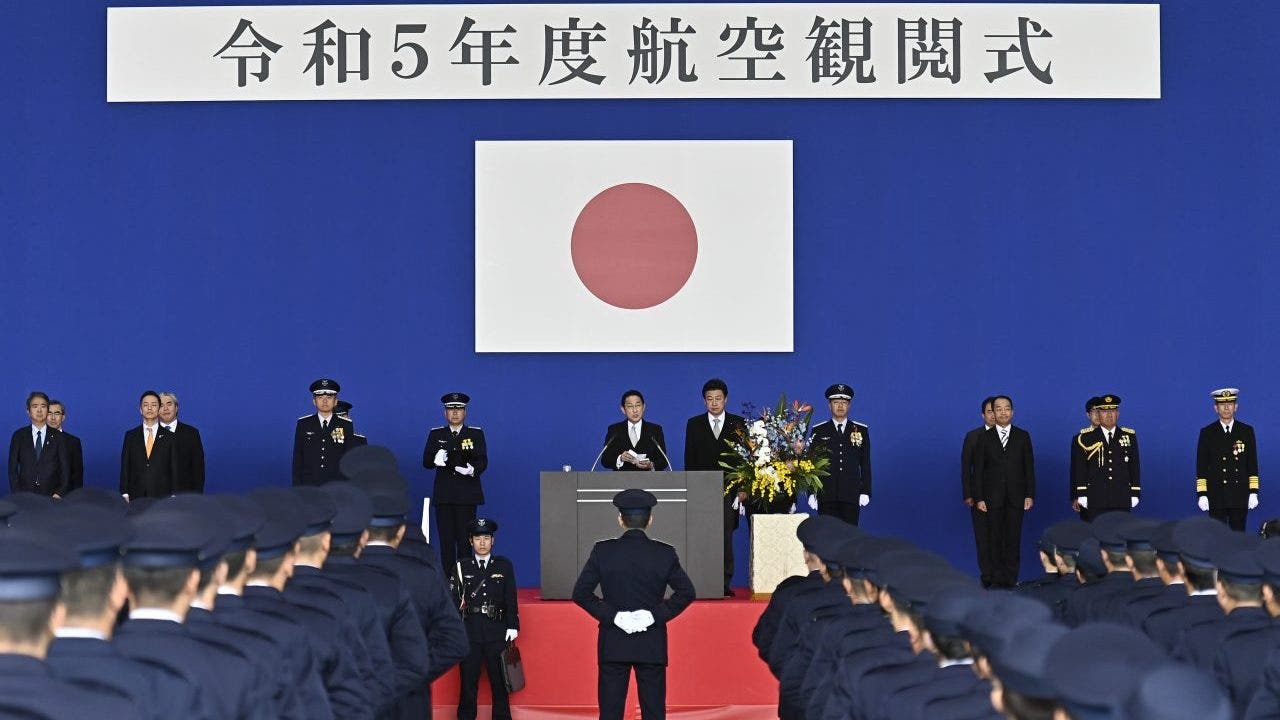
Taiwan isn't just sitting there. On April 21, they responded by deploying their own aircraft, naval ships, and coastal-based missile systems. They're watching. We’re also seeing regional shifts. Japan just eased its arms export curbs, which might seem unrelated, but in this climate, every bit of regional defense cooperation matters.
If you’re watching this situation, keep your eyes on the frequency of these multi-directional incursions. A single flight is a headline, but 24 aircraft and 8 ships across three zones—while a carrier transits the strait—is a rehearsal.
Keep an eye on the official MND Twitter (X) feed for real-time updates. It’s the most direct way to see the daily tally. Don't ignore the "official ships" mentioned in the reports either; these are often coast guard or research vessels used to assert maritime claims without using "gray" military paint. If you want to understand the true pressure on Taiwan, track the cumulative sorties over the next 30 days. That's where the real story of attrition is hidden.