The wood is light, but the weight it carries is heavy. In a quiet office within a Singaporean secondary school, a rattan cane rests behind a locked cabinet. It isn’t an antique. It isn't a relic of a bygone era. It is a present-day reality, a tool of last resort in a system that prides itself on order.
Yet, for Education Minister Chan Chun Sing, the focus isn't on the sting of the wood. It is on the invisible scars that lead a child to that room in the first place.
When we talk about school discipline, we often talk in statistics. We track the frequency of suspensions, the percentages of recidivism, and the legislative boundaries of what a teacher can and cannot do. We treat it like an engineering problem. If a part is broken, apply pressure until it aligns. But a child is not a mechanical part. A bully is often a collection of unaddressed echoes—frustrations from home, a desperate need for status, or a profound lack of empathy that has never been modeled for them.
Consider a hypothetical student named Wei. Wei doesn't wake up wanting to be a villain. He wakes up feeling small. At school, he finds that by pushing someone else down, he finally feels tall. When Wei is caught, the instinct of the collective is often a roar for retribution. We want him to pay. We want the "last resort" to be the first response.
But the Ministry of Education sees a different map.
The Architecture of Restraint
In the Singaporean context, caning is strictly regulated. It is reserved for male students, administered only by authorized personnel—usually the principal or vice-principal—and conducted with a witness present. It is a clinical, somber affair. There is no anger in the room, only the cold execution of a consequence.
Minister Chan Chun Sing recently clarified this stance, emphasizing that while the cane remains in the toolkit, it is never the starting point. The goal is not to break the student, but to pause a trajectory of self-destruction.
The ministry’s approach operates on a hierarchy of intervention. Before the cabinet is ever unlocked, there are layers of "soft" power. There are counseling sessions that feel like interrogations to a defensive teenager. There are restorative justice circles where the bully must look their victim in the eye and hear, in a shaking voice, exactly how much sleep they’ve lost.
These moments are often more grueling than physical pain.
Pain is momentary. Guilt is a marathon.
The real work happens in the gray areas. The ministry's strategy involves a "whole-school" approach. This isn't just a buzzword; it’s a recognition that the culture of a canteen or a WhatsApp group chat is where the seeds of bullying are watered. If the teachers only react to the explosion, they’ve already missed the fuse.
The Victim’s Shadow
We cannot discuss the discipline of the aggressor without acknowledging the silence of the prey. For every headline about a student being disciplined, there are a dozen stories of children who dread the sound of their own alarm clock.
Imagine Sarah. She is fourteen. For her, bullying isn't a singular event like a fight in the hallway. It is a relentless, low-grade fever. It’s the "accidental" bump in the stairs. It’s the exclusion from the project group. It’s the sticker on her back that everyone sees but her.
When Sarah’s parents demand "action," they are often asking for the cane. They want a visible sign that the institution cares about their daughter’s pain. They want the scales of justice to tip back toward center.
However, the Ministry's perspective is that physical punishment for Wei does not necessarily result in safety for Sarah. If Wei returns to the classroom fueled by resentment rather than reflection, the cycle merely goes underground. It becomes more sophisticated. Digital. Untraceable.
The invisible stakes are found here: in the gap between "stopping the behavior" and "changing the person."
A Society in the Balance
Singapore is a country built on the "social compact." We agree to follow rules because we believe those rules provide a foundation for everyone to thrive. In this environment, school discipline is a microcosm of national identity.
The debate over caning is, at its heart, a debate over the nature of human change.
Some argue that the fear of the cane is a necessary deterrent—a "keep left" sign for the soul. They believe that without a hard boundary, the social fabric thins. They point to rising rates of youth delinquency in cities that have abandoned all forms of corporal punishment.
Others argue that the practice is a failure of imagination. They suggest that if we resort to the cane, it is an admission that our words, our psychology, and our mentorship have all failed.
Minister Chan’s position is a pragmatic middle ground. He acknowledges the visceral reality of the tool while insisting on its rarity. It is a deterrent that works precisely because it is so infrequently used. Like a nuclear option in diplomacy, its power lies in its presence, not its deployment.
But the Minister also touches on something deeper: the role of the parent.
Schools are not vacuum-sealed environments. A child who sees aggression at home will view caning as just another form of "might makes right." A child who is never told "no" by a parent will view school discipline as an unforgivable betrayal. The Ministry is increasingly calling for a partnership, a realization that the teacher cannot be the only moral compass in a child's life.
The Long Road Home
The light in the Principal’s office stays on late.
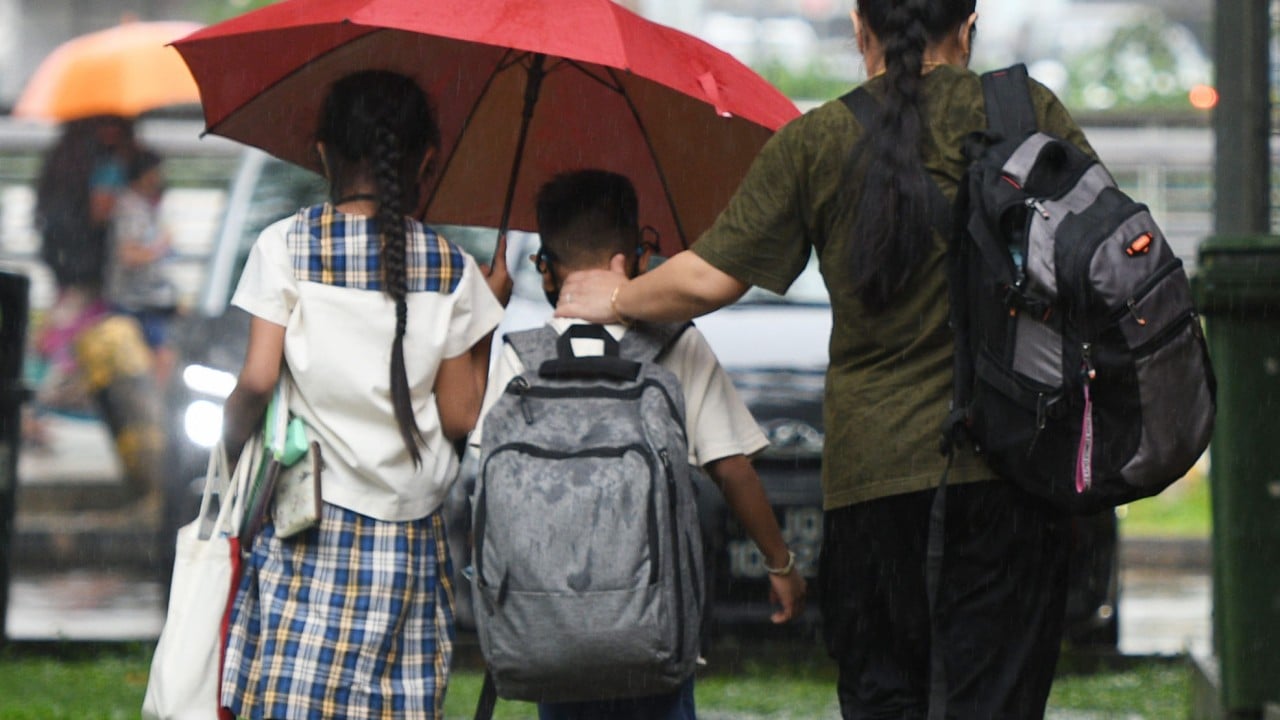
Outside, the tropical sun sets, and thousands of students head home, their backpacks heavy with textbooks. Most of them will never see the cane. Most of them will navigate their teenage years with the usual mix of angst and growth.
But for the few who find themselves standing before the locked cabinet, the message from the Ministry is clear. The wood is there. It is real. But everyone in that room—the Minister, the Principal, the victim, and even the bully—would prefer it if the cabinet stayed shut.
Because the ultimate goal isn't to punish the child for where they’ve been. It’s to ensure they have a reason to want to go somewhere better.
True discipline isn't found in the strike of a rattan. It is found in the moment a child realizes that their actions ripple outward, touching lives they never considered, and that they have the power to stop the waves.
The cane is a period at the end of a very bad sentence. The ministry is trying to teach the children how to write a different story altogether.
We are all watching to see if the ink takes.