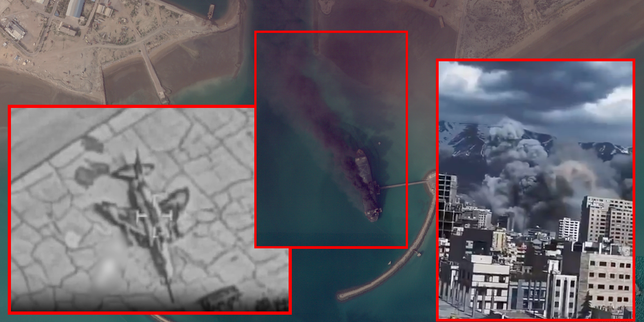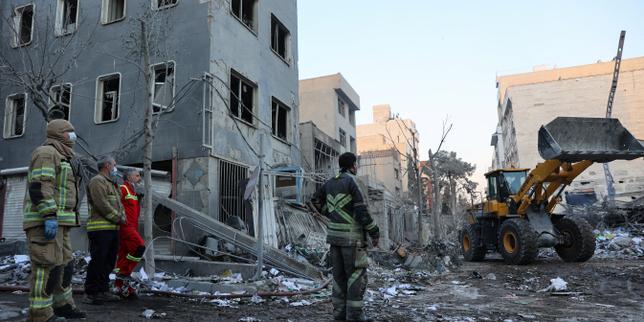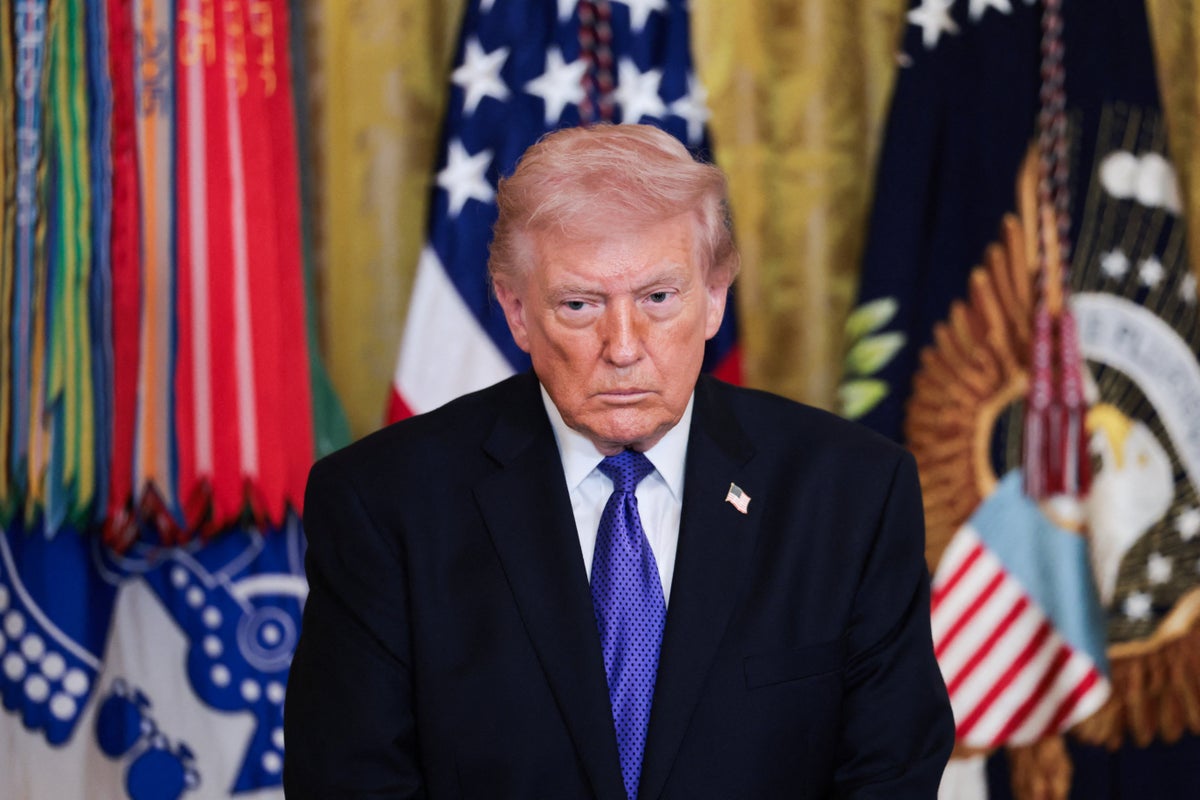
Donald Trump’s recent warnings that "the big one is coming soon" regarding Iran have sent ripples through global energy markets and intelligence circles alike. While many observers see a scattershot collection of contradictory goals, a closer look at the geopolitical mechanics reveals a deliberate strategy of high-stakes brinkmanship designed to paralyze Tehran through unpredictability. The objective is not necessarily a single treaty or a defined military outcome, but the total disruption of Iran’s regional influence and economic stability by keeping the Islamic Republic in a state of perpetual defensive posture.
By oscillating between calls for a "grand bargain" and threats of total destruction, the Trump administration forces the Iranian leadership into a reactive loop. This prevents Tehran from establishing long-term strategic plans or securing the foreign investment it desperately needs to modernize its aging oil infrastructure. The confusion is the point.
The Economics of Uncertainty
The most immediate impact of these conflicting messages isn’t found in the halls of diplomacy, but on the trading floors of the world's major commodity exchanges. Every time the White House shifts its stance, the price of Brent crude reacts. This volatility serves a specific purpose in the broader campaign of maximum pressure.
For Iran, whose budget is inextricably linked to its ability to export petroleum, price instability makes fiscal planning impossible. When the U.S. signals a potential opening for talks, oil markets may soften. When the rhetoric turns toward "the big one," insurance premiums for tankers in the Strait of Hormuz skyrocket. This creates a hidden tax on any nation or company still willing to risk secondary U.S. sanctions to trade with Iran.
Starving the IRGC
Beyond the macro-economy, the strategy targets the financial arteries of the Islamic Revolutionary Guard Corps (IRGC). The IRGC operates as a state-within-a-state, controlling vast swaths of the Iranian economy from construction to telecommunications. By keeping the threat of military action high, the U.S. ensures that global banks remain terrified of any association with Iranian front companies.
This financial isolation serves to:
- Deplete foreign currency reserves needed to fund regional proxies.
- Prevent the acquisition of dual-use technologies that could advance the Iranian ballistic missile program.
- Inflate the cost of basic goods, stoking domestic unrest within Iran.
The Strategic Logic of Contradiction
To the casual observer, saying "I want them to be a great country" one day and threatening "obliteration" the next looks like a lack of focus. To a veteran negotiator, it is the classic application of the "Madman Theory," a concept famously utilized during the Nixon era.
If a rival believes their opponent is capable of anything, they are less likely to cross certain red lines. Trump’s refusal to define what "the big one" actually means leaves the Iranian military guessing. Does it mean a cyberattack on their power grid? A strike on nuclear facilities? Or a full-scale naval blockade? Because the answer remains a moving target, the Iranian response is fractured and hesitant.
The Nuclear Paradox
The core tension lies in the Joint Comprehensive Plan of Action (JCPOA), or what remains of it. The Trump administration’s stated goal is a "better deal," yet the escalating threats often drive Iran closer to the very nuclear threshold the U.S. claims to want to avoid.
Recent data from the International Atomic Energy Agency (IAEA) shows that Iran has steadily increased its stockpiles of enriched uranium and deployed more advanced centrifuges. The U.S. bet is that the economic pain will eventually outweigh the strategic value of the nuclear program. It is a race against time. Can the Iranian economy collapse before their scientists master the fuel cycle?
$$U_{enrichment} = \int_{t_0}^{t_{final}} \Delta SWR , dt$$
In this simplified model, the rate of enrichment ($SWR$ or Separative Work Units) is a function of time and technical capacity. The U.S. strategy aims to interrupt the supply chain necessary for $\Delta SWR$ through sanctions while simultaneously threatening a $t_{final}$ brought about by kinetic force.
Technology as the Invisible Battlefield
While the public focuses on aircraft carriers and troop deployments, the real "big one" may already be happening in the digital ether. The intersection of cyber warfare and physical infrastructure has become the primary theater for U.S.-Iran hostilities.
Following the 2019 attacks on Saudi Aramco facilities—which the U.S. attributed to Iran—the American response was notably non-kinetic. Instead of dropping bombs, the U.S. reportedly launched a massive cyber strike against the IRGC’s database used to target tankers. This type of "invisible war" allows for escalation without the political fallout of body bags returning home.
The Vulnerability of Iranian Infrastructure
Iran’s industrial sector is particularly susceptible to these types of attacks. Much of their hardware is outdated, sourced through grey markets, and lacks the sophisticated defensive layers found in Western systems.
Key targets for U.S. digital operations include:
- The Gas Distribution Network: Disrupting domestic heating and cooking fuel to spark public anger.
- Port Management Systems: Halting what little trade remains by freezing the logistics of Bandar Abbas.
- The Banking Swift-Alternative: Neutralizing Iran's internal efforts to bypass global financial messaging systems.
Regional Alliances and the Outsourcing of Risk
A significant factor in the "big one" rhetoric is the role of regional partners, specifically Israel and Saudi Arabia. These nations view Iran as an existential threat and have different thresholds for military action than the United States.
By maintaining a high level of verbal aggression, the Trump administration provides a security umbrella for these allies. It signals that if Israel were to take preemptive action against Iranian assets in Syria or Lebanon, the U.S. would provide the necessary logistical and diplomatic cover. This "outsourcing" of pressure allows the U.S. to maintain a degree of plausible deniability while still achieving its goal of containing Iranian expansionism.
The Proxy War Stalemate
From the Houthi rebels in Yemen to Hezbollah in Lebanon, the IRGC’s "Axis of Resistance" remains the primary tool for Iranian projection of power. The U.S. strategy of maximum pressure seeks to turn these assets into liabilities. If the "center" in Tehran cannot hold financially, the "periphery" begins to starve.
We are seeing the early signs of this in Lebanon, where Hezbollah has been forced to launch public fundraising campaigns for the first time in decades. The "big one" may not be a single explosion, but the simultaneous collapse of these proxy networks as their funding evaporates.
The Risk of Miscalculation
The danger of this strategy is the thin margin for error. When both sides are operating under a cloud of intentional ambiguity, a small tactical mistake can lead to an unintended strategic catastrophe. A drone shot down in the wrong airspace or a sea mine hitting the wrong vessel could trigger a sequence of events that neither Washington nor Tehran can easily de-escalate.
The Iranian leadership is not a monolith. There are "pragmatists" who might be open to a deal and "hardliners" who believe that only a military confrontation will force the U.S. to back down. The constant stream of threats from the White House often strengthens the hand of the hardliners, who use the rhetoric to justify increased repression of domestic dissent.
The Domestic Audience Factor
It is impossible to analyze Trump’s Iran policy without acknowledging the domestic political landscape. The "big one" warnings serve as a powerful tool for base mobilization. They project an image of strength and "America First" resolve that resonates with voters who are weary of the long, inconclusive wars of the previous two decades.
The challenge is that this rhetoric creates its own momentum. Once you have promised a massive response, failing to deliver when provoked can be seen as weakness. Conversely, delivering on the promise could lead to the very "endless war" that the administration has vowed to avoid.
The Reality of the "Grand Bargain"
If a deal is ever reached, it will likely look very different from the JCPOA. The U.S. demand list, famously summarized in twelve points by former Secretary of State Mike Pompeo, essentially requires Iran to cease being a revolutionary state and become a "normal" nation.
This includes:
- An end to all uranium enrichment, forever.
- Total withdrawal of forces from Syria.
- The cessation of support for Hamas, Hezbollah, and the Houthis.
- The dismantling of the ballistic missile program.
To the current leadership in Tehran, these demands are viewed as a call for regime change by other means. The survival of the Islamic Republic is predicated on its identity as a regional power and a champion of Shia interests. To give up these pillars would be to invite internal collapse.
The Intelligence Gap
One of the most concerning aspects of the current standoff is the degradation of reliable intelligence. With fewer diplomatic channels and a highly politicized environment, the risk of "confirmation bias" is high. This is where intelligence is filtered to support a preconceived policy goal rather than to inform it.
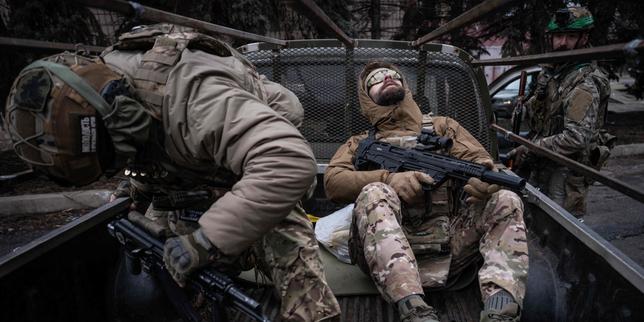
We saw this during the lead-up to the 2003 Iraq War. Today, the stakes are arguably higher. Iran is a more populous, geographically complex, and militarily capable adversary than Iraq was in 2003. Their "asymmetric" capabilities—the ability to strike back through proxies and cyberattacks—mean that any conflict would not be contained within Iranian borders.
The Drone Factor and Modern Warfare
The 2026 battlefield is dominated by low-cost, high-impact technologies. Iran has become a global leader in the production of loitering munitions and suicide drones. These systems allow them to threaten sophisticated naval vessels and airbases at a fraction of the cost of traditional hardware.
The U.S. military is currently in a period of rapid adaptation, trying to develop directed-energy weapons and electronic jamming systems to counter this "swarm" threat. The "big one" would likely serve as the first real-world test of these competing technologies on a massive scale.
The Endgame of Attrition
Ultimately, the Trump approach to Iran is a war of attrition played out in the headlines and on the balance sheets. It is a gamble that the Iranian system will break before the American political will to maintain sanctions does.
The conflicting goals—negotiation versus confrontation—are not an accident. They are the twin engines of a policy designed to keep Tehran off balance. By never allowing the situation to settle into a predictable pattern, the U.S. retains the initiative.
The Iranian government now faces a grim choice: continue to watch their economy wither under the weight of "maximum pressure," or take a massive military gamble to force the world to the bargaining table on their terms. As the rhetoric from the White House intensifies, the window for a diplomatic exit is closing, replaced by the cold logic of a conflict that neither side can afford to lose, but neither seems able to avoid.
Would you like me to analyze the specific impact of these tensions on the 2026 global semiconductor supply chain?