A young soldier sits in a reinforced concrete dugout, his eyes fixed on a tablet screen. He isn't watching a movie. He is listening. Beyond the rhythmic thud of distant artillery, there is a new sound that haunts the nightmares of modern infantry—a high-pitched, lawnmower-like whine that signals a mechanical predator is overhead. For years, that sound belonged almost exclusively to the Iranian Shahed, a "suicide drone" that turned the sky into a source of constant, low-cost terror.
But the air is changing.
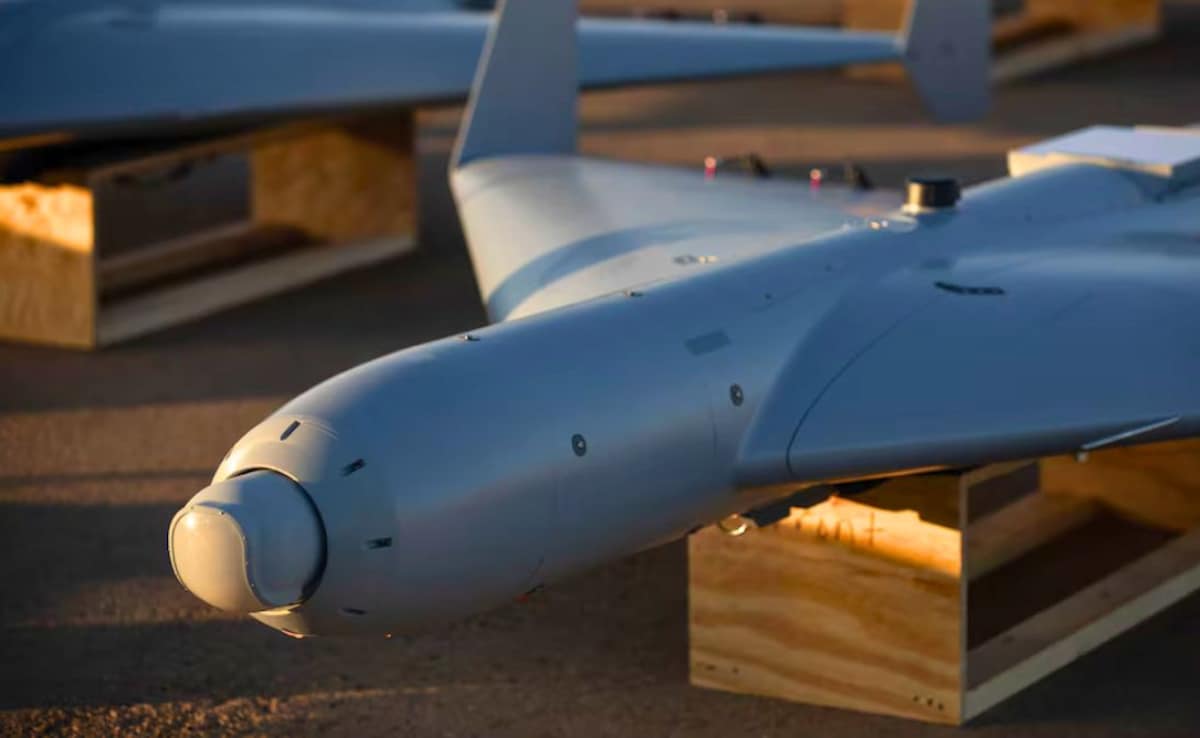
The United States has entered the fray with the LUCAS, a system designed to do what the Shahed did, only with the terrifying precision of American engineering. This isn't just about a new piece of hardware. It is about the democratization of destruction. We are witnessing a shift where the most expensive tanks in the world can be hunted by a machine that costs less than a luxury SUV.
The Cheapening of the Sky
War used to be a rich man’s game. If you wanted to strike a target from hundreds of miles away, you needed a multi-million dollar cruise missile or a stealth jet with a pilot who had a decade of training. The Shahed changed the math. It was slow, loud, and relatively simple, but it was cheap enough to send in swarms. If you fire thirty of them and twenty-nine get shot down, the one that hits its mark still makes the mission a success.
The LUCAS represents the American response to this brutal arithmetic. While the U.S. military has traditionally favored "exquisite" technology—satellites and drones like the Reaper that cost as much as a small country's GDP—the LUCAS is a pivot toward the practical. It is built to be expendable.
Consider a hypothetical logistics officer, let's call her Major Sarah Chen. In the old world, Sarah would have to justify the risk of a $20 million aircraft to take out a fuel depot. With a LUCAS unit, the calculation flips. She can authorize a strike without the paralyzing fear of losing a strategic asset. The drone becomes a bullet rather than a gun.
More Than a Copycat
On the surface, the LUCAS looks like its Iranian cousin. It shares that distinct delta-wing shape, optimized for long-range cruising and stability. Yet, under the skin, the differences are as vast as the Atlantic.
The Shahed relies on civilian-grade GPS and inertial navigation that can be confused by modern electronic warfare. If the signal goes dark, the Shahed often wanders aimlessly. The LUCAS, however, is designed to think. It carries a suite of sensors that allow it to recognize shapes and terrain features even when the GPS satellites are jammed or spoofed.
Think of it like this: the Shahed is a blind man following a pre-set path of breadcrumbs. If you sweep away the breadcrumbs, he is lost. The LUCAS is a scout with a map and a pair of binoculars. It knows where it is because it can see the world around it.
This brings us to the most unsettling feature of the LUCAS: its "loitering" capability. Unlike a traditional missile that travels from point A to point B in a straight line, the LUCAS can park itself in the sky. It circles. It waits. It watches. It stays there until the target reveals itself. For the person on the ground, the psychological toll is immense. You know something is up there, but you don't know when it will decide to drop.
The Human Toll of Autonomous Decisions
We often talk about these machines as "unmanned," but that is a lie. There is always a human in the loop, or at least, there is supposed to be. The danger of the LUCAS, and the entire class of loitering munitions, is the way they compress the time a human has to make a moral choice.
Imagine a commander in a darkened room, staring at a grainy thermal feed. The drone identifies a vehicle. The AI flags it as a threat with 85% certainty. The clock is ticking. The battery is running low. In that moment, the "human element" becomes a bottleneck. The pressure to trust the machine’s judgment is nearly irresistible.
The LUCAS is unique because it bridges the gap between a manual tool and a fully autonomous hunter. It has the range to fly deep into enemy territory—well over 600 miles in some configurations—which means the person pulling the trigger is half a continent away. The distance doesn't just protect the operator; it detaches them.
A New Era of Proliferation
The real story isn't just that the U.S. built a better suicide drone. The story is that the U.S. had to build one. We have reached a point where quantity has a quality all its own.
The LUCAS is designed for rapid manufacturing. It doesn't require a clean-room facility or a decade-long supply chain. It can be churned out in factories that look more like automotive plants than aerospace hangars. This is the industrialization of the kamikaze.
When technology becomes this accessible, it doesn't stay in one set of hands for long. We are entering an era where small nations, and even non-state actors, can possess the kind of long-range precision strike capability that was once reserved for superpowers. The LUCAS is the gold standard of this new class, but its existence guarantees that everyone else will be scrambling to catch up.
There is a specific kind of silence that falls over a landscape when a loitering drone is nearby. Birds stop singing. People stop talking. Everyone looks up, squinting against the sun, trying to find the tiny speck of grey that holds their fate in its circuit boards.
The LUCAS is that speck. It is the realization that the future of conflict isn't found in the roar of a jet engine, but in the persistent, buzzing shadow that refuses to go away. It is the sound of a world where the sky is no longer a ceiling, but a weapon.
The soldier in the dugout finally sees the icon on his screen turn red. He takes a breath, his thumb hovering over the glass. He isn't just launching a drone; he is releasing a ghost into the machine, a predator that will not stop until it finds what it was born to destroy.