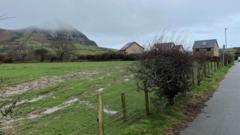
A developer in Gwynedd recently floated a proposal that would effectively bar anyone from buying a home on a new estate unless they could prove they were fluent in Welsh. It was a bold, desperate attempt to build a linguistic fortress around a local community. It was also, predictably, declared illegal almost immediately.
The proposal hit a brick wall of equality legislation. You cannot legally discriminate against a homebuyer based on the language they speak any more than you can based on the color of their skin. But while the legal experts are busy taking victory laps for upholding the Equality Act 2010, they are ignoring the underlying rot. The "Welsh-only" housing condition wasn't just a legal blunder. It was a symptom of a housing market that has become entirely decoupled from the communities it is supposed to serve.
We are witnessing a slow-motion collision between civil rights law and cultural survival. On one side, you have the right to free movement and the protection against discrimination. On the other, you have a language that is physically tied to the soil of its heartlands—territory that is being bought out from under its speakers by an open market that values a holiday rental more than a native tongue.
The Legal Mirage of Linguistic Protection
The core of the issue lies in the tension between the Welsh Government’s ambitious goal of reaching a million Welsh speakers by 2050 and the rigid framework of UK-wide equality laws. When a council or a developer tries to mandate language requirements for residency, they run head-first into the "protected characteristics" defined by law. Race and nationality are protected. Since language is often a proxy for national origin, a "Welsh speakers only" rule is seen as indirect discrimination against those who are not Welsh.
Lawyers argue that such a policy would disproportionately exclude people from England, Scotland, or further afield. In a court of law, that is an open-and-shut case. But in the reality of a village where 80% of the residents spoke Welsh thirty years ago and only 30% do today, the law feels less like a shield and more like a wrecking ball.
Planning authorities already have the power to consider the "linguistic impact" of a development. They can ask for a Welsh Language Impact Assessment. They can demand that signs be bilingual. They can even suggest that a percentage of homes be "affordable" for locals. What they cannot do is check your grammar at the front door. This creates a toothless regulatory environment where planners can acknowledge a language is dying while being legally forbidden from doing the one thing that might save it: ensuring the people who speak it have a place to live.
Why the Market Always Wins
The economics of the Welsh housing crisis are not complicated, but they are devastating. In areas like Gwynedd, Anglesey, and Ceredigion, the gap between local wages and property prices has widened into a canyon. The average salary in these rural hubs is often pinned to agriculture or tourism—sectors that do not pay enough to compete with a buyer from London or Manchester looking for a "quiet retreat" or a lucrative Airbnb investment.
When a new estate is built, the developer needs to turn a profit. If the local population cannot afford the "market rate," the developer looks elsewhere. If the council tries to restrict the sale to Welsh speakers, the land value plummets because the pool of potential buyers shrinks.
- Market Rate: Defined by global or national demand, not local affordability.
- The Second Home Premium: Cash buyers often outbid local mortgages by 20% or more.
- The Ghost Village Effect: High Welsh-speaking areas become seasonal shells where the language is never heard because the owners are only there in August.
This is the "why" that the legal debate ignores. People aren't trying to pass illegal housing laws because they are xenophobic. They are doing it because they are watching their schools close and their chapels turn into boutique hotels. They are reaching for any lever they can find, even if that lever is legally broken.
The Section 106 Failure
There is a mechanism called a Section 106 agreement. It allows councils to put "local occupancy" clauses on new builds. You see this often in National Parks. It says you must have lived or worked in the area for three years to buy the house. This is perfectly legal. It targets "locality," not "language."
However, this has failed to save the Welsh language for one simple reason: a "local" person doesn't necessarily speak Welsh. You can be born and bred in a Welsh village and only speak English. Conversely, a fluent Welsh learner from Birmingham who wants to move in and contribute to the culture would be barred by a local occupancy clause but welcomed by a language clause.
The blunt instrument of "local occupancy" doesn't protect the culture; it just protects the geography. By ruling language requirements illegal, the courts have forced councils to use these geographic proxies, which are far less effective at maintaining the specific linguistic density required for a minority language to thrive. For a language to survive, it needs a "threshold" of speakers in a concentrated area. Once you dip below a certain percentage, the social language of the shop, the pub, and the street defaults to the dominant tongue. In Wales, that dominant tongue is English.
The Gentrification of Heritage
We are seeing the commodification of Welsh identity. Developers often use Welsh names for their estates—"Bryn This" or "Cae That"—to add a veneer of "authentic" charm to a project that is actively displacing the people who gave those names meaning. It is a cynical branding exercise.
The real tragedy is that the "Welsh speakers only" controversy provides a convenient distraction for the government. As long as the public is arguing about whether a policy is "racist" or "illegal," they aren't talking about the massive failure to build social housing. The Welsh Government has the power to intervene in the housing market far more aggressively than it currently does. It could tax second homes into oblivion. It could provide massive subsidies for community-led housing trusts. Instead, it often hides behind the complexity of the law.
If a developer proposes an illegal condition, the council can simply say, "Our hands are tied." It’s an easy out. It allows everyone to maintain their ideological purity while the actual houses continue to be sold to the highest bidder, regardless of what language they speak or where they come from.
The Missing Counter-Argument
What nobody wants to say out loud is that even if a "Welsh-only" housing policy were legal, it might still fail. The language is not just under threat from outsiders; it is under threat from the lack of economic opportunity within. If you build an estate for Welsh speakers but there are no high-paying jobs in the area, the young Welsh speakers will still leave. They will go to Cardiff, Bristol, or London to find work.
A house is not a home if you can't pay the mortgage. Linguistic protection cannot exist in a vacuum. It must be paired with an industrial strategy that makes staying in a rural Welsh village a viable career move, not a vow of poverty.
The Actionable Pivot
If we want to save the Welsh heartlands, we have to stop looking for a "silver bullet" law that will likely be struck down in court. The focus must shift to three concrete areas:
- Closing the Second Home Loophole: Ensuring that "holiday lets" are taxed as businesses and that councils have the absolute right to cap the number of non-primary residences in any given ward.
- Community Land Trusts: Moving land ownership out of the hands of private developers and into community trusts that can set their own criteria for residency based on a mix of local need and cultural contribution.
- Linguistic Planning Parity: Amending the Planning Act to give the Welsh language the same legal weight as environmental protections. If you can stop a housing estate because it might disturb a rare species of newt, you should be able to stop it if it will demonstrably destroy a linguistic ecosystem.
The legal defeat of the "Welsh-only" condition should be a wake-up call. You cannot legislate a culture into existence through exclusion. You have to build the economic and social conditions that make that culture the natural, thriving choice for the people who live there.
Stop waiting for a court to give permission to protect a community. Start buying the land back.