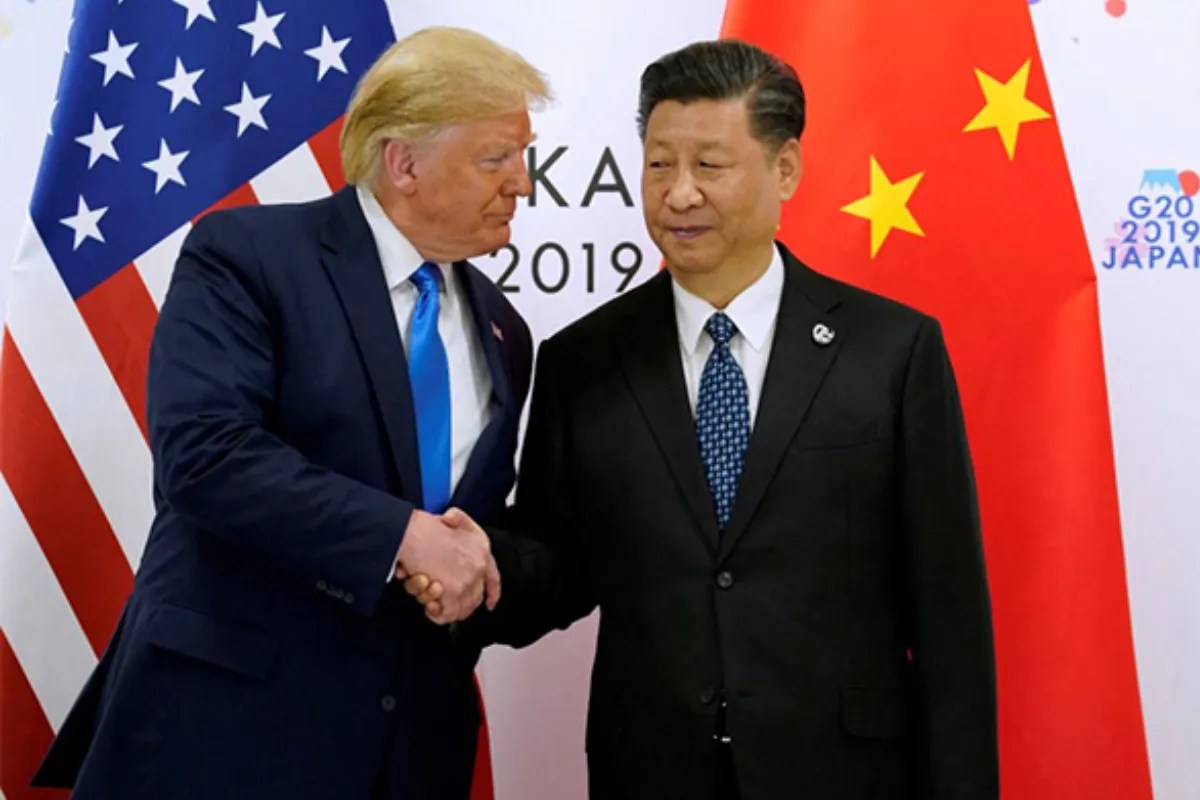
Beijing has stopped pretending. The latest firestorm over Chinese firms allegedly fueling Iran’s military machine has moved past the usual diplomatic posturing and into the territory of open economic warfare. China isn't just denying the accusations; it is threatening a massive retaliation if the United States continues to use tariffs and sanctions as weapons. This isn't a mere trade spat. It is a fundamental shift in how Beijing views the Western-led financial order, signaling that the era of China quietly absorbing US pressure is officially over.
The Myth of Neutrality in the Red Sea and Beyond
Washington’s intelligence agencies claim that Chinese entities are the lifeblood of Iran’s drone and missile programs. They point to dual-use technologies—microchips, engines, and GPS modules—that find their way from Chinese factories to Iranian assembly lines. China’s response has been uncharacteristically blunt. They view these accusations as a smear campaign designed to justify protectionist trade policies. Discover more on a connected issue: this related article.
The reality on the ground is far more complex than a simple arms deal. China operates through a labyrinth of small, seemingly independent trading firms that operate under the radar of international banking systems. These "gray market" operators move components through third-party hubs like Dubai or Kuala Lumpur before they ever reach Tehran. For the US, this is a clear violation. For Beijing, it is legitimate commerce that Washington has no right to police.
Tariffs as a Tool of Containment
The Biden administration and its likely successors see tariffs not just as a way to protect American jobs, but as a strategic leash. By threatening 60% tariffs on Chinese goods, the US hopes to force Beijing to blink. It won't work. Beijing has spent the last decade diversifying its economy and building the "Fortress China" model. They have stockpiled essential minerals, built their own domestic chip industry, and strengthened ties with the Global South. Further journalism by USA Today delves into similar views on this issue.
If Washington pulls the trigger on massive new tariffs, Beijing has already hinted at its counter-move. It involves restricting the export of rare earth elements. You cannot build an F-35 fighter jet, a wind turbine, or an electric vehicle battery without these minerals. China controls over 80% of the global supply chain for some of these materials. If they turn off the tap, the American industrial base doesn't just slow down—it grinds to a halt.
The Weaponization of the Dollar
The core of this conflict isn't actually about drones or steel. It is about the US dollar. Every time the US Treasury Department blacklists a Chinese company, it reinforces Beijing's belief that it must decouple from the dollar-based SWIFT system. We are seeing the birth of a parallel financial universe. China’s CIPS (Cross-Border Interbank Payment System) is growing. While it is currently a fraction of the size of SWIFT, it provides a "dark" channel for Russia, Iran, and China to trade without American oversight.
This makes sanctions a diminishing asset. The more the US uses them, the more it incentivizes the world's second-largest economy to build an ecosystem where those sanctions are toothless. It is a classic case of overreach. By trying to control Chinese trade with Iran, the US might be inadvertently destroying its own greatest superpower: the global dominance of the dollar.
Why China is Doubling Down on Iran
Iran is a crucial piece of China’s Belt and Road Initiative (BRI). It is a geographic bridge to Europe and a massive source of discounted oil. Despite US sanctions, China remains Iran’s largest trading partner. They aren't doing this out of ideological love for the regime in Tehran. They are doing it for energy security.
China’s leadership remembers the 1990s when they were vulnerable to Western pressure. They have vowed never to be in that position again. By supporting Iran—even indirectly—they ensure that the US remains bogged down in Middle Eastern geopolitics, distracted from the "Pivot to Asia." Every drone sold or microchip transferred is a calculated move to keep American resources stretched thin across multiple theaters.
The Failure of the Sanctions Machinery
The US Treasury's Office of Foreign Assets Control (OFAC) is playing a game of whack-a-mole. They sanction five companies in Shenzhen, and ten more pop up in their place the following week with different names and the same directors. The sheer volume of trade is too high to monitor effectively.
Supply chain fragmentation has made it impossible to track where a single capacitor ends up. A component might be manufactured in Malaysia by a Chinese-owned firm, sold to a distributor in Turkey, and then shipped to an Iranian front company. The paper trail is a mess. Beijing knows this. They use this "plausible deniability" as a shield. When the US complains, Beijing demands "hard evidence," knowing full well that by the time the evidence is gathered, the supply chain has already shifted.
Strategic Retaliation and the Critical Mineral Trap
If the US moves forward with the "Nuclear Option" of broad-based tariffs on all Chinese electronics or green-tech, the response will be surgical. Beijing won't just tax American soybeans. They will target the most sensitive parts of the American tech sector.
- Gallium and Germanium: These are essential for high-speed computer chips and fiber optics. China already introduced export permits for these in 2023 as a "warning shot."
- Graphite: China produces nearly all the world’s high-purity graphite needed for EV anodes. No graphite means no "Green Revolution" for the West.
- Logistics Interruption: China controls many of the world’s largest shipping ports. A "slowdown" in processing containers destined for US West Coast ports would cause an inflationary spike that would make the 2022 price hikes look mild.
The Illusion of De-risking
Western politicians love the word "de-risking." It sounds safer than "decoupling." But for a veteran analyst, it looks like a fantasy. You cannot de-risk from a country that provides the base components for your entire pharmaceutical industry, your defense industry, and your consumer electronics.
The US is trying to maintain a 1990s-style hegemony in a 2026 reality. China is no longer a "developing" nation looking for a seat at the table; they want to build a new table. Their threats regarding Iran sanctions are a litmus test. If the US backs down, China wins. If the US leans in, we enter a period of global economic volatility that hasn't been seen since the 1930s.
Direct Confrontation is the New Normal
We have moved past the era of quiet diplomacy behind closed doors. The Ministry of Foreign Affairs in Beijing now uses the same aggressive rhetoric that was once reserved for domestic audiences. This "Wolf Warrior" style isn't just for show. It reflects a genuine internal consensus that the US is a declining power trying to "suppress" China’s rise.
This mindset makes compromise nearly impossible. When the US warns China about sending components to Iran, Beijing doesn't see a legal warning; it sees a colonial decree. They respond with threats of "reciprocal measures" because they believe they have the economic leverage to win a war of attrition. They are betting that the American consumer’s appetite for cheap goods is stronger than the American politician’s appetite for a Cold War.
The Corporate Fallout
American multinationals are caught in the crossfire. Apple, Tesla, and Nvidia are essentially hostages to this geopolitical standoff. If Beijing decides to retaliate against US tariffs by targeting these companies' Chinese operations, the S&P 500 would crater overnight. This is the "mutually assured destruction" of the modern age. It isn't nuclear; it’s fiscal.
The US executive branch is under immense pressure to look "tough on China," but the moment that toughness leads to a $150 increase in the price of an iPhone or a shortage of essential medications, the political will usually crumbles. Beijing is counting on this inconsistency. They are playing a long game, while Washington is focused on the next election cycle.
The threat from Beijing is clear: Treat us as an equal or prepare for a shattered global economy. They are no longer interested in "managing" the relationship. They are interested in redefining it. The accusations regarding Iran are simply the catalyst for a much larger, much more dangerous confrontation that will determine who controls the flow of technology and capital for the next century. Washington’s next move will either solidify a new Cold War or force a humiliating retreat from the sanctions-heavy foreign policy that has defined the last thirty years.
There is no middle ground left. Every tariff imposed will be met with a restriction on a critical resource. Every company sanctioned will lead to a retaliatory probe of a US firm operating in Shanghai. The bridge is burning, and both sides are still pouring gasoline.