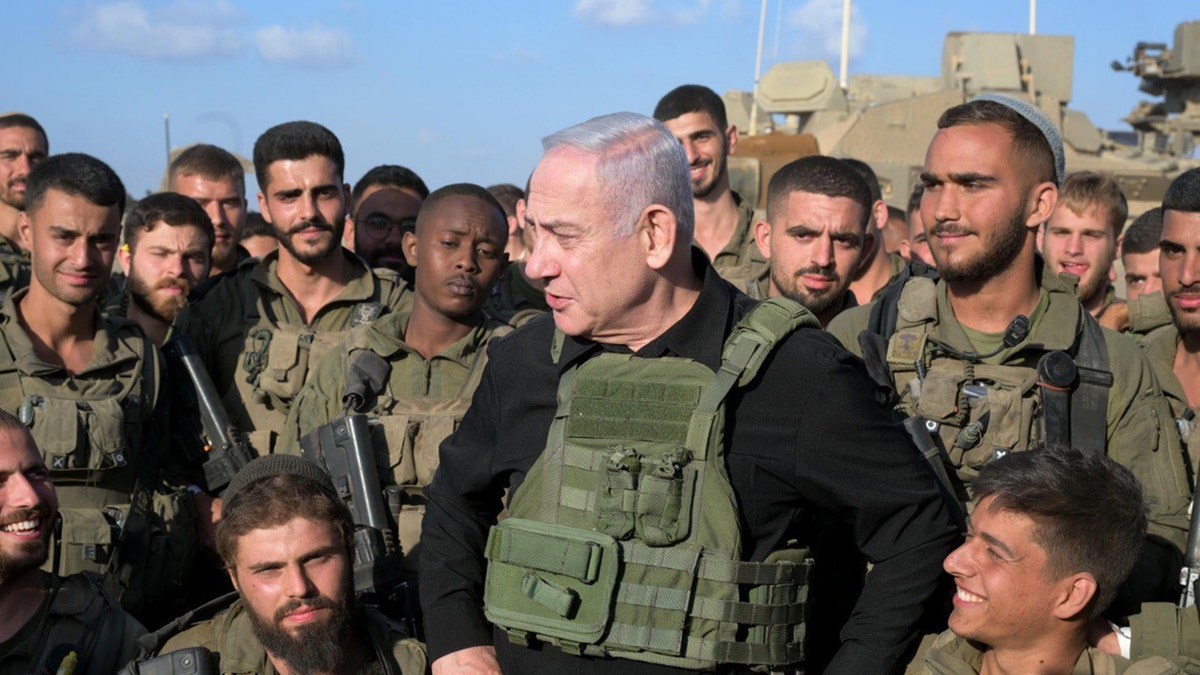
Benjamin Netanyahu is currently trapped between his own political survival and the grinding reality of a multi-front regional escalation. While his public rhetoric suggests a desire to avoid an "endless war," his tactical decisions tell a far more complicated story. The Prime Minister’s recent assertions come as the Middle East remains on a knife-edge, with fourth-day escalations signaling that the window for a managed conflict is rapidly slamming shut. Israel is not just fighting a kinetic war; it is fighting a war of attrition that its economy and social fabric were never designed to sustain indefinitely.
The core of the problem lies in the disconnect between military objectives and political reality. Netanyahu claims he wants a swift resolution, yet every strategic move pushes the finish line further into the horizon. To understand why "endless war" is the very thing he must avoid—and yet remains the path he is currently treading—one must look past the televised addresses and into the logistical and diplomatic machinery currently failing behind the scenes.
The Mirage of a Short Conflict
Military doctrine in Israel has historically relied on the "Short War" principle. Because the country relies on a citizen-army of reservists, pulling hundreds of thousands of workers out of the economy for months on end is a recipe for fiscal collapse. When Netanyahu speaks of avoiding a forever war, he is acknowledging that the Israeli shekel and the high-tech sector cannot survive a two-year mobilization.
However, the current theater is unlike 1967 or 1973. The adversaries are non-state actors with deep tunnels, decentralized command structures, and a willingness to wait. By stating he does not want a long war, Netanyahu is trying to signal to the markets and the Biden administration that there is an exit strategy. The reality? There isn't one. You cannot have a short war against an ideology that views time as its primary weapon.
The friction is visible in the defense budget. Israel has already burned through billions in munitions and interceptors. The cost of maintaining a "boiling" Middle East is rising every hour. If the conflict doesn't end soon, the internal pressure from the Ministry of Finance might become more dangerous to Netanyahu’s coalition than any external threat.
The Irony of Strategic Ambiguity
Netanyahu’s strategy has long been based on "mowing the grass"—periodic, high-intensity strikes to degrade enemy capabilities without seeking a definitive, regime-changing conclusion. This approach is precisely what led to the current "endless" feel of the conflict. By refusing to commit to a "day after" plan for governance in contested territories, the Prime Minister has ensured that military vacuums are constantly filled by the same insurgents he claims to be defeating.
Critics within the IDF have grown increasingly vocal about this lack of a political horizon. Soldiers are being sent to clear the same neighborhoods three or four times because there is no civilian administration ready to take over. This is the definition of a war without end. Netanyahu’s refusal to empower a Palestinian alternative or a multi-national coalition is a calculated move to keep his right-wing base intact, but it is the primary driver of the perpetual combat he publicly decries.
Regional Boiling Points and the Fourth Day Syndrome
The "fourth day" of any major escalation in the Middle East is traditionally when the international community shifts from "Israel has a right to defend itself" to "we need an immediate ceasefire." We are seeing this play out with clinical precision. The pressure from Washington is mounting, not because of a sudden shift in morals, but because of the risk to global oil prices and shipping lanes.
The Red Sea is already a graveyard for predictable trade. If the conflict spreads further into Lebanon or involves direct, sustained exchanges with Tehran, the global economic fallout will be severe. Netanyahu knows this. His "no endless war" stance is an attempt to preemptively blame the international community or his own military brass if he is forced into a stalemate.
The Hezbollah Factor
The northern border is where the "endless war" rhetoric meets its toughest test. Tens of thousands of Israeli civilians are displaced from their homes. They cannot return while Hezbollah remains positioned on the Litani River. A diplomatic solution seems impossible, yet a full-scale ground invasion of Lebanon would dwarf the current operations in scale and casualty counts.
- Logistics: Israel’s air force is stretched.
- Morale: Reservists are exhausted after months of high-tension deployments.
- Intelligence: Predicting the moves of a sophisticated paramilitary group is vastly different from tracking insurgent cells.
Netanyahu is gambling that a series of targeted assassinations and high-tech sabotage will be enough to cow his enemies into a retreat. It is a gamble that ignores decades of historical precedent.
The Domestic Trap
Inside Israel, the "endless war" is a political life raft. As long as the country is in a state of emergency, the protest movements that plagued Netanyahu’s government before the current crisis are largely neutralized. The corruption trials against him remain in a state of flux. To end the war is to invite the reckoning.
This creates a perverse incentive structure. The Prime Minister must say he wants the war to end to appease the Americans and the grieving families of hostages, but he must ensure the security conditions for that end are so high they are virtually unreachable. This is the "Total Victory" paradox. By demanding a standard of success that no modern military has ever achieved against a decentralized insurgency, he guarantees the war continues under the guise of trying to finish it.
The Economic Cliff
We have to talk about the numbers. Israel’s credit rating has already taken hits from major agencies. The tech sector, which accounts for a massive portion of GDP and tax revenue, relies on stability. Talent is mobile. If the "boiling" state of the Middle East becomes the new normal, the brain drain will accelerate.
Investors don't put money into countries where the workforce might be called to the front lines at any moment. Netanyahu’s background is in economics; he knows this better than anyone. His rhetoric is a desperate attempt to maintain the "Startup Nation" image while the reality shifts toward a "Garrison State."
The Failure of Regional Integration
Before the current escalations, the talk of the town was the Abraham Accords and a potential deal with Saudi Arabia. That vision of a unified, pro-Western Middle East is currently on life support. The longer the war drags on, the harder it becomes for Arab capitals to maintain even back-channel cooperation with Jerusalem.
The "endless war" doesn't just kill people; it kills the prospect of a regional security architecture that could actually contain Iran. Without that architecture, Israel is left fighting 360-degree threats alone, relying entirely on a U.S. administration that is increasingly distracted by its own domestic election cycle.
A Strategy of No Choice
Netanyahu often speaks of having "no choice" but to continue. This is a classic rhetorical device to absolve the leader of agency. In reality, there are always choices:
- Accepting a messy, imperfect ceasefire that involves high political costs.
- Empowering a viable Palestinian governing body.
- Defining clear, limited military objectives instead of chasing "absolute" results.
He has chosen none of these. Instead, he has opted for a middle path that maximizes duration while minimizing decisive action. It is a strategy of survival, not victory.
The Middle East is boiling because the old status quo was shattered, and no one—least of all the man at the helm in Jerusalem—has the courage to build a new one. The war isn't endless because of a lack of military power. It is endless because the political cost of peace is higher than the current cost of conflict for those in power.
Watch the troop movements near the northern border tonight. If the "fourth day" turns into a fourteenth week of expanded operations, the words "no endless war" will be remembered as the ultimate irony of the Netanyahu era.
Stop looking at the maps and start looking at the cabinet meeting minutes. That is where the war is being lost.
Demand a clear definition of victory from your leaders. Without a defined end-state, a military operation is merely a violent holding pattern. If you are tracking this conflict, ask why the "day after" plan remains a blank sheet of paper.