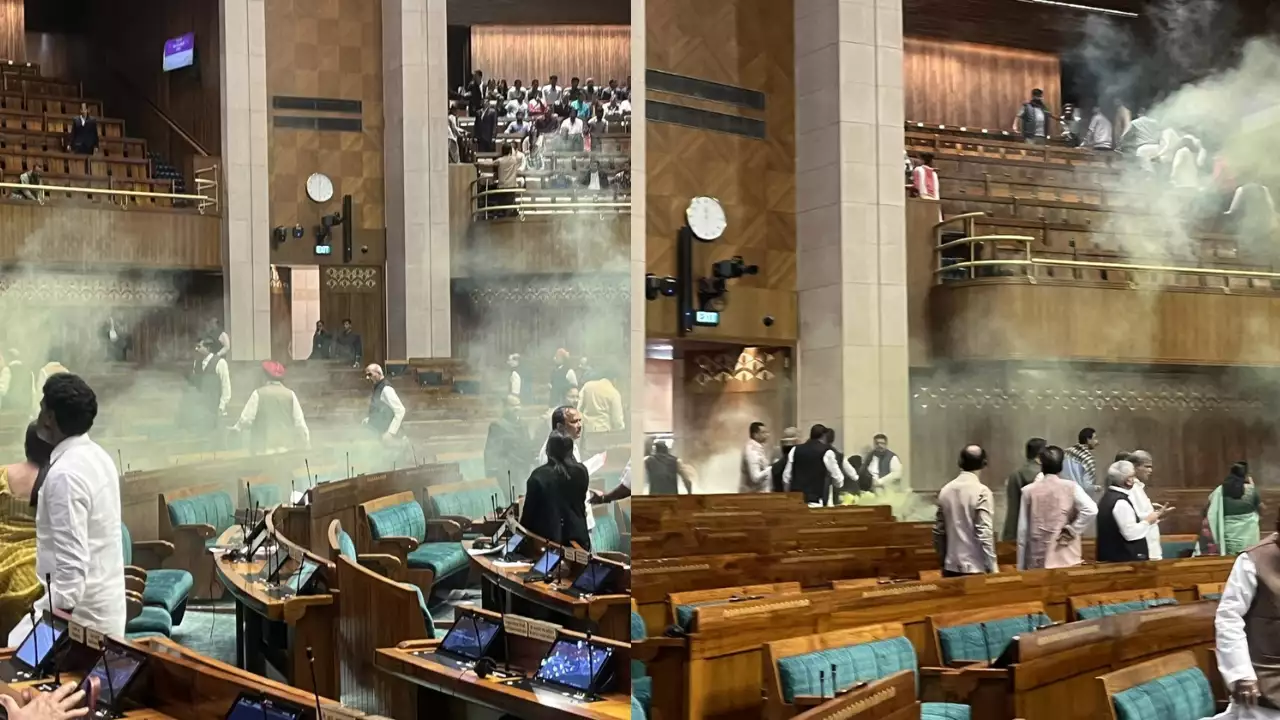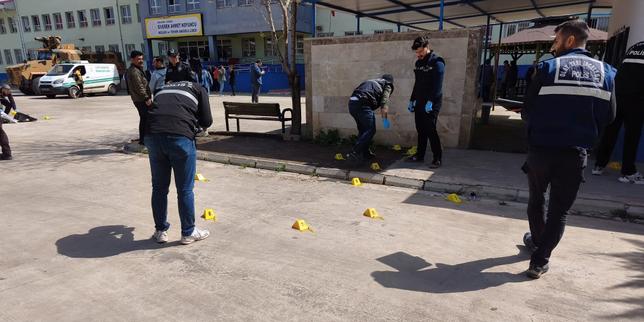
The recent surge of violence in Turkish schools is not a freak occurrence or a sudden lapse in security. It is the predictable outcome of a nation awash in unregistered firearms and a legal system that treats the illegal possession of a handgun with less severity than a tax discrepancy. When a student enters a classroom in Istanbul or Izmir with a loaded weapon, the failure began months, if not years, prior. It began with the normalization of the "individual armament" culture and a digital marketplace where a pistol is easier to procure than a high-end gaming console.
Public outrage followed two high-profile shootings that left educators dead and students traumatized. The immediate reaction from the Ministry of Education and local authorities followed a tired script: increased metal detectors, more security guards, and vague promises of psychological support. These measures address the symptom, not the pathology. Turkey is currently facing an epidemic of violence that is fueled by a massive influx of untraceable weapons, a breakdown in traditional social safety nets, and a legislative framework that has essentially signaled to the public that carrying a weapon is a manageable risk rather than a cardinal crime.
The Digital Arms Bazaar
The primary driver behind this crisis is the staggering ease of acquisition. In the past, a teenager seeking a weapon had to navigate dangerous physical underworlds. Today, the "underworld" is a Telegram group or a private Facebook page. Investigative tracking of these circles reveals a thriving trade in "blank-firing" pistols that are professionally converted to fire live ammunition. These weapons are often manufactured in small, illicit workshops and sold for prices that any middle-class student can afford.
The legal loophole here is massive. Blank-firing guns are subject to much looser regulations than standard firearms. Once converted, they lack the rifling marks and ballistic signatures that allow police to track a bullet back to a specific weapon. This makes them the perfect tool for a generation that sees violence as a viable conflict resolution strategy. When we talk about school shootings in Turkey, we are not talking about the complex, premeditated "manifesto" culture seen in the United States. We are talking about impulsive acts of rage carried out with cheap, accessible hardware.
The Erosion of the Teacher’s Authority
Beyond the hardware, there is a fundamental shift in the power dynamic within Turkish schools. For decades, the teacher was a figure of absolute authority, protected by a social contract that placed education at the center of the Republic’s values. That contract has been shredded. Economic instability has devalued the profession, and political interference in the curriculum has stripped educators of their standing.
Today, teachers report a climate of fear. It is no longer just about unruly behavior; it is about the threat of physical retaliation. When a student feels that their dignity is at stake—often over something as trivial as a failing grade or a disciplinary warning—they no longer look to the school board for recourse. They look to their pocket. The institutional response has been to blame the individual "bad seed" rather than acknowledging that the school environment has become a pressure cooker without a safety valve.
Why Metal Detectors are a Performance
The government’s insistence on physical security measures is a classic example of "security theater." Installing a metal detector at the front gate of a school with 2,000 students is a logistical nightmare that is easily bypassed. Side entrances, low fences, and the sheer volume of traffic during peak hours make these devices nearly useless. More importantly, they do nothing to address the radicalization of the youth or the domestic environments where these weapons are stored.
Data from independent monitoring groups suggests that over 30 million firearms are in circulation in Turkey, and a staggering 80% to 90% of those are believed to be unregistered. No amount of school-gate security can compensate for a society where one in every three households potentially harbors an illegal weapon. The problem is not that the school is porous; it is that the community is saturated.
The Failure of the Penal Code
Current Turkish law is remarkably lenient on the possession of unregistered firearms. Unless a weapon is used in a violent crime, the penalties often amount to little more than a fine or a suspended sentence. For a young person looking to project power or seek "protection," the cost-benefit analysis favors the gun.
There is also the issue of "justice by proxy." In many cases, if a minor is caught with a weapon, the legal system struggles to hold the parents or the sellers accountable. The chain of responsibility is broken. If a parent allows an unregistered handgun to be accessible in a home, they are effectively an accomplice to whatever happens next. Yet, the prosecution of parents in the wake of school shootings remains almost non-existent in the Turkish legal landscape.
The Rise of the Alpha Subculture
We must also address the cultural shift. Social media in Turkey is dominated by a specific brand of hyper-masculinity that glorifies the racon—a traditional underworld code of conduct. This subculture portrays the gun as a tool of justice and the only way for a "real man" to defend his honor. For a teenage boy struggling with identity and economic hopelessness, this imagery is intoxicating.
Music videos, streaming series, and TikTok influencers frequently showcase weapons as accessories of success. This isn't just entertainment; it’s a recruitment tool for a mindset that views the state and its laws as obstacles to be overcome. When this mindset enters the classroom, the teacher is no longer an educator; they are an adversary in a turf war.
The Economic Context of Violence
It is impossible to separate this violence from Turkey’s broader economic malaise. When the future looks bleak, the present becomes more volatile. High youth unemployment and the skyrocketing cost of living have created a vacuum of purpose. In previous generations, the school was the ticket to a better life. Now, many students see it as a dead end.
When education loses its value as a tool for social mobility, the school becomes a site of resentment. The frustration felt by parents is passed down to children, who then take it out on the most accessible targets: their peers and their teachers. The shootings are not just individual tragedies; they are the externalized symptoms of a collective nervous breakdown.
The Myth of Global Trends
Policy makers often try to deflect criticism by claiming that school violence is a "global phenomenon," citing incidents in the West. This is a dishonest comparison. In Turkey, the violence is rooted in a specific intersection of state neglect, legal loopholes for manufacturers, and a rapid decay of local social structures.
The "Western" model of school shootings often involves long-term social isolation and extremist ideology. The Turkish model is increasingly characterized by "ordinary" students who have integrated the gun into their daily lives. It is a normalization of lethality.
Immediate Legislative Requirements
If the state is serious about stopping the next shooting, it must move beyond the rhetoric of "condemnation." There are concrete steps that could be taken tomorrow, though they would require significant political will.
- Criminalize the conversion of blank-firing pistols with mandatory, non-commutable prison sentences for both the technician and the seller.
- Implement "Strict Liability" for gun owners, where the legal owner of a firearm is held criminally responsible for any crime committed with that weapon if it was not stored in a registered, biometric safe.
- Establish an Independent Firearms Task Force that operates outside the standard police bureaucracy to map and dismantle the digital distribution networks on encrypted apps.
- Mandatory psychological screening for any household where a firearm is present, conducted by third-party health professionals rather than government-appointed officials.
The current strategy of putting more guards in hallways is akin to putting a bandage on a gunshot wound while the shooter is still in the room. It ignores the source of the bleeding. The Turkish state has shown it can be incredibly efficient at tracking down political dissidents and monitoring social media for "insults." It is time that same investigative energy is applied to the people putting guns in the hands of children.
The classrooms of Turkey are currently serving as a litmus test for the rule of law. Every time a shot rings out in a hallway, it is a signal that the state has lost its monopoly on force and its commitment to its most vulnerable citizens. The time for "indignation" has passed. What is required now is a ruthless dismantling of the illegal arms trade and a total restructuring of how society values the life of an educator versus the "right" of a citizen to be armed and dangerous. Stop checking the bags and start checking the laws.