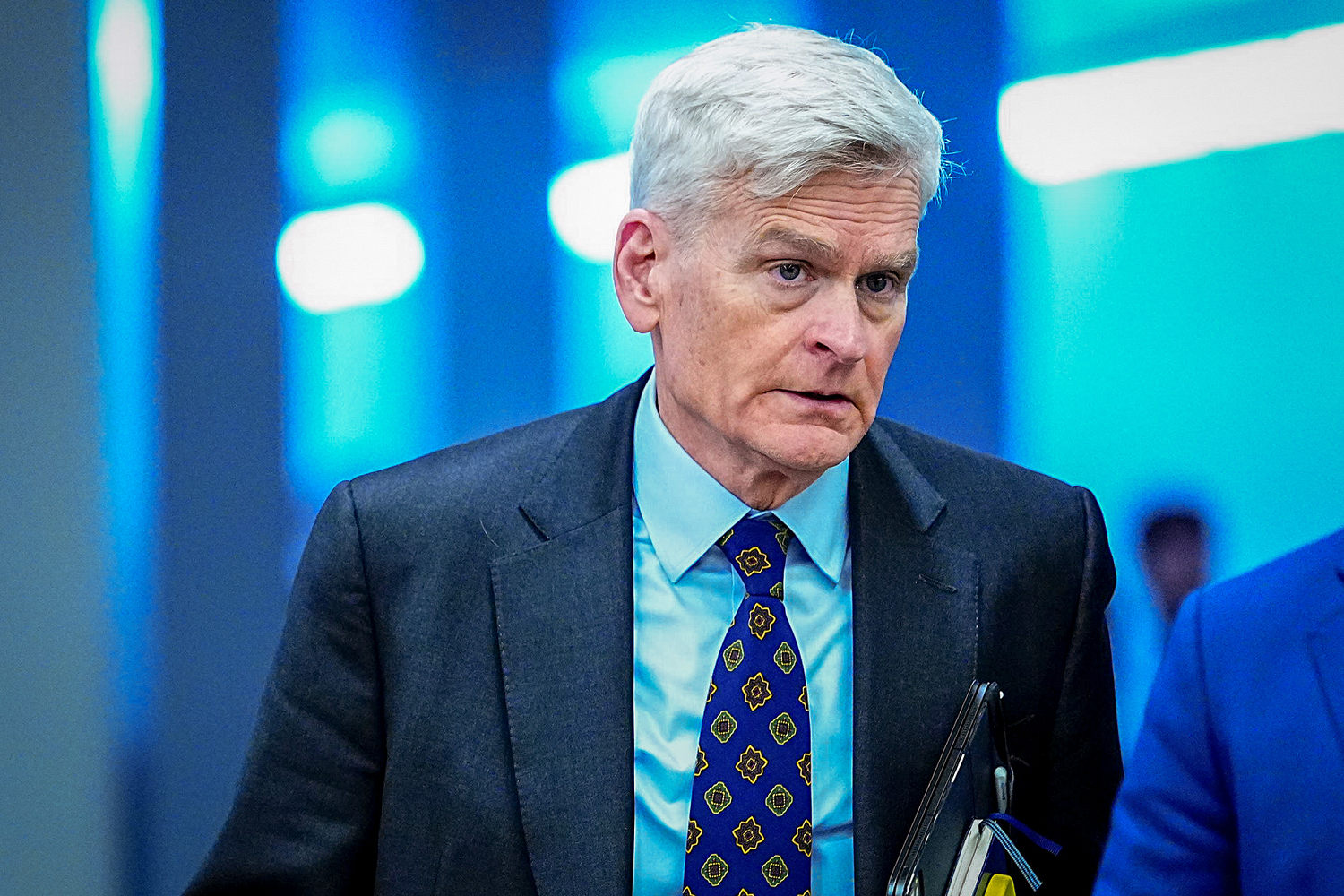
The national media is choking on its own narrative. Follow the frantic headlines coming out of Louisiana, and you will see the exact same copy-pasted analysis: Senator Bill Cassidy’s third-place finish in the Republican primary is a definitive story of raw presidential vengeance. We are told his political career ended because he committed the ultimate sin of voting to convict Donald Trump in 2021, and that his defeat proves dissent is entirely unaffordable.
It is a neat, dramatic story. It is also completely wrong.
By treating Cassidy as a pure martyr of conscience crushed by a Twitter account, analysts are missing the brutal operational reality of modern politics. Cassidy did not lose because of a five-year-old grudge. He lost because he committed the ultimate sin of legislative hubris: he believed his pork-barrel spending and inside-the-Beltway committee chair power could override a structural rewriting of the electoral engine.
This was not an ideological execution. It was a structural eviction.
The Bipartisan Delivery Fallacy
I have seen political campaigns burn through tens of millions of dollars operating on a fundamentally flawed premise: the belief that the average voter trades their deep-seated cultural alignment for localized infrastructure spending.
Cassidy’s campaign and his allied super PAC, the Louisiana Freedom Fund, dumped more than $22 million into the race. They outspent the actual runoff contenders, Julia Letlow and John Fleming, combined. The core of that multi-million-dollar pitch? Pure managerial competence. Cassidy traveled across Louisiana bragging about how he secured money from Joe Biden’s 2021 bipartisan infrastructure law. He literally campaigned on the fact that he carved out a carve-out in a tax bill to ensure barbers did not pay taxes on tips.
This is the classic Beltway delusion. In a highly polarized environment, boasting that you worked across the aisle to secure a bridge or save a barber a few hundred bucks does not look like "delivering for your state." To the base, it looks like administrative collusion with the enemy.
Imagine a corporate CEO trying to save their job by telling angry shareholders that, while he insulted the company's founder, he managed to negotiate a great deal on office chairs with the main competitor. The shareholders do not care about the chairs. They care about the direction of the firm.
Cassidy tried to fight a war of raw passion with an excel spreadsheet of legislative achievements. When you run on technocratic competence in an era of theological populism, you have already lost.
The Structural Trap He Ignored
The real story of the Louisiana primary is not found on social media; it is found in the state house archives. Until this year, Louisiana operated under an open "jungle primary" system. Everyone ran on the same ballot. If no one hit 50 percent, the top two advanced.
That system was Bill Cassidy’s life insurance policy. It allowed a center-right Republican to survive by stitching together a coalition of business-class conservatives, independent voters, and moderate Democrats who preferred a predictable institutionalist over a fire-breathing populist.
But earlier this cycle, Republican Governor Jeff Landry and the state legislature deliberately tore that system down. They replaced it with a closed partisan primary for congressional races. Unaffiliated voters were forced to specifically request a Republican ballot, a procedural hurdle that introduces massive friction into voter turnout.
Look at the mechanics of what happened on Saturday:
- Julia Letlow: 45.2%
- John Fleming: 28.3%
- Bill Cassidy: 24.4%
Cassidy was entirely locked out of the June runoff. Why? Because his core strategy relied on an open-door policy that his own party locked from the inside.
In a closed Republican primary in a deep-red state, the electorate changes completely. It is stripped of moderating influences. Cassidy spent the final weeks of his campaign issuing frantic "Red Alerts" and personally calling political commentators, begging them to tell Democrats to change their registration to "No Party" just to bail him out. It was a humiliating, logistical hail-mary that telegraphed absolute desperation.
If you do not control the rules of the game, your strategy means nothing. Cassidy’s defeat is a masterclass in failing to realize that structural changes eat political capital for breakfast.
The Double Game That Pleased Nobody
The conventional wisdom says Cassidy stood tall on his principles. That is a comforting myth for the Sunday morning talk shows, but it ignores the reality of his actual voting record over the last year.
Cassidy did not just stand on a hill of pure institutionalism. He tried to play a dangerous double game to buy back the base, and in doing so, he alienated everyone. As chairman of the Senate Health, Education, Labor, and Pensions Committee, he held the keys to Donald Trump’s cabinet nominations.
What did he do? He grilled Robert F. Kennedy Jr. over vaccine skepticism, acting the part of the serious, scientifically minded medical doctor. Then, when the pressure mounted, he cast the crucial vote to advance and confirm RFK Jr. anyway. Later, he turned around and blocked wellness influencer Casey Means for surgeon general, causing Trump to publicly explode at him.
This is the worst way to play contrarian politics.
- To the MAGA base, his skepticism of Trump's nominees proved he was still a closet institutionalist who could not be trusted.
- To the independents and moderate Democrats who might have crossed over to save him, his ultimate capitulation on major votes looked like cowardice.
When you try to split the difference in a zero-sum political landscape, you do not build a consensus. You build a target on your back. You end up with zero allies, a third-place finish, and an empty campaign account.
Dismantling the Primary Premise
The national media wants you to ask: Can a Republican survive if they cross Trump?
That is the wrong question. The real question is: Can an incumbent survive when they mistake their institutional title for actual power?
The institutionalist wing of the political class genuinely believes that committee readerships, senior status, and a $22 million war chest matter more than raw grassroots alignment. They believe that voters are rational consumers weighing the cost-benefit analysis of infrastructure bills.
They are entirely wrong. Saturday's primary proved that the modern political party is not a big tent defined by legislative output. It is a closed ecosystem defined by cultural loyalty. Cassidy thought he was an indispensable asset to Louisiana. The voters viewed him as a legacy line-item that needed to be cleared from the ledger.
Stop looking at this as a tragedy of political conscience. It was a catastrophic failure of political risk assessment. If you defy the core identity of your organization, you cannot rely on the HR department or a great quarterly report on "bipartisan tip taxes" to save your job. You either build an alternative power base from the ground up, or you get cleared out when the rules change. Cassidy did neither, and the trap snapped shut exactly as designed.


_Biopsy.png?branch=uat_release_3)
