The seizure of the vessel Touska and the subsequent Iranian demand for "immediate release" represents a calculated stress test of maritime sovereignty rather than a random kinetic clash. The incident highlights a fundamental breakdown in the informal de-confliction protocols that have historically governed the Persian Gulf. By examining the operational mechanics of the encounter—territorial claims, the technical capabilities of the assets involved, and the shifting legal definitions of "innocent passage"—we can map the precise trajectory of regional instability.
The Triad of Maritime Friction
The confrontation involving the Touska functions within three distinct operational layers. Understanding these layers is necessary to move beyond the surface-level rhetoric of "assaults" and "illegal detentions."
1. The Jurisdictional Ambiguity of Regional Waters
The United Nations Convention on the Law of the Sea (UNCLOS) provides the framework for maritime rights, but its application in the Strait of Hormuz is subject to intense interpretation. Iran, while a signatory, has not ratified UNCLOS, and it maintains that the right of "transit passage" only applies to states that are party to the treaty. Instead, it enforces a stricter "innocent passage" standard.
The Touska incident hinges on whether the vessel was within the 12-nautical-mile territorial limit or the Contiguous Zone. When the US Navy intervenes in these zones, the legal friction point is "High Seas Freedoms" versus "Coastal State Security." If the US assets entered what Iran defines as its sovereign space to interact with the Touska, the Iranian narrative of an "assault" gains domestic legal standing, regardless of international recognition.
2. The Asymmetric Response Function
Iran utilizes a cost-imposition strategy. Because it cannot match the US Fifth Fleet in a conventional blue-water engagement, it relies on "swarming" tactics and the detention of commercial assets to create a diplomatic bottleneck. The demand for the release of the crew is a secondary objective; the primary objective is the assertion of a veto right over transit.
3. Kinetic Signal Processing
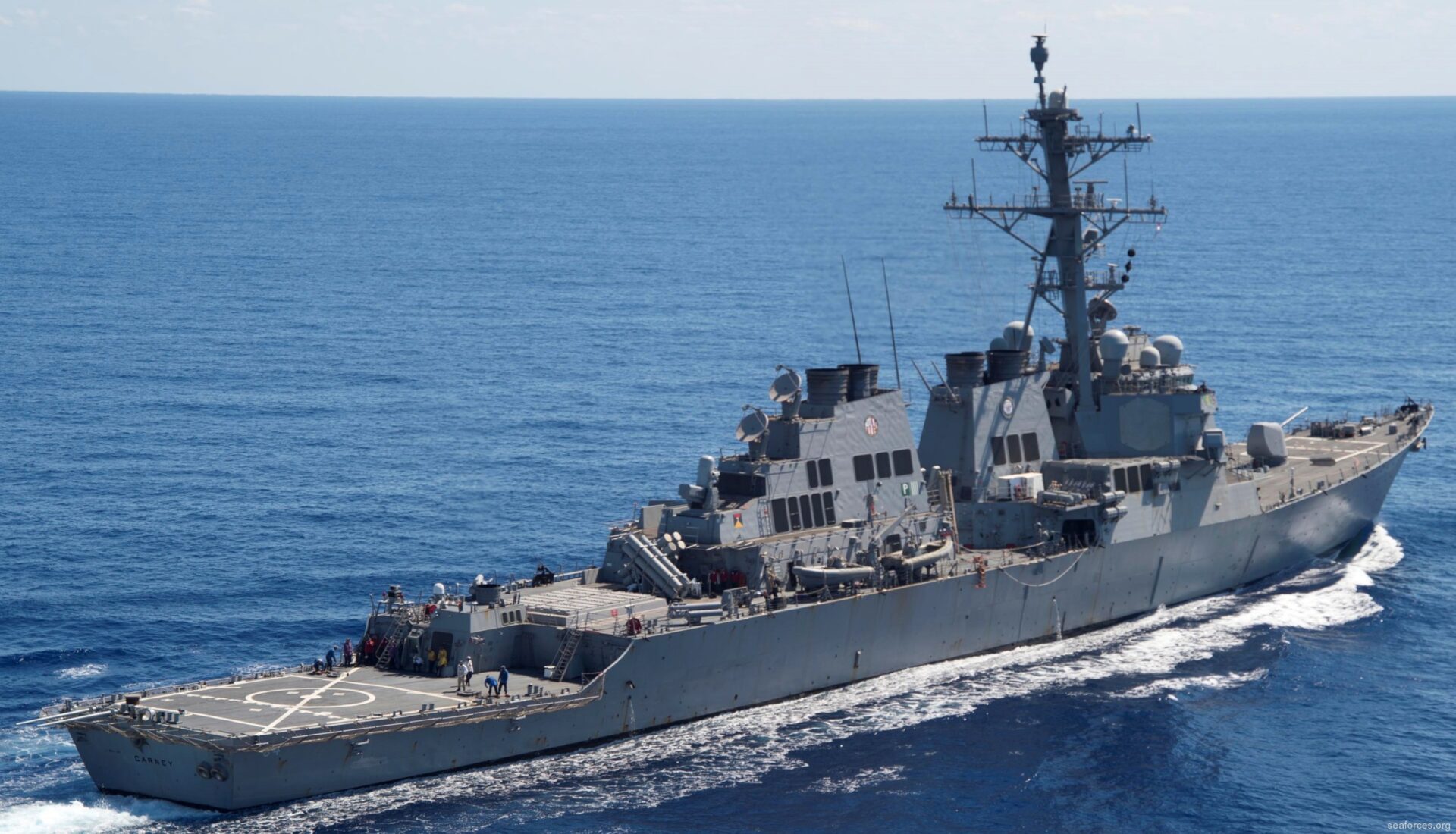
The physical interaction between US boarding teams and the Touska crew serves as a data point for both intelligence agencies. The response time of the Iranian Islamic Revolutionary Guard Corps Navy (IRGCN) and the tactical positioning of US destroyers reveal the current "Rules of Engagement" (ROE) threshold. A delayed US response signals a pivot toward de-escalation; a rapid, aggressive intervention suggests a policy of zero-tolerance for maritime harassment.
Mechanics of the Touska Incident
To analyze the specific claims surrounding the "US assault," we must deconstruct the sequence of events into a technical timeline. The Iranian Port and Maritime Organization claims the vessel was intercepted while performing routine operations. The US counter-narrative typically centers on sanctions enforcement or the prevention of illicit cargo transfers (such as ship-to-ship oil smuggling).
The Boarding Protocol
Standard maritime interdiction involves a specific escalation ladder:
- Radio Challenge: Identification of the vessel and its manifest.
- Non-Kinetic Maneuvering: Positioning a warship to impede the target's path.
- Consensual vs. Non-Consensual Boarding: If the flag state grants permission, the boarding is legal. If the US invokes "Right of Visit" under suspicion of statelessness or piracy, the threshold for physical force drops.
The "assault" described by Iranian state media likely refers to the Fast Rope or Small Boat boarding maneuver. In a high-tension environment, the deployment of a Visit, Board, Search, and Seizure (VBSS) team is interpreted as an act of war by the coastal state, especially if the vessel is under an Iranian charter or flying an Iranian flag.
The Economic Cost Function of Maritime Detention
The detention of the Touska is not merely a diplomatic hurdle; it is a direct attack on the insurance and logistics infrastructure of the region. Every hour a vessel is held under "investigation" or "detention" triggers a cascade of financial penalties.
War Risk Premiums
The primary mechanism of economic pressure here is the "War Risk" surcharge. Lloyd’s Market Association Joint War Committee frequently updates the list of areas where additional premiums are required. Incidents like the Touska seizure cause these premiums to spike by 10% to 25% within 48 hours of the news cycle. For a VLCC (Very Large Crude Carrier) or a medium-sized bulk carrier like the Touska, this represents hundreds of thousands of dollars in unhedged costs.
Supply Chain Elasticity
The Strait of Hormuz handles roughly 20% of the world's total petroleum liquids consumption. While the Touska may not be a Tier-1 energy carrier, the precedent of its seizure creates a "chilling effect." Shippers begin to calculate the "Risk of Forfeiture." If the probability of seizure rises above a specific threshold (historically around 0.5% of total transits), the freight rates for the entire Persian Gulf reflect a permanent risk-adjusted increase.
Technological Escalation: The Role of Unmanned Systems
A significant shift in these maritime standoffs is the integration of ISR (Intelligence, Surveillance, and Reconnaissance) drones. The Iranian Navy has increasingly used "suicide drones" and surveillance UAVs to shadow US vessels during interdiction operations.
This creates a "Sensor-to-Shooter" bottleneck. If a US boarding team is on the deck of the Touska, they are vulnerable to low-cost loitering munitions. This tactical reality forces the US to commit more high-value assets (Aegis-equipped destroyers) to protect a single boarding party, essentially trading a $2 billion asset's focus for a $20,000 drone’s presence. This imbalance is the cornerstone of the Iranian maritime strategy.
Structural Failures in Diplomatic De-confliction
The absence of a direct "Hotline" between the US Fifth Fleet in Bahrain and the IRGCN headquarters in Bandar Abbas means that every incident must be filtered through Swiss intermediaries or public broadsides. This creates a "Signal Noise" problem:
- Internal Signaling: The Iranian leadership uses the "immediate release" demand to project strength to domestic hardliners.
- External Signaling: The US uses the seizure to demonstrate the efficacy of its sanctions regime to global partners.
- Operational Miscalculation: Without direct communication, a mechanical failure on a boarding craft or a nervous sailor on the Touska could trigger a kinetic exchange that neither capital actually desires.
The Strategic Play for Regional Stakeholders
The current situation with the Touska is a precursor to a more rigid "Blockade by Bureaucracy." Iran is moving away from mining the waters—which invites a massive conventional military response—and toward a model of "Legalistic Harassment." By citing environmental violations, safety concerns, or "assaults" by foreign navies, they provide a thin veneer of legality to what is effectively a maritime hostage strategy.
The strategic response for commercial interests and allied navies is not simply "more escorting." It requires a three-pronged tactical shift:
- Redundant Connectivity: Vessels must be equipped with independent, tamper-proof tracking that provides real-time telemetry to both owners and international maritime monitors. This removes the "he-said, she-said" regarding territorial incursions.
- Legal Pre-clearance: Flag states must establish clearer bilateral agreements regarding the boarding of their vessels in sensitive corridors to prevent "stateless" designations that the US uses as a pretext for interdiction.
- The Drone Canopy: Deployment of autonomous surface vessels (USVs) to act as a buffer between commercial ships and coastal navy patrol boats. This de-escalates the human element of the confrontation while maintaining a persistent "eye" on the vessel.
The demand for the release of the Touska is a move on a chessboard where the board itself is shrinking. The goal for Iran is to make the cost of US presence in the Gulf higher than the benefit of the sanctions they are trying to enforce. For the US, the goal is to prove that the global commons remain open, regardless of local claims. The Touska is the current friction point, but the underlying mechanics suggest that the frequency of these "assault and demand" cycles will increase as the technical and legal barriers to interference continue to erode.