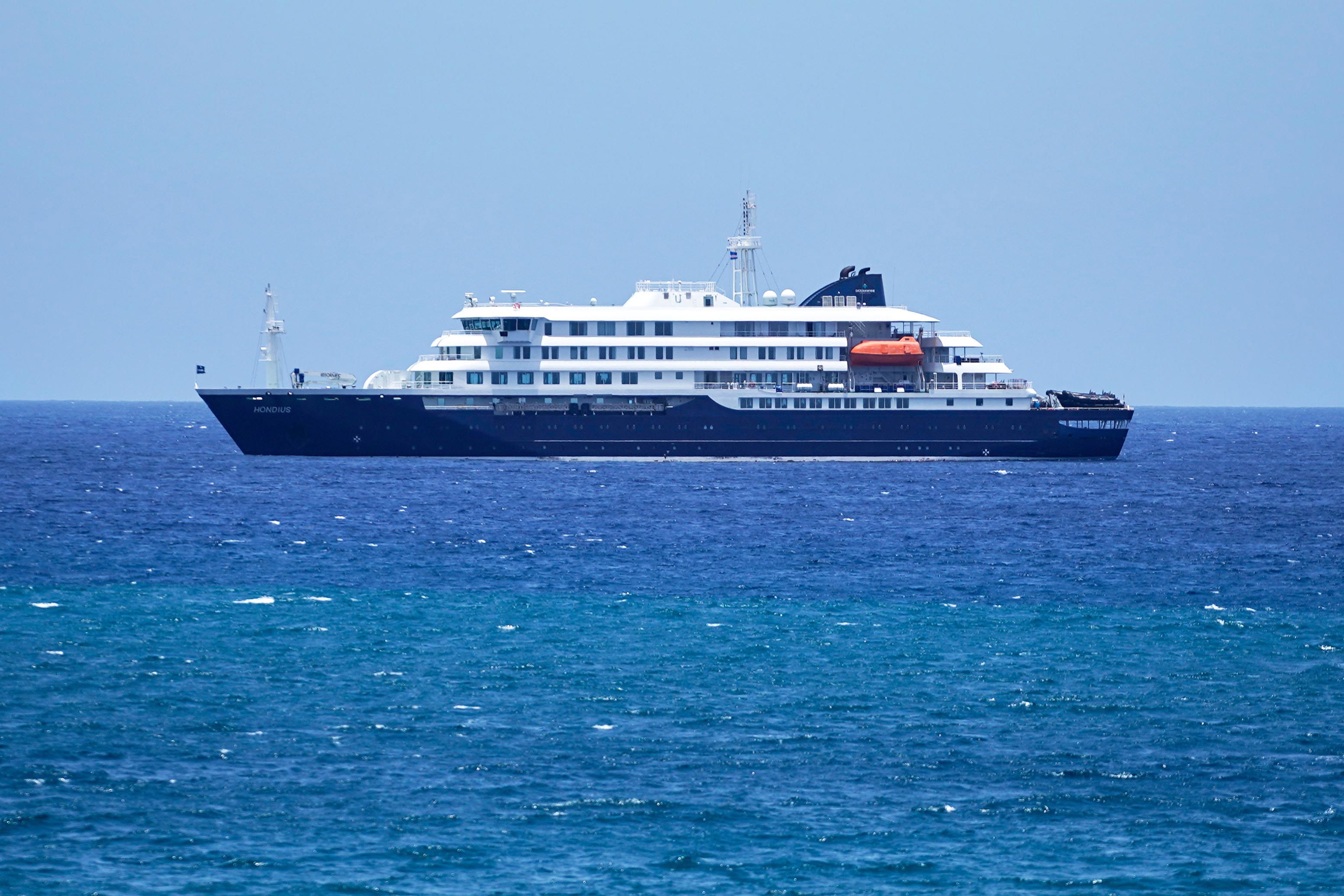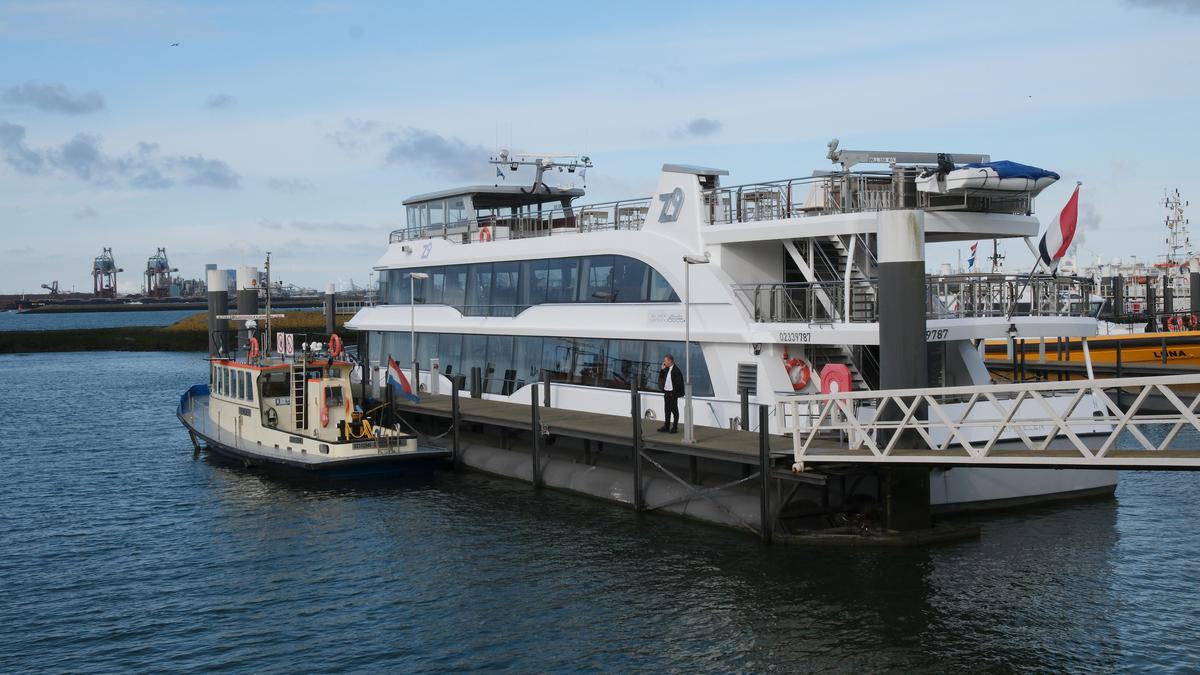
The docking of the cruise vessel MV Hondius at the Port of Rotterdam reveals a fundamental vulnerability in maritime biosecurity: the structural compounding of zoonotic viral transmission within closed thermodynamic and architectural systems. While traditional epidemiologic commentary focuses heavily on the logistical mechanics of passenger evacuation and regional port politics, the true failure vector lies at the intersection of long-pathogen incubation periods and localized air exchange rates. The MV Hondius incident represents the first documented transmission of hantavirus—specifically the Andes orthohantavirus strain (ANDV)—within a commercial maritime vessel.
Analyzing this outbreak requires moving past descriptive reporting toward a quantitative framework governed by epidemiological variables, architectural airflow constraints, and strict viral kinetic behaviors.
The Primary Vector: Viral Kinetic Variables of Andes Orthohantavirus
Hantaviruses are traditionally categorized as non-bifurcated, negative-stranded RNA viruses primarily transmitted via the aerosolization of rodent excreta. The index case aboard the MV Hondius, an adult male who had traveled through endemic zones in Argentina before boarding the ship at Ushuaia on April 1, fits the classic profile of environmental spillover. However, the subsequent progression of cases across passengers and crew members who lacked terrestrial environmental exposure confirms a critical, secondary transmission mechanism: human-to-human propagation.
Unlike the Sin Nombre hantavirus variant common in North America, the Andes strain possesses a distinct biological profile that allows for direct inter-human transmission. This occurs via close-contact droplets and potentially short-range aerosols generated by individuals experiencing advanced Hantavirus Pulmonary Syndrome (HPS).
Three distinct biological attributes dictate the epidemiological progression of ANDV within a maritime environment:
- Extended Incubation Window: The latent period for ANDV ranges from 7 to 56 days. This mathematical variability ensures that an infected individual can clear pre-boarding health screenings entirely asymptomatic, transforming the ship into an incubator weeks before the index case exhibits measurable pathology.
- Biphasic Pathogenesis: The clinical progression moves from a non-specific febrile phase (myalgia, cephalalgia, gastrointestinal distress) directly into a hyper-inflammatory cardiopulmonary phase. This transition is characterized by rapid capillary leak syndrome, pulmonary edema, and acute respiratory distress syndrome (ARDS), yielding a historical case fatality rate (CFR) hovering between 30% and 40%.
- Low Quantum Shedding with High Proximity Coefficients: Inter-human transmission requires prolonged, close-quarter exposure. Onland, this limits outbreaks to tight domestic clusters. At sea, the physical constraints of a vessel artificially compress the entire population into these high-risk proximity coefficients.
Vessel Architecture as an Epidemiological Force Multiplier
The transmission dynamics onboard the MV Hondius cannot be isolated from the structural mechanics of passenger ship design. A vessel operating at sea functions as a closed ecosystem where air exchange, communal transit corridors, and high-touch surfaces are structurally fixed.
The Micro-Climate Vector
Standard cruise ship HVAC (Heating, Ventilation, and Air Conditioning) systems are designed for thermal comfort and energy efficiency, often utilizing a ratio of recirculated air to fresh air to minimize cooling or heating loads. When an apex pathogen like ANDV is introduced, this recirculated volume becomes a structural hazard.
While the Pasteur Institute’s genomic sequencing of the MV Hondius strain confirmed no novel mutations increasing transmissibility, the environmental envelope of a ship acts as an artificial force multiplier. Evaporative cooling loops and localized cabin air mixing can maintain viral droplet stability longer than dry, open-land environments.
The Spatial Density Bottleneck
The spatial distribution of passengers on expedition vessels creates inevitable bottlenecks. The index case developed initial febrile symptoms on April 6 but did not succumb to cardiopulmonary arrest until April 11. During this five-day window of active viral replication and shedding, communal dining spaces, narrow cabin corridors (typically less than 1.2 meters wide), and shared excursion equipment acted as high-density exposure zones.
The transmission to the ship’s medical officer and an onboard guide underscores this spatial vulnerability; those tasked with close-quarter intervention inherit the highest cumulative viral load exposure.
Quantifying Containment: The Maritime Quarantine Paradox
The management of the MV Hondius prior to its arrival in Rotterdam highlights the severe limitations of standard international maritime quarantine frameworks. When the United Kingdom notified the World Health Organization (WHO) of the cluster on May 2 under International Health Regulations (IHR 2005), the vessel was already exposed to a complex multi-jurisdictional web.
The mathematical breakdown of the containment timeline reveals a distinct latency lag:
[April 1: Embarkation] ---> [April 6: Symptom Onset] ---> [April 11: Index Death]
                                                                  |
[May 4: PCR Confirmation] <-- [May 2: WHO Notification] <-- [Lag: 21 Days]
This 21-day gap between the first fatality and definitive molecular identification meant that contact tracing had to be conducted retroactively across passengers from 23 different nationalities, many of whom had already disembarked during routine scheduled stops in late April.
When a pathogen with a multi-week incubation period enters a mobile population, point-in-time isolation becomes fundamentally ineffective. The decision by public health authorities to disembark the remaining passengers in the Canary Islands for international air repatriation introduced a secondary vector risk: transitioning a localized maritime cluster into a distributed terrestrial contact-tracing problem across more than 20 countries.
The confirmation of a positive hantavirus case in Canada from a returned passenger on May 17 validates this risk, demonstrating that the boundaries of the vessel failed to contain the biological footprint of the outbreak.
Industrial Decontamination Deconstruction
The arrival of the empty vessel in Rotterdam shifts the strategic challenge from epidemiological containment to absolute biological eradication. Eliminating an enveloped RNA virus like ANDV from a complex mechanical structure requires a multi-tiered chemical and physical protocol.
The primary risk factor shifts from human-to-human droplets to the disruption of dried biological matter during cleaning operations. Standard mechanical agitation, such as dry sweeping or conventional vacuuming, must be strictly prohibited, as it re-aerosolizes viral particles, placing decontamination crews at immediate risk.
Decontamination Protocol Framework:
[Structural Zoning] -> [Saturated Chemical Inactivation] -> [HVAC Remediation] -> [Validation]
Phase 1: Structural Zoning and Liquid Saturation
The ship is divided into hot, warm, and cold zones based on proximity to confirmed patient cabins and medical bays. Before any physical removal of materials occurs, all surfaces must undergo non-turbulent liquid saturation using a hospital-grade disinfectant.
The chemical selection requires agents capable of rapidly disrupting the lipid envelope of the orthohantavirus. Hypochlorite solutions (diluted at 1:10) or accelerated hydrogen peroxide (AHP) are utilized due to their high efficacy and low residual toxicity profiles.
Phase 2: HVAC System Remediation and Mechanical Extraction
The entire internal volume of the ship’s ventilation ducting must be isolated. The physical remediation requires a complete extraction of all porous insulation materials that may have trapped respiratory droplets.
Non-porous surfaces within the air-handling units must be misted with vaporized hydrogen peroxide (VHP). VHP achieves a $6\text{-log}$ reduction ($99.9999%$ eradication) of biological contaminants without damaging sensitive navigation electronics or ship control systems.
Phase 3: Total Volume Air Exchange
Following liquid and vapor interventions, the vessel must undergo a minimum of 15 air changes per hour (ACH) using 100% outside air filtered through high-efficiency particulate air (HEPA) systems rated to capture particles down to 0.3 microns with 99.97% efficiency. This process dilutes any remaining micro-aerosols to zero-point risk before public health officials conduct final biological sampling.
Strategic Operational Mandate for High-Density Environments
The MV Hondius outbreak cannot be dismissed as an isolated maritime anomaly; it must be interpreted as a systemic warning for the cruise industry, commercial shipping fleets, and remote operational facilities. Relying on passive screening protocols and historical health declarations creates a structural vulnerability that apex pathogens will consistently exploit.
To mitigate the risk of catastrophic biological disruptions in high-density environments, maritime operators and public health authorities must immediately deploy a three-part operational strategy:
- Redesign HVAC Architecture to Implement Real-Time Segregation Loops: Future passenger vessels must abandon centralized air recirculation models in favor of localized, hermetically segregated ventilation zones equipped with automated ultraviolet germicidal irradiation (UVGI) fields in the return air plenums. This prevents a single cabin's viral shedding from crossing into separate accommodation decks.
- Deploy Onboard Molecular Diagnostic Capabilities: Commercial vessels operating in remote regions must be provisioned with point-of-care multiplex polymerase chain reaction (PCR) platforms capable of identifying high-consequence zoonotic and respiratory pathogens within hours of a passenger presenting with a fever. Eliminating the multi-week diagnostic lag seen in the MV Hondius incident is critical to executing localized isolation before human-to-human transmission dynamics cross critical thresholds.
- Establish Formal Sovereign Pre-Clearance Agreements for Biological Incidents: The geopolitical friction observed during the Hondius voyage—where multiple port authorities denied docking privileges or delayed medical evacuations—severely degrades clinical outcomes. International maritime bodies must establish binding biosecurity corridors that guarantee immediate, standardized medical access and controlled disembarkation protocols at designated global hub ports, removing political hesitation from the containment equation.