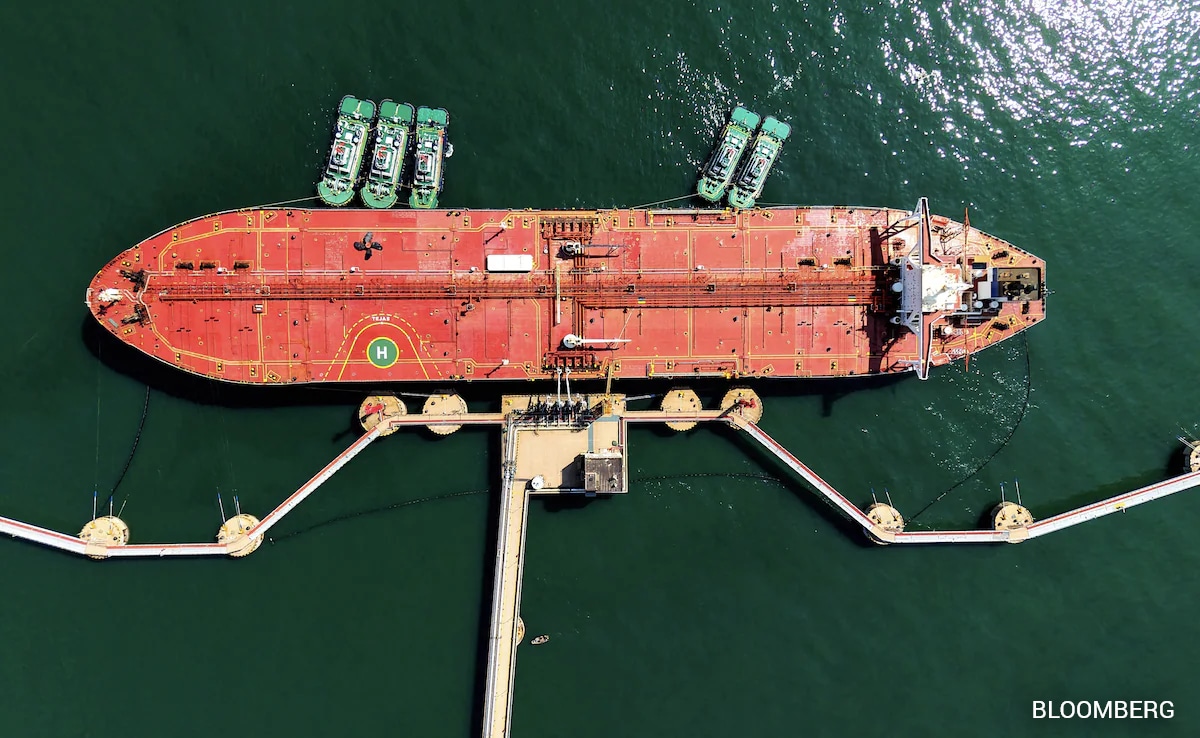
The fundamental tension in global logistics is the divergent treatment of physical assets and biological agents. In maritime commerce, a vessel is a finite set of depreciating parts, historical maintenance logs, and replaceable cargo. Its value is quantifiable, its risk is poolable, and its loss is settleable via a wire transfer. Human life, conversely, represents an unquantifiable liability that resists standard actuarial modeling because it lacks a replacement cost, a salvage value, or a finite upper bound on legal restitution. This discrepancy creates a systemic vulnerability where the safety of the global supply chain rests on the one variable the industry cannot effectively hedge.
The Triad of Maritime Risk Quantification
To understand why a ship can be "fully covered" while a crew remains "uninsurable" in a philosophical and practical sense, one must analyze the three distinct layers of risk management currently governing the high seas.
1. The Asset Valuation Layer
Hull and Machinery (H&M) insurance operates on the principle of indemnity. If a tanker sinks, the insurer pays the agreed value. The logic is linear:
- Replacement Cost: Calculated based on current market rates for steel, labor, and technology.
- Depreciation: Fixed schedules reduce the payout over the vessel's lifecycle.
- Salvage Potential: The ability to recover parts or cargo creates a residual value that offsets total loss.
2. The Liability Layer
Protection and Indemnity (P&I) Clubs handle third-party liabilities, including crew injury or death. However, these are not "insuring the life"; they are insuring the financial consequence of the loss of life. This distinction is critical. The payout is not a valuation of a human being but a settlement of a legal claim based on:
- Contractual obligations (Employment terms)
- Jurisdictional standards (The location of the claim or the nationality of the crew)
- Dependents’ future earnings potential (Actuarial math on human productivity)
3. The Ethical and Operational Layer
This is where the "uninsurability" of human life creates a friction point. No insurer can provide a policy that "replaces" a Chief Engineer. The loss of a key crew member creates a technical deficit that no financial instrument can bridge during a voyage. This creates an operational bottleneck: the vessel is a $100 million asset that remains paralyzed without a specific, non-fungible biological component.
The Asymmetry of Modern Risk Management
The modern maritime industry relies on an asymmetric risk model. The "uninsurability" of human life isn't a failure of the insurance market; it's a reflection of the biological reality that humans are not modular parts.
The Problem of Non-Modular Human Capital
When a generator fails, a vessel can continue under backup power or wait for a replacement part. This is modularity. Human crew members are non-modular because their specialized knowledge, social cohesion, and split-second decision-making cannot be instantly replicated by a substitute. If a captain is incapacitated, the entire asset's safety profile shifts instantaneously.
Legal Indemnification vs. Biological Replacement
A common error in risk analysis is conflating "liability coverage" with "insurance." When a ship is lost, the owner is made whole. When a human is lost, the owner is shielded from the financial fallout, but the organization's human capital is permanently diminished. This creates a hidden cost of operation that most maritime firms fail to quantify: the Residual Risk of Human Attrition.
The Strategic Failure of "Standard" Safety Protocols
Most shipping companies treat safety as a compliance cost—a necessary hurdle to maintain insurance eligibility. This reactive stance ignores the structural reality that human life is the only variable in the risk equation that can both prevent a catastrophe and be the cause of one.
The Human-Centric Cost Function
The true cost of a maritime accident is not the hull loss (which is insured) or the cargo claim (which is insured). The true cost is the compounded failure of human systems. 1. Decision Fatigue: Prolonged shifts lead to a measurable decay in cognitive function, increasing the probability of a navigation error.
2. Moral Hazard: When an asset is over-insured, there is a subconscious reduction in the perceived urgency of human-driven maintenance.
3. The Information Gap: Sensors can monitor engine temperature, but they cannot monitor the psychological state of a crew facing a Force 10 gale.
The Mechanism of Failure
The catastrophic loss of the El Faro in 2015 serves as a case study in this mechanism. The ship was insured. The cargo was insured. But the decision to sail into the path of Hurricane Joaquin was a human failure that no insurance policy could have prevented or truly mitigated once the voyage began. The "uninsurable" element—the judgment of the crew—was the single point of failure.
Strategic Recommendation: Shifting from Liability to Resilience
To mitigate the risk of the "uninsurable" human life, maritime organizations must move away from a compliance-only model and adopt a Human Systems Engineering (HSE) framework. This involves three tactical shifts.
I. Real-Time Cognitive Monitoring
Instead of relying on logbooks and self-reporting, firms should implement biometric monitoring to identify crew fatigue. This is not about surveillance; it is about treatable data. If a bridge officer’s heart rate variability indicates high stress or sleep deprivation, the "asset" (the crew member) is failing. In this scenario, the ship becomes "at-risk" before a physical error occurs.
II. Redundancy in Specialized Knowledge
Cross-training must be mandatory. The current model of highly siloed roles (Engine vs. Deck) creates a fragile system. If the ship can be insured, the knowledge required to operate it must be distributed. A vessel with a single point of technical knowledge is a vessel that is effectively uninsurable against catastrophic human failure.
III. The Valuation of Experience
Insurance premiums should be decoupled from hull age and tied more aggressively to crew stability. A vessel operated by a crew that has worked together for 36 months has a fundamentally different risk profile than a vessel with a "plug-and-play" crew hired through a manning agency. The "uninsurable" life becomes a manageable variable when the continuity of that life is prioritized as a business asset.
The final strategic play for any maritime stakeholder is the recognition that financial indemnity is a defensive posture. True operational excellence requires an offensive strategy that treats human life as the primary engine of the vessel, rather than a liability to be managed. The ship can be insured, but the mission depends entirely on the variable that cannot be replaced.