The headlines are screaming about body counts and kinetic success. They see 787 targets neutralized and call it a surgical masterclass. They are looking at the scoreboard of a game that ended twenty years ago. If you think these strikes actually moved the needle on Middle Eastern stability or slowed Iran's regional hegemony, you aren't just wrong—you’re a liability to anyone trying to understand modern geopolitical risk.
Modern warfare isn't a math problem where more deaths equals a higher probability of surrender. In fact, in the current Iranian context, these numbers are a gift to the hardliners in Tehran. We are witnessing the death of the "Shock and Awe" doctrine, replaced by a desperate, expensive attempt to buy time with missiles that cost more than the facilities they are blowing up.
The Attrition Trap Nobody Wants to Calculate
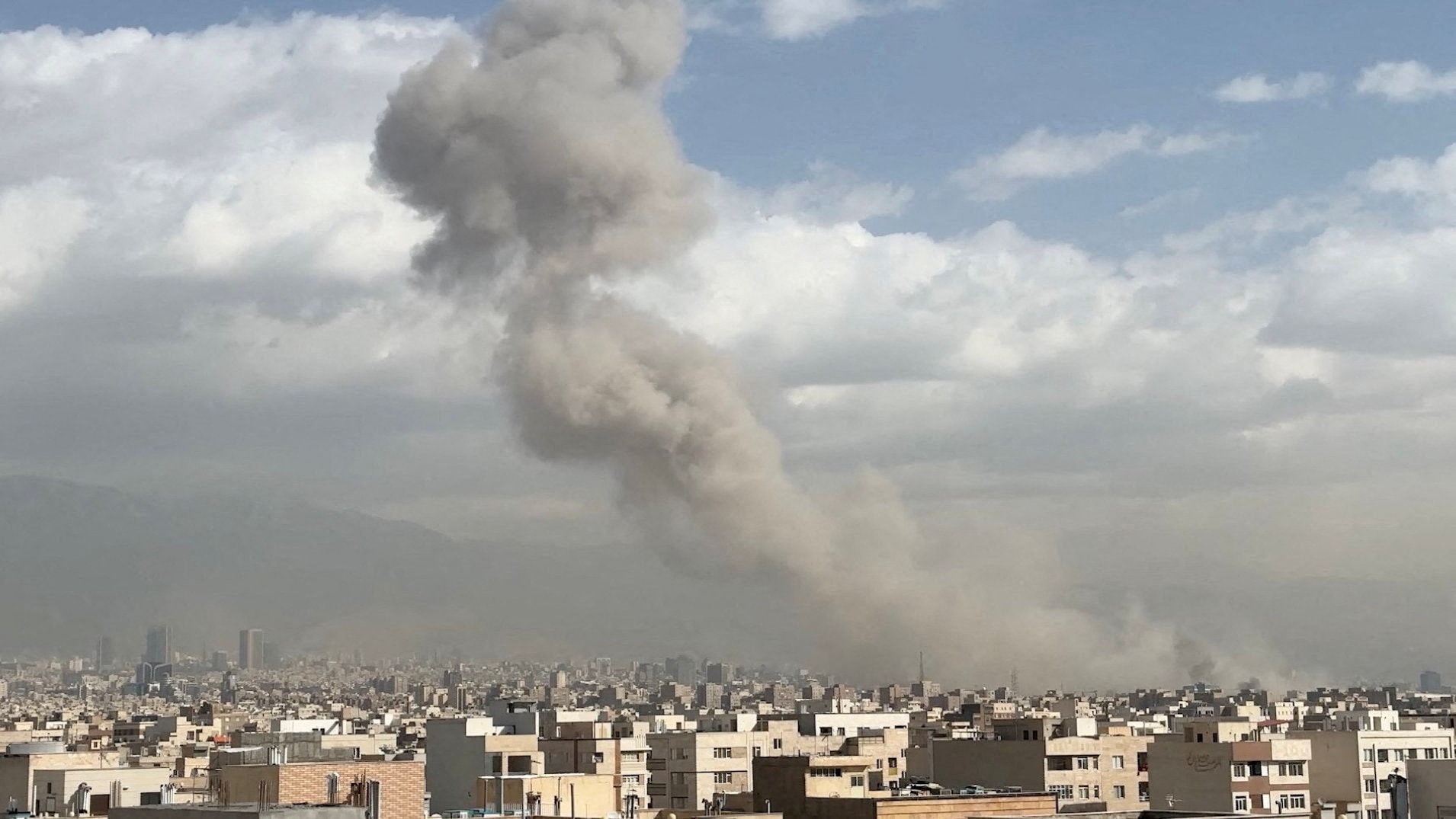
The mainstream media loves a high body count because it feels like progress. It isn't. When the US and Israel strike 787 points of interest, they aren't dismantling a regime; they are stress-testing a decentralized architecture built specifically to survive this exact scenario.
I’ve sat in rooms with defense contractors who salivate over these engagement numbers. They see "787" and think about replenishment contracts. I see a massive failure in intelligence-led deterrence. If you have to kill nearly 800 people in a single night to "send a message," the message was never received in the first place.
True power is the ability to change an adversary's behavior without firing a shot. These strikes prove that the West has lost its leverage. We are now in the "whack-a-mole" phase of empire, where we spend $2 million per interceptor to stop a $20,000 drone made of fiberglass and lawnmower parts.
The Cost-Incompatibility Equation
Let’s look at the math of modern escalation.
- The Western Side: F-35 sorties, satellite-guided munitions, carrier strike group maintenance, and the political capital required to justify civilian "collateral damage."
- The Iranian Side: Concrete, sacrificial personnel, and a propaganda machine that converts every martyr into ten more recruits.
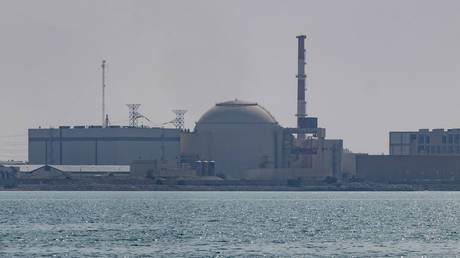
Iran has mastered the art of "asymmetric endurance." They have spent three decades burying their most critical assets—centrifuges, command hubs, and missile silos—deep under granite mountains. The 787 casualties reported are largely surface-level personnel and secondary logistical hubs. To the IRGC, these people are replaceable. The infrastructure is not. By focusing on the body count, Western analysts are falling for a classic magician’s trick: watching the hand that’s moving while the real action happens in the dark.
The Myth of the "Surgical Strike"
The term "surgical strike" is a linguistic sedative designed to make the public feel better about state-sponsored violence. There is nothing surgical about 787 deaths.
When you hit that many targets, you aren't performing surgery; you're using a chainsaw. This volume of kinetic activity creates a vacuum. It destroys the "moderate" voices in Tehran—those few who still argued for diplomatic backchannels—and hands the microphone to the radicals.
Why the "Talks" Were Already Dead
The competitor article claims Tehran "rejects talks" as if that’s a new development. It’s a lazy observation. Tehran hasn't been at the table for years. They use "negotiation" as a stalling tactic to harden their infrastructure. Every time a Western diplomat says we are "keeping the door open," the Iranians are adding another foot of reinforced concrete to their bunkers.
The rejection of talks isn't a sign of Iranian stubbornness. It’s a sign of their confidence. They know the West doesn't have the stomach for a full-scale ground invasion, and they know that air strikes alone cannot stop a nuclear program or a proxy network.
Intelligence is No Longer an Advantage
We used to win because we knew more than they did. That era is over. Open-source intelligence (OSINT) and cheap surveillance tech have leveled the field.
In past conflicts, a strike of this magnitude would have crippled a nation’s ability to communicate. Today, Iran’s proxy networks—the "Axis of Resistance"—operate on decentralized protocols. You can kill the general, but you can’t kill the Telegram group. You can blow up the barracks, but the drone schematics are already on a server in a third country.
The 787 casualties are a data point in a failing model. We are using 20th-century kinetic solutions for 21st-century ideological and cyber problems.
The Economic Blowback
While the US-Israeli strikes are categorized as "defense," the market views them as "instability."
- Insurance premiums for shipping in the Strait of Hormuz don't care about the 787 dead; they care about the one Iranian mine that might hit a tanker next week.
- Energy markets don't care about "degrading capabilities"; they care about the retaliatory strike on Saudi or Emirati refineries that inevitably follows.
We are burning billions of dollars in military hardware to achieve a temporary pause in a conflict that is fundamentally about regional identity and long-term stamina. Iran is playing a game of centuries. We are playing a game of election cycles.
Stop Asking "Did it Work?" Start Asking "What Did We Trade?"
The common question after a strike like this is: "Did we degrade their capabilities?"
The honest answer is: Briefly.
But here is what we traded for that brief pause:
- Diplomatic Isolation: We’ve pushed the Global South further toward the BRICS alignment by reinforcing the image of Western "aggressors."
- Technical Exposure: Every time we use our "cutting-edge" (excuse the term) EW suites and stealth platforms, Iran and its allies gather data on how to defeat them next time.
- Escalation Dominance: We have reached the ceiling of what we can do without a declaration of war. Iran still has several rungs of the ladder to climb.
Imagine a scenario where these 787 deaths don't lead to a retreat, but to a massive, coordinated cyber-attack on Western water treatment plants or electrical grids. That is the asymmetry we aren't prepared for. While we’re counting bodies in the desert, they’re probing the vulnerabilities of our digital heartland.
The Reality of Retaliation
Tehran "vows retaliation." The press treats this like a standard scripted response. It isn't. Retaliation in the modern era doesn't mean a fleet of ships sailing toward the Mediterranean. It means a "lone wolf" in a European capital, a supply chain disruption in the South China Sea, or a coordinated dump of sensitive Western intelligence.
The 787 dead are a rallying cry for a generation of Iranians who were starting to sour on their own government. Nothing unites a fractured population like being bombed by foreign powers. We didn't just kill 787 people; we potentially recruited 78,700 more.
The Failure of the "Red Line"
For a decade, the West has drawn red lines in the sand. Every time Iran crosses one, we launch a strike. Every strike is bigger than the last. Yet, the behavior doesn't change.
If your "punishment" doesn't result in a change in behavior, it isn't a deterrent—it’s just the cost of doing business. Iran has factored these strikes into their budget. They expect to lose people. They expect to lose buildings. As long as the regime survives and the proxies stay armed, they are winning by not losing.
Actionable Intel for the Realistic Observer
If you are a business leader or a policy maker, stop looking at the casualty counts. They are a distraction. Look at the resilience metrics.
- Watch the proxies: If Hezbollah and the Houthis don't blink, the strikes failed.
- Watch the oil: If the price doesn't spike and stay up, the market knows this was a theater performance, not a tectonic shift.
- Watch the cyber-front: The real retaliation won't be televised.
We are stuck in a loop of performative militarism. We celebrate the 787 "kills" because it's easier than admitting we have no long-term strategy for a multi-polar world. We are trying to bomb our way back to 1991. It’s not working.
The next time you see a "massive strike" headline, don't ask how many people died. Ask how much closer it brought us to a war we can't afford to win.
Stop counting bodies and start counting the cost of our own obsolescence.