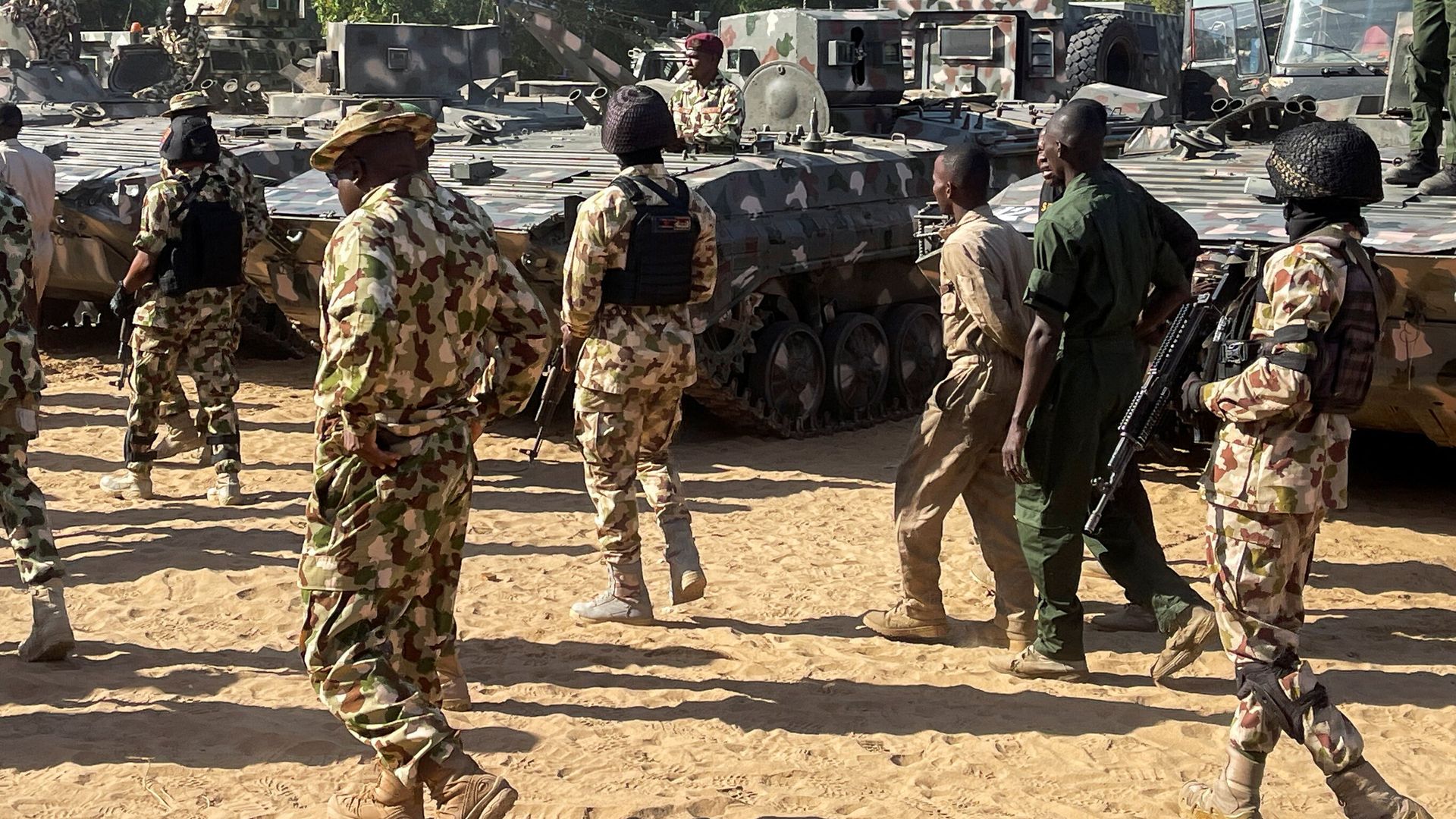
The headlines are predictable. They are almost scripted. Nigerian security forces engage "bandits" in a remote forest, a fierce gun battle ensues, and dozens of criminals are neutralized. The public claps. The government issues a press release. The media carries the body count like a trophy.
It is a lie. Not necessarily a lie of facts—though the math in these skirmishes is notoriously rubbery—but a lie of strategy. If you believe that killing 45 men in a bush in Kaduna or Zamfara moves the needle on national security, you are falling for the oldest trick in the counter-insurgency playbook: confusing activity with achievement.
The Body Count Trap
We have seen this movie before. From the Mekong Delta to the Sambisa Forest, the obsession with "attrition" is the hallmark of a military that has lost its way. When a general points to a pile of corpses to prove he is winning, it usually means he has no idea how to secure the territory.
Banditry in Nigeria is not an army; it is a franchise. It is a decentralized, low-entry-barrier industry fueled by poverty, climate-driven migration, and a total collapse of local governance. In this ecosystem, 45 men are a rounding error. They are replaceable. By the time the spent casings are cleared from the site of the "victory," ten more recruits have been radicalized or incentivized to take their place.
The metric of success shouldn't be how many people died today. It should be how many schools opened in the "red zone" without an armed escort. It should be the price of cattle in the local market. It should be the absence of sound, not the roar of an AK-47.
The Logistics of a Failed Victory
Let’s look at the math. To kill 45 bandits in a single engagement, you need significant firepower, intelligence, and luck. You also need the bandits to be grouped together—a rare occurrence for a guerrilla force unless they are being cornered or are overconfident.
When the military "wins" these battles, they often celebrate the seizure of motorcycles and rusted rifles. But where is the intelligence on the supply chain? Who sold them the fuel? Who laundered the ransom money through the banking system? Who provided the high-grade ammunition?
If you kill 45 foot soldiers but leave the logistics network intact, you haven't won a battle; you’ve just performed a very expensive, very bloody pruning of a weed that is designed to grow back faster.
The Recruitment Math
Imagine a scenario where a village has a 70% youth unemployment rate and zero access to credit. To these young men, the bandit leader isn't just a criminal; he is the only employer in town.
- Military Logic: Kill the bandits to deter others.
- Economic Reality: The death of 45 bandits creates 45 job openings in a high-risk, high-reward industry.
- The Result: Perpetual war.
Kinetic Force is a Lazy Solution
Politicians love kinetic solutions because they are photogenic. You can put a burnt-out technical vehicle on the evening news. You cannot easily film "the slow restoration of trust in the local police force" or "the successful implementation of a land-use agreement between herders and farmers."
I have spent enough time analyzing security budgets to know that "ammunition" is a much easier line item to grift than "community development." Kinetic operations allow for massive, opaque spending. Peace, on the other hand, is cheap and boring. It requires long-term commitment, cultural nuance, and the ego-bruising work of negotiation.
We are addicted to the "gun battle" narrative because it absolves the state of its actual responsibility. If the problem is just "evil men in the woods," then the solution is just "more bullets." But if the problem is a systemic failure of the social contract, then the government has to look in the mirror. And that is the one thing they refuse to do.
The Intelligence Deficit
The "45 bandits" story usually lacks one crucial element: names.
In a functional counter-terrorism operation, you target the head of the snake. You look for the financiers. In Nigeria, we are stuck in a loop of "tactical successes" that lead to "strategic defeat." We kill the messenger and let the sender of the message keep writing checks.
True intelligence-led policing would see those 45 bandits arrested, interrogated, and used to map the entire network. But dead men tell no tales. When the military kills everyone on site, they are often destroying the very evidence needed to end the war. It is a scorched-earth policy that prioritizes the "win" of the day over the peace of the decade.
The Trust Gap
Every time a village becomes a battlefield, the local population loses. They are caught between the brutality of the bandits and the often-indiscriminate fire of the military.
When the military announces a "victory," they rarely mention the collateral damage. They don't talk about the displaced families or the fields that will go unharvested because the area is now a "theatre of operations." Every civilian who loses a limb or a livelihood in these gun battles is a potential new recruit for the next generation of bandits.
We are not fighting a war against an external invader. We are performing a violent, internal surgery on our own body politic. You cannot keep cutting out the "bad tissue" if you aren't doing anything to heal the infection.
Stop Asking "How Many Died?"
The "People Also Ask" section of the public consciousness is filled with the wrong questions.
- "Is the Nigerian army winning?"
- "Where are the most bandits located?"
- "How many bandits have been killed this year?"
These questions are irrelevant. They focus on the symptoms. The real questions—the ones that make people uncomfortable—are:
- "Why is the Nigerian state unable to project authority five miles outside of a state capital?"
- "Which political actors benefit from the continued instability in the North-West?"
- "How much of the defense budget actually reaches the front lines?"
The Professional Price of Honesty
I recognize that this perspective is unpopular. It’s much more comforting to believe that our "gallant troops" are winning the day. And they are gallant. They are often underpaid, overstretched, and sent into the meat grinder with equipment that belongs in a museum.
But supporting the troops shouldn't mean supporting a failed strategy. It should mean demanding a strategy that doesn't rely on them dying in a bush to provide a three-minute segment on the news.
The contrarian truth is that the more "gun battles" we have, the further we are from peace. A successful security policy is one where the military stays in the barracks because the police are sufficient, the courts are fair, and the economy is inclusive.
Until we stop celebrating the body count, we are just financing a graveyard.
Stop asking for more "neutralizations." Start asking for the names of the people who bought the guns. Start asking why the borders are still porous. Start asking why, after thousands of "bandits killed," the roads are more dangerous than ever.
The war will end when the business of war becomes less profitable than the business of peace. Until then, 45 dead bandits is just the cost of doing business.
Do not look at the smoke from the gun battle and see victory. Look at the smoke and see a country on fire, with a government that thinks the solution is to throw more bodies into the furnace.